


Bitcoin is “boring” now.
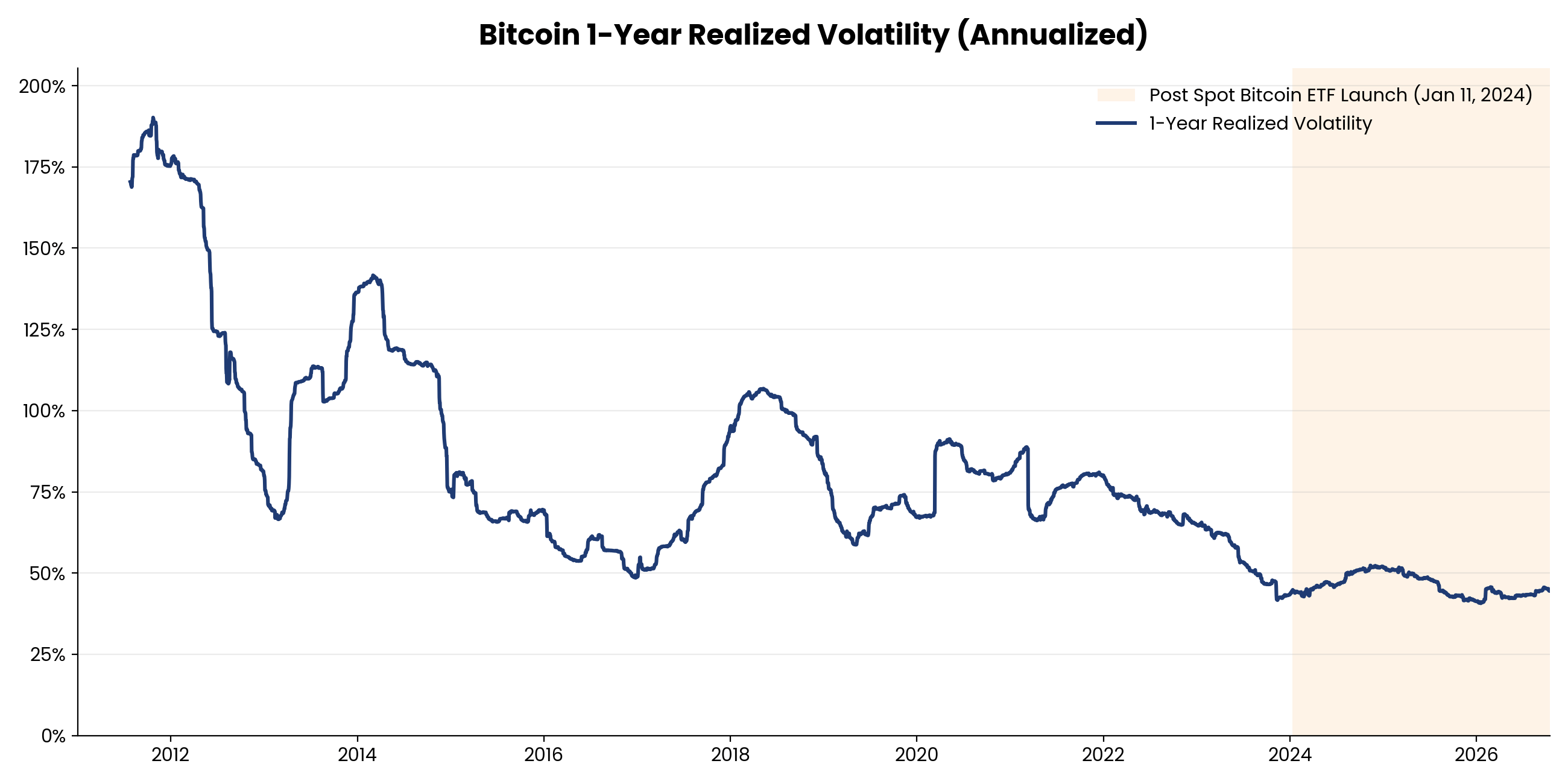
Since the spot ETFs went live in January 2024, Bitcoin’s volatility has been cut in half:
Annualized Volatility Pre-ETF: 91%
Annualized Volatility Post-ETF: 46%
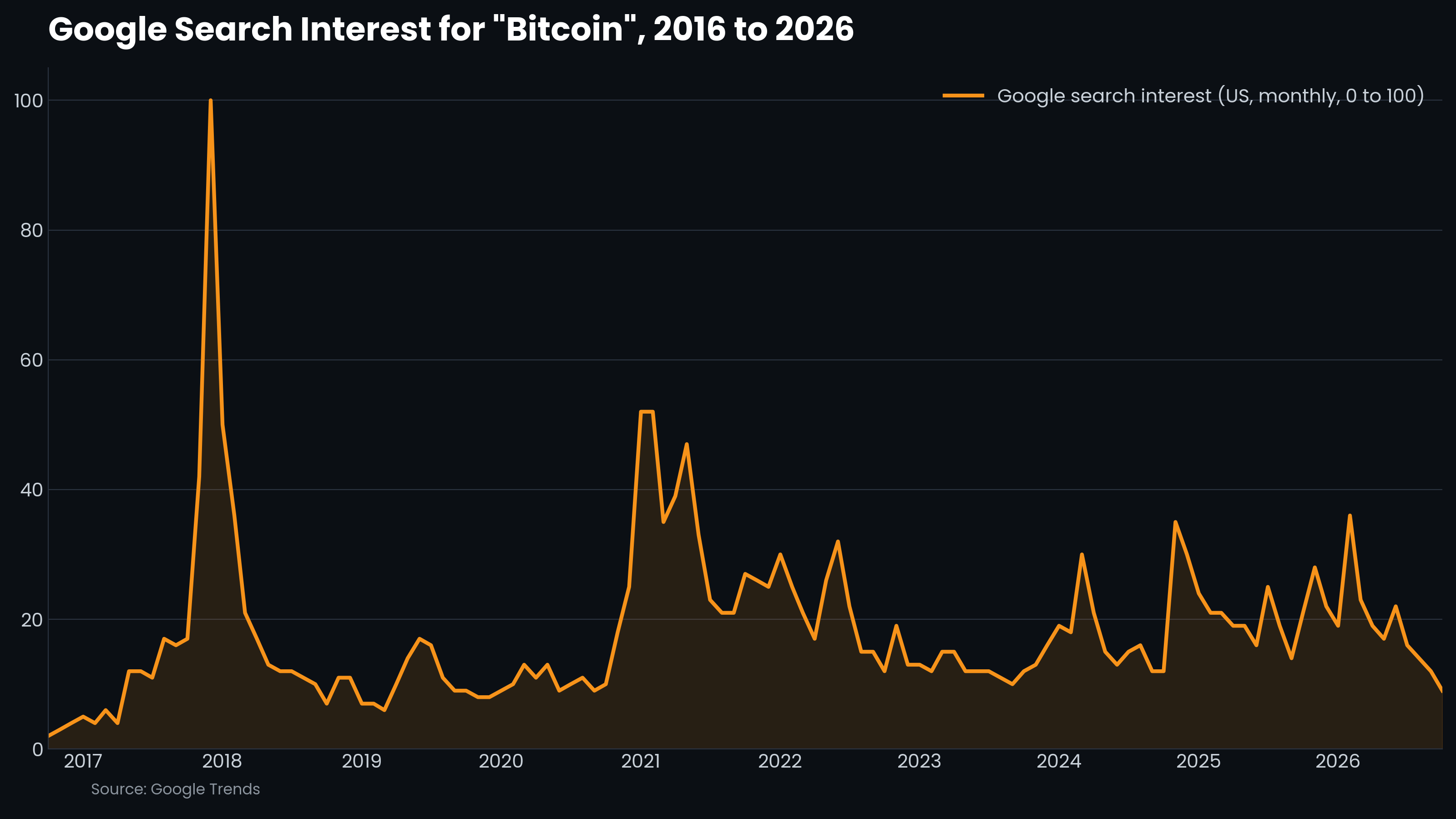
The market over the last two-years has been objectively disappointing. After rallying north of $100k in Q4 2024, on the hopeful expectation of a strategic Bitcoin reserve, Bitcoin sits lower two years later… and retail has lost interest.
Google searches for Bitcoin are at their lowest level since 2020.
Many retail investors are discourage looking at the state of the market. Cherry-picked return timeframes. The opportunity cost of being in Bitcoin during a sideways/down market while equities and gold make all-time highs. And the asset that was supposed to dethrone central banks now in bed with the same institutions Satoshi warned about.
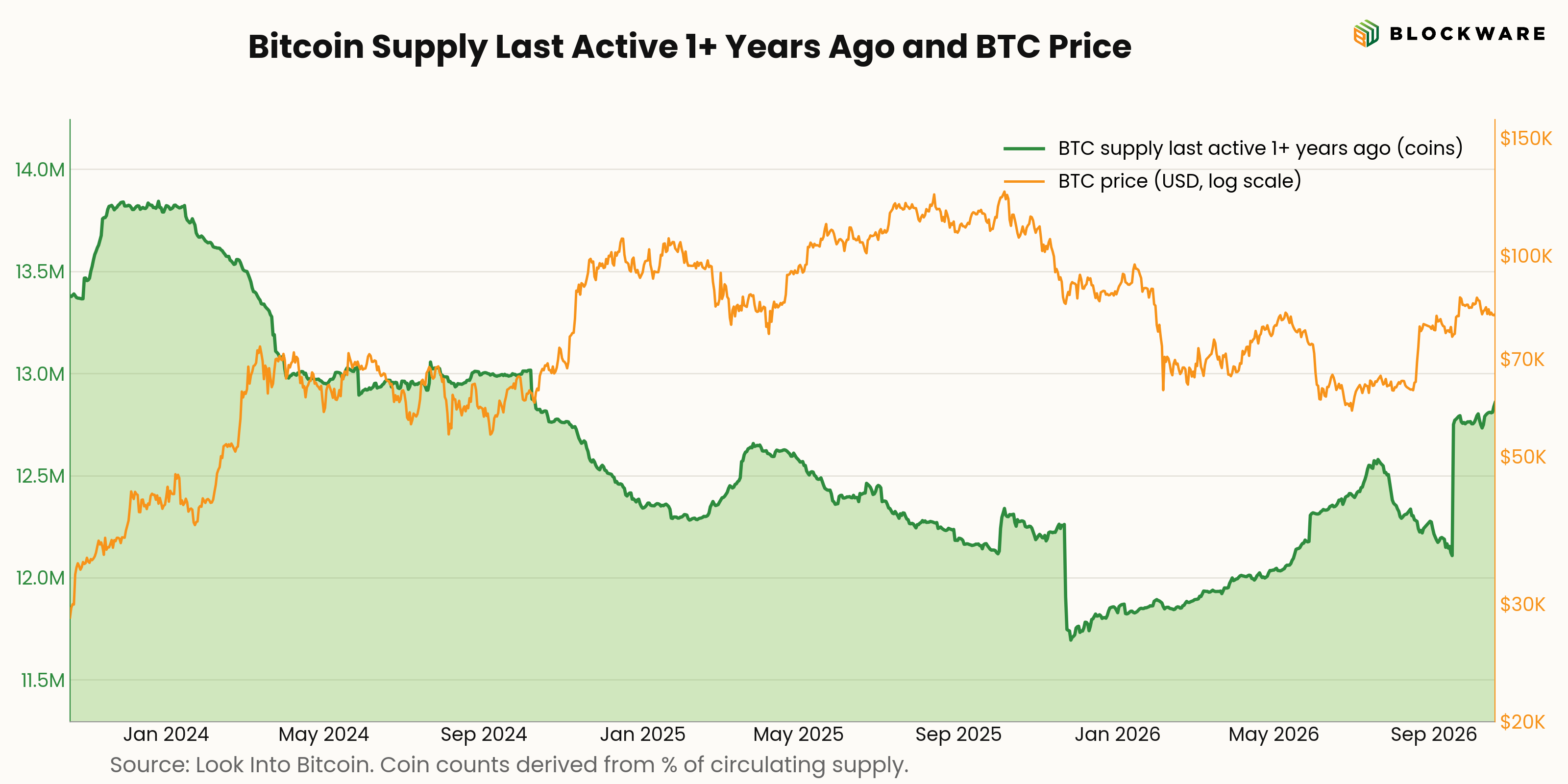
The lower-volatility and price consolidation of the past two years has resulted in a drastic shift in Bitcoin’s ownership profile. Retail is selling and institutions are buying.
In December 2023, one month before the launch of ETFs, ~13.8 million BTC had not moved in a year or longer. Today that number is ~12.8 million.
Many long-time Bitcoin holders were shaken out by the “boring” phase.
On a shorter-term basis, the amount of an inactive Bitcoin is up over the past twelve months (November 2025 low of ~11.7 million). This is bullish.
Sign up for a FREE 3-part webinar series from The Bitcoin Way to learn why you need a Plan B residency and how to get one

Every major asset in history has gone through the “boring” phase. The boring phase is where most people give up, and it’s exactly where you should be doubling down.
Boring Bitcoin is the best thing that could happen to you if you hold the asset, and it is a requirement if Bitcoin is ever going to hit $1,000,000 per coin.
Every high quality asset is boring.
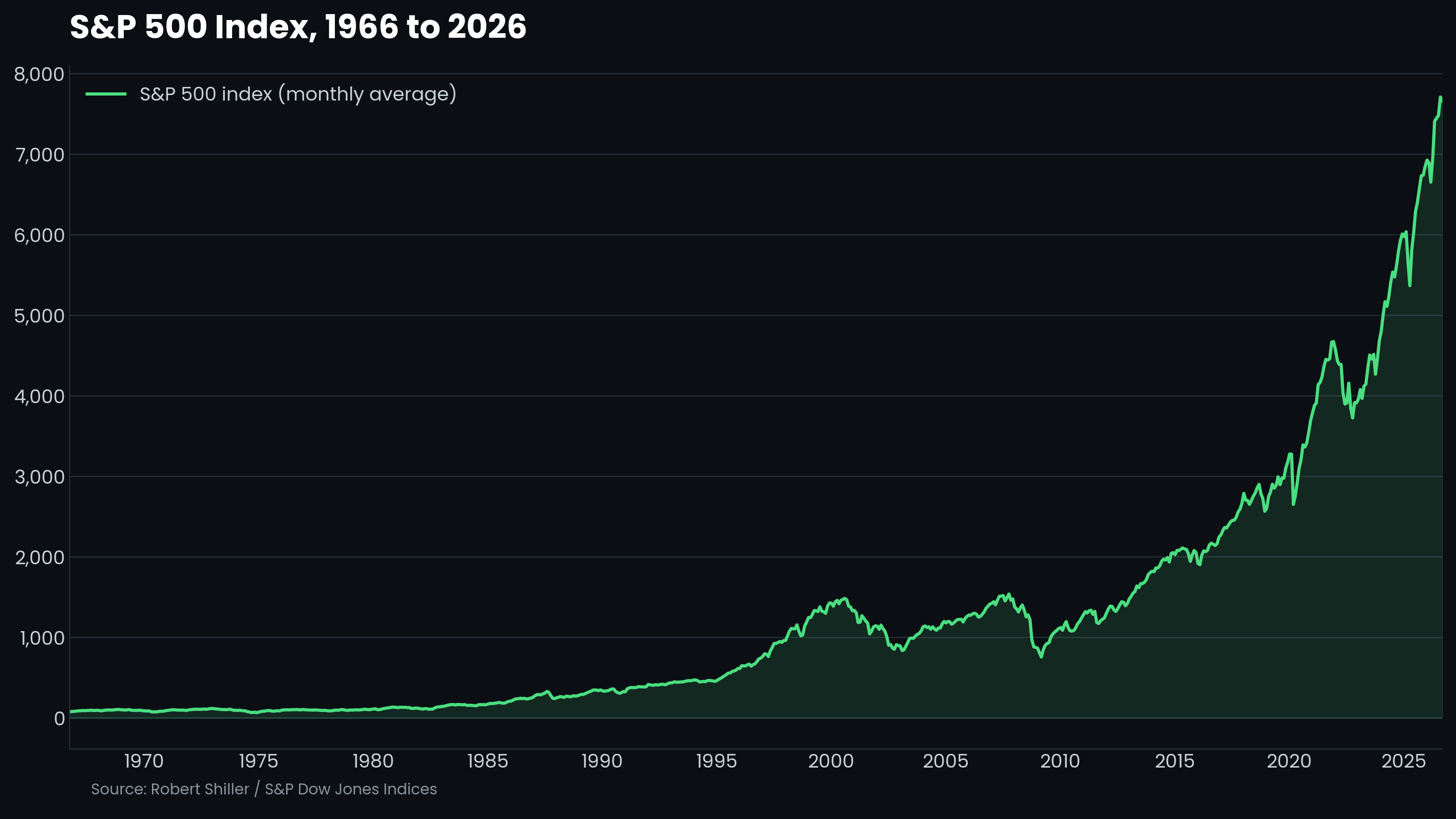
Think about the three assets everyone agrees you should own: gold, real estate, and the S&P 500. Gold is a rock. It’s rare, it’s durable, it’s recognized everywhere, and that’s about it. No earnings reports, no flying cars. Real estate is land you can’t make more of. You can develop it and rent it out, but the earth is the same as it was a thousand years ago. And the S&P 500 is the benchmark every hedge fund on the planet is trying to beat, with conventional wisdom being to just dollar cost average into it forever.
Nobody gets fired up to talk about gold, real estate, or the S&P 500. They are conventional wisdom. If Bitcoin is going to become the fourth asset on that list, the one everyone agrees transfers your value from today into the future, it is going to look a lot more like those three and a lot less like a memecoin.
Warren Buffett compounded Berkshire at roughly 20% per year for 70 years by buying quality assets and sitting on his hands. No swing trading, no chasing the hottest new toy. Bitcoin is one of those assets you can buy and hold forever, and you don’t need 91% vol to get rich doing it.
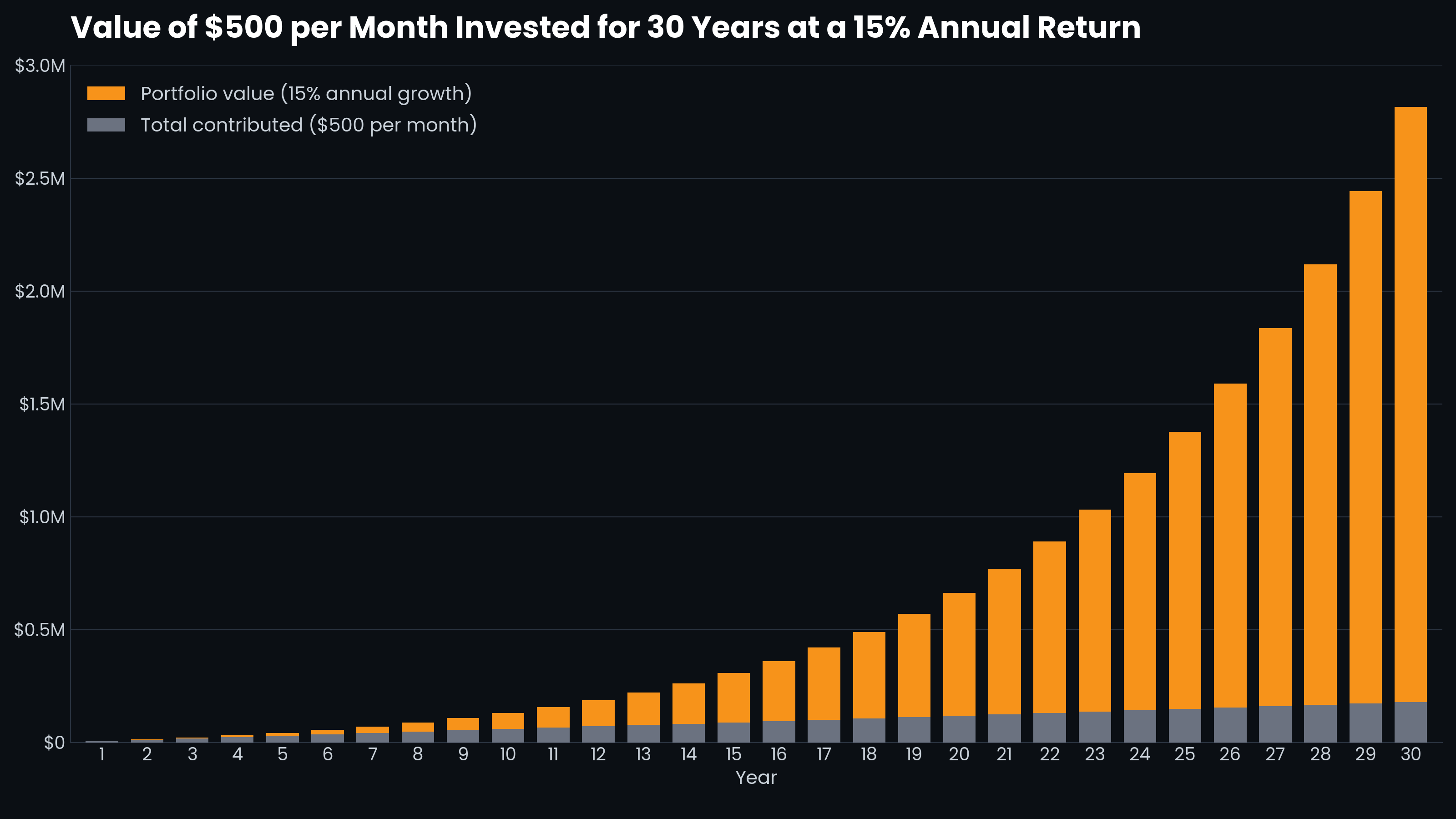
If you buy $500 of Bitcoin per month, less than most people pay in rent, and Bitcoin compounds at 15% per year for 30 years, you end up with about 0.39 BTC worth $2.8 million.
A 15% CAGR is far below Bitcoin’s historical average and honestly most of you probably think it’s too bearish. The money supply grows about 7% a year and the S&P 500 does about 10%, so a modest premium on top of that from debasement and continued adoption is very reasonable.
The most interesting development in Bitcoin over the past two years is bonus depreciation. Buy Bitcoin miners and you can deduct 100% of the purchase against your active income in a single tax year. Spend $50,000 on machines, offset $50,000 of income. That’s capital you would have sent to the IRS turned into Bitcoin instead.
To earn the ~$500 of Bitcoin per month in the example above, you need less than $15,000 worth of mining equipment.
If you want to see the numbers for yourself and learn how to turn you 2026 taxes into Bitcoin, download Blockware’s free Bitcoin mining guide here.

Not tax, legal or investment advice. Projections are model outputs and depend on Bitcoin price, network difficulty and uptime.