


Our friends at The Bitcoin Way put together a self-custody guide which covers everything you need to know. Download the free guide to learn how you can secure your Bitcoin stack safely and sovereignly.

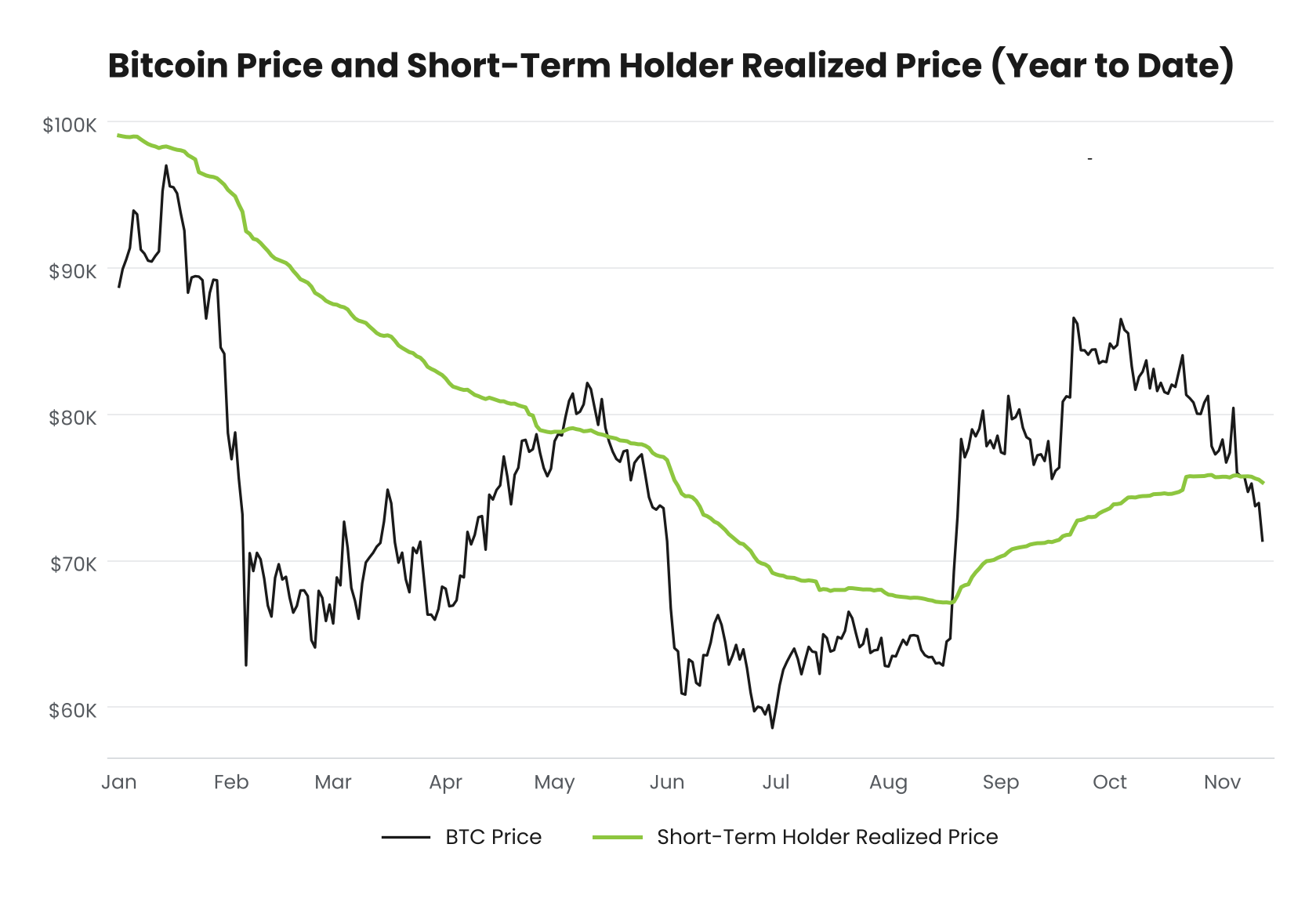
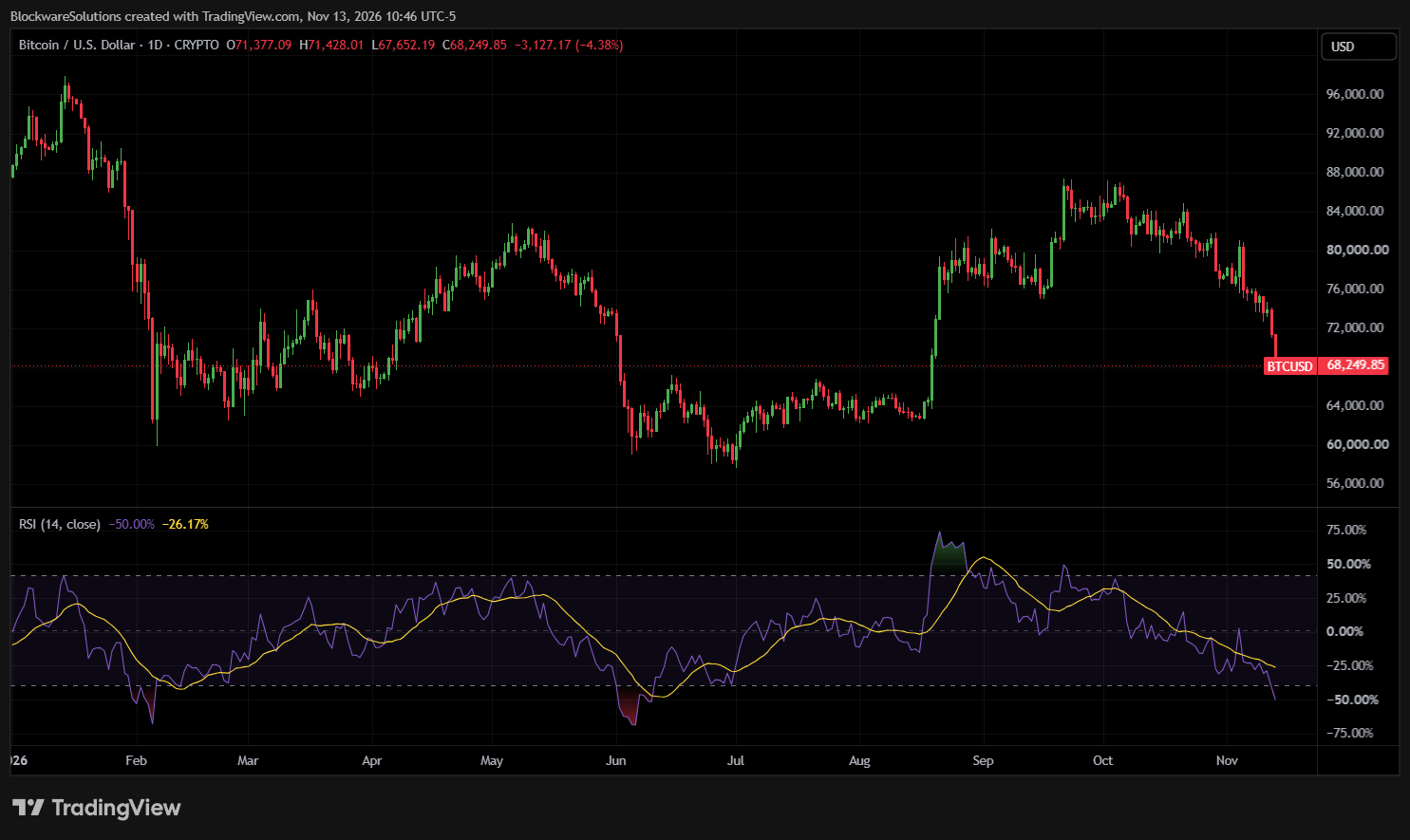
After losing support at the Short Term Holder Cost Basis Bitcoin has, expectedly, taken a dip lower; falling below $70,000. This move down has BTC entering “over sold” territory on the Relative Strength Index for the 3rd time in 2026; both previous instances proved to be local lows.
With the most important support level now lost, our base case is for BTC to trade range-bound between $60,000 & $70,000 to close out the remainder of the year. Widespread macro uncertainty around inflation and interest rate policy coupled with the political uncertainty of the lame duck period leaves little room for potential short-term bullish catalysts. That being said, as some of the charts below demonstrate, this an incredible opportunity for long-term investors to stack Bitcoin at highly discounted prices.
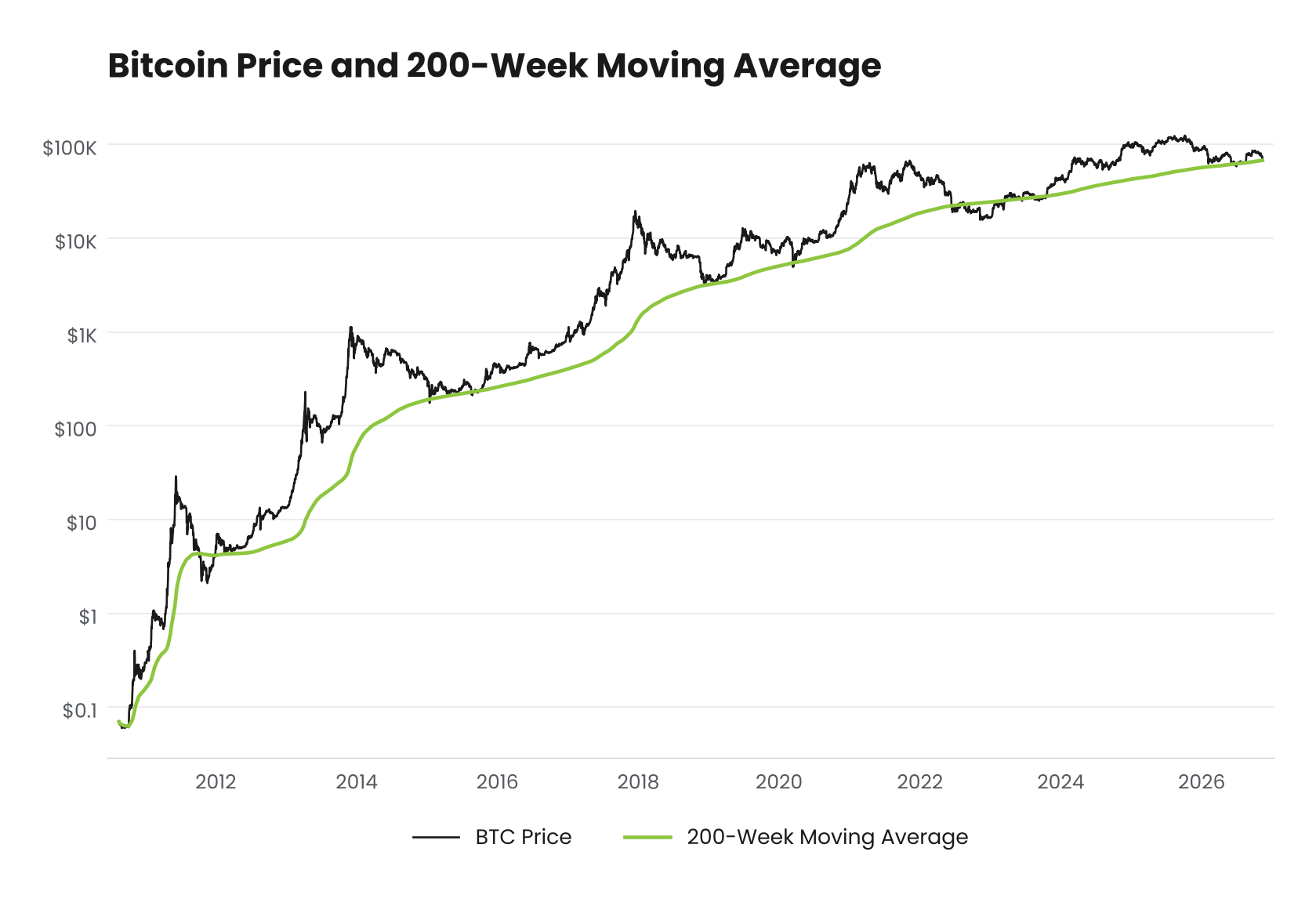
While RSI measures “oversold” vs “overbought” on a shorter time frame, many long-term value indicators are flashing; the most important of which is the 200 Week Moving Average. BTC treaded around this level all year long; historically, it’s only fallen below a handful of times.
On days where BTC closed below the 200WMA, the median return over the following 24 months is ~323% (excluding 2010 & 2012 from the calculation as there were not yet 200 weeks of data). A continuation of this trend would put BTC at ~$280,000 in two years based on the current price of ~$68,000.
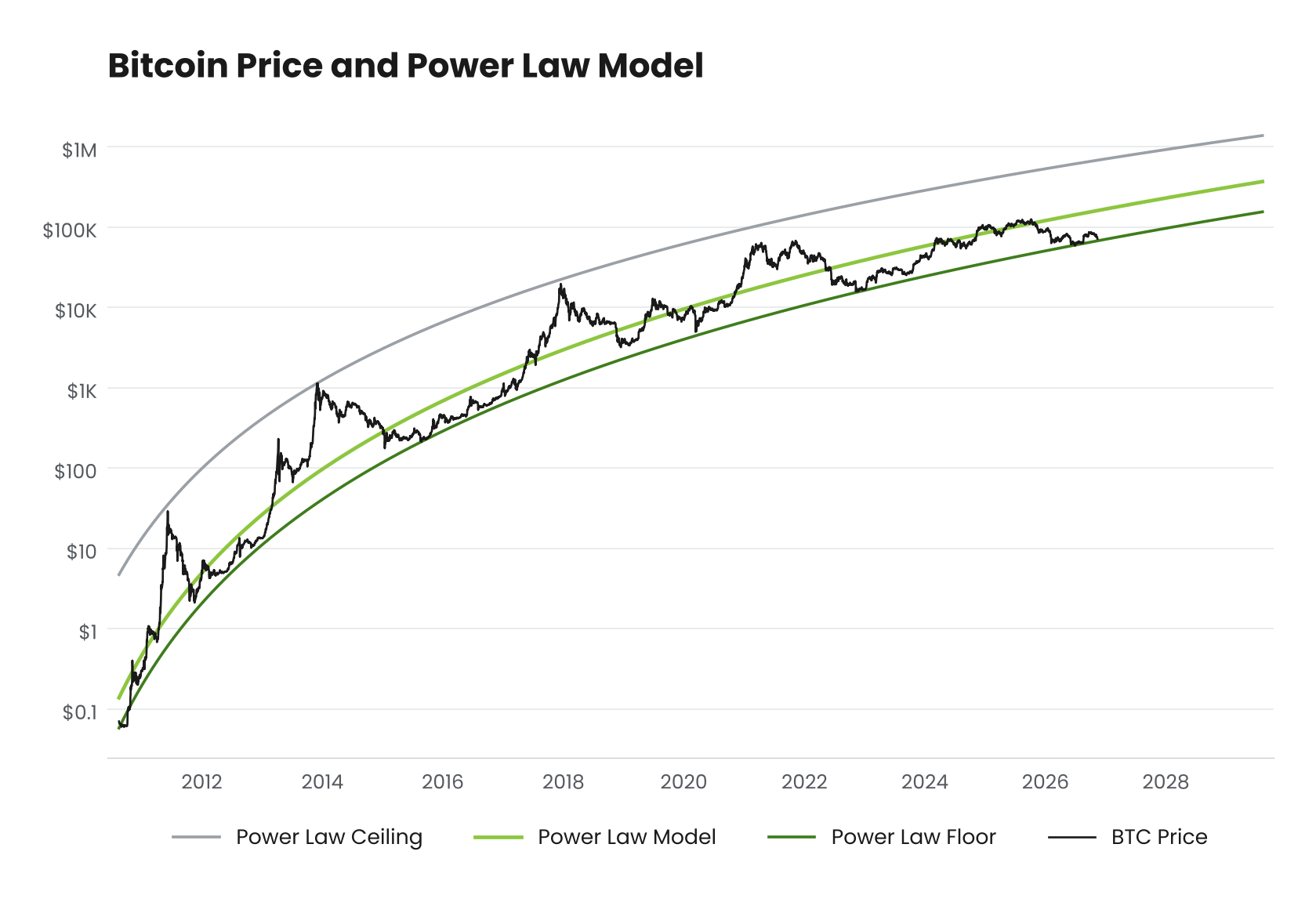
Bitcoin has also reached the power law floor price for the second time this bear market. The power law models Bitcoin’s price as a function of time alone: price equals a constant multiplied by the number of days since the genesis block raised to roughly the 5.8 power, which plots as a straight line when both price and time are on log scales.
The model line is the regression fit through Bitcoin’s full price history and the floor sits at a fixed 42% of that line. Bitcoin has closed below this line on only four days since 2010.
Since 2013, buying Bitcoin on any day it traded below the model line has produced a median return of 137% over the following 12 months and 340% over the following 24 months, with 98% of those days positive two years later, compared to a median 12-month return of -19% on days it traded above the line.
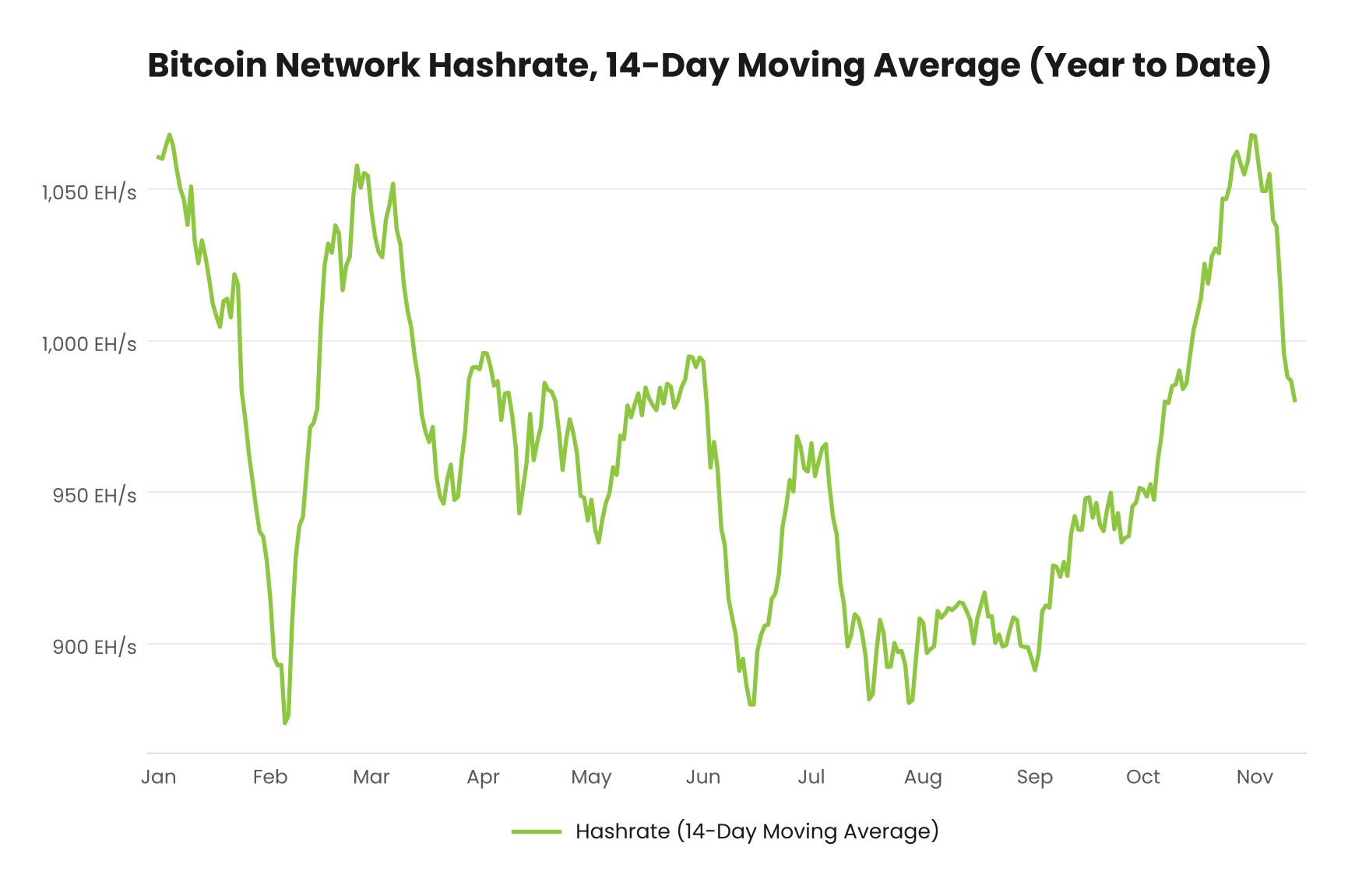
Bitcoin Miners have reacted swiftly to this pullback in price; with nearly 100 EH/s coming off the network over the past two weeks. This bears a strong resemblance to both the February and June local price lows. The reflexivity of hash rate is much stronger to the downside; it’s far easier to unplug miners than it is to build new infrastructure to support incremental hash rate.
The incoming negative difficulty adjustment of ~8% will help miners offset some of the loss in revenue as a result of a lower Bitcoin price.
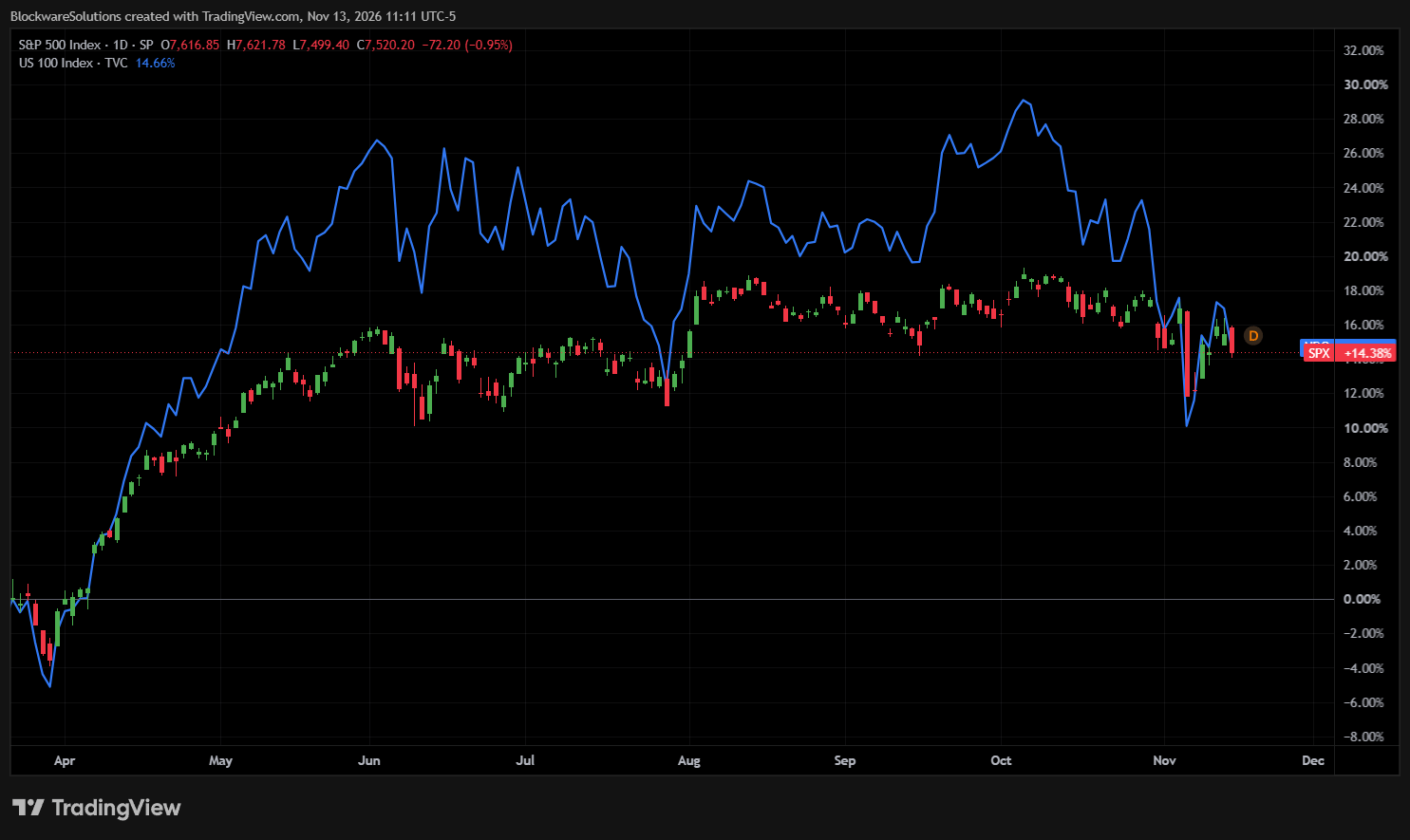
Weakness across US Equities persisted for another week, with both the S&P & NASDAQ putting in lower highs. Widespread uncertainty about Ai regulation, a change in leadership at NVIDIA, a global Microsoft outage, and a hotter than expected wholesale inflation print gave investors plenty of reasons to take risk off the table.
The NVIDIA news matters most, because Jensen Huang’s resignation removes the face of the Ai trade at the exact moment the market is questioning how the buildout gets financed. With the largest company in both indexes now run by an interim CEO, the burden of proof sits with the bulls, and until the S&P and NASDAQ reclaim their prior highs, the path of least resistance remains sideways to lower.
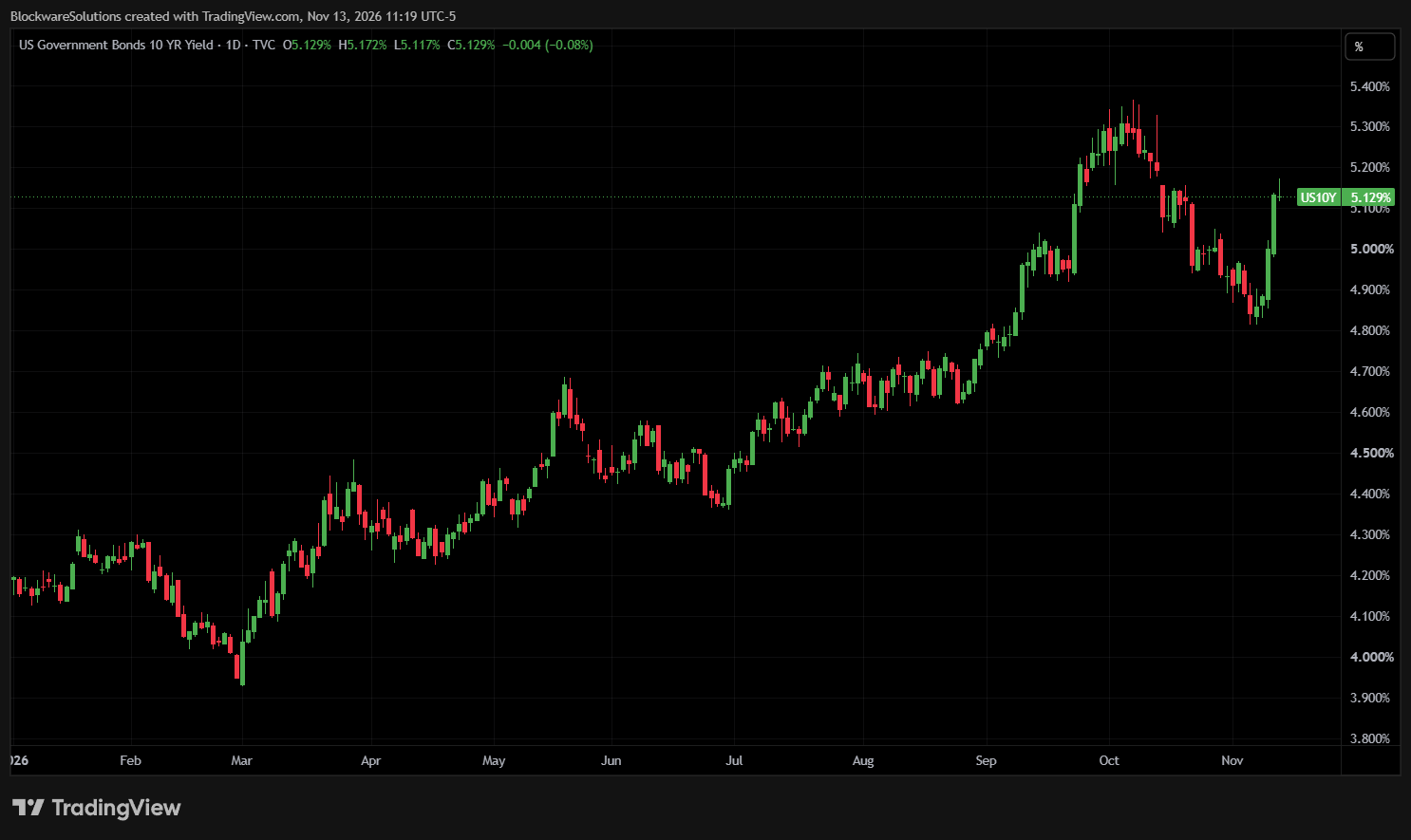
BTC and stocks have taken a beating and bonds haven’t fared much better; it’s been a brutal week across the board. The 10-year yield is up more than 30 basis points over the past five days and is now only another 30 basis point move from a new high. A hotter than expected October CPI print has the market pricing in another Fed rate hike in December.
Bitcoin’s move lower over the past few weeks has pulled miner prices down with it, and machines are now nearly 20% cheaper than they were a month ago. That makes this one of the better entry points of the year for hosted mining, since you are buying the hardware at a lower price while still writing off 100% of the cost against this year’s income. Blockware sources, hosts and operates the machines for you, and the Bitcoin they mine is paid out to you every day.
Dip buying opportunities like this only show up for Bitcoin every four years. Don’t miss this opportunity.
→ Schedule a free consultation at blockwaresolutions.com/info
