


Bitcoin is down 40% over the past 12 months.
Surely this has been a bad time to be a Bitcoin miner… right?
Wrong.
Bitcoin Mining is not a short-term bet on BTC price action. That’s what IBIT 0.00%↑ options are for.
Bitcoin mining is a Tax-Efficiency and Dollar Cost Average strategy.
It’s purpose is to build a BTC position over a long-period of time in the most tax and capital efficient way possible.
In this newsletter we examine the past twelve months of a hypothetical mining operation:
$300,000 per year earner living in NYC (32% Federal Tax Bracket)
10x Antminer S21 XP (2,700 TH) at ($7,020 per machine), hosted at $0.07/kWh, online July 6, 2025.
Monthly power costs paid out of pocket (to resemble a “DCA” strategy).
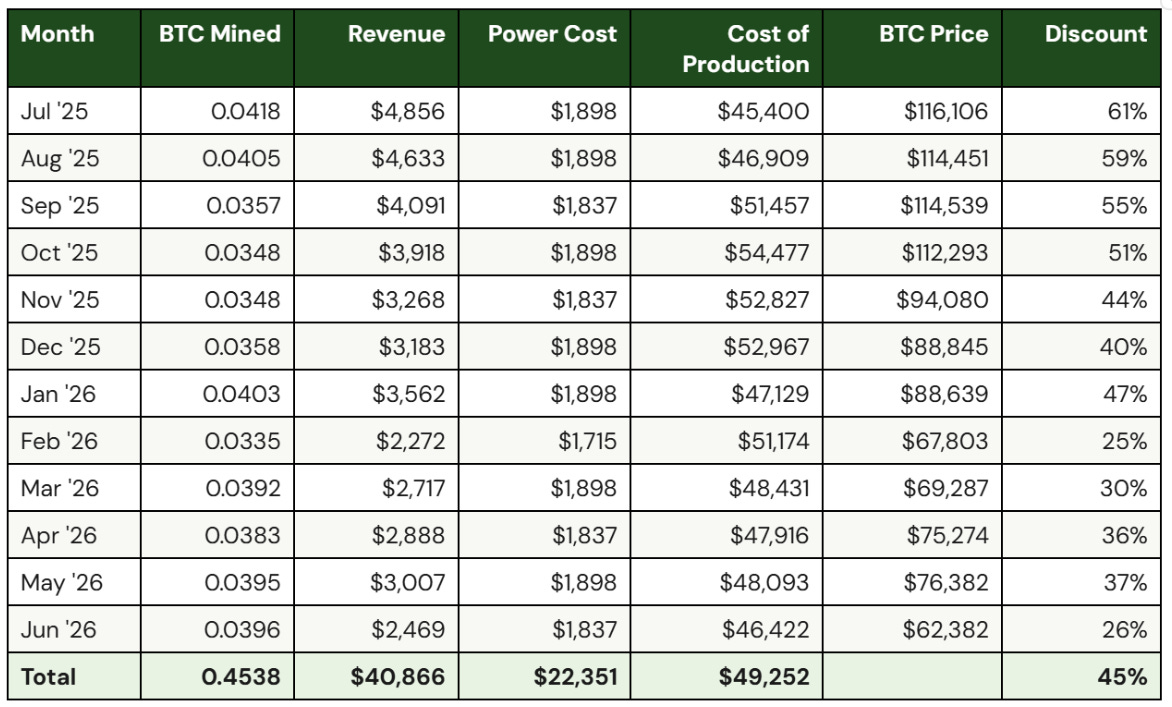
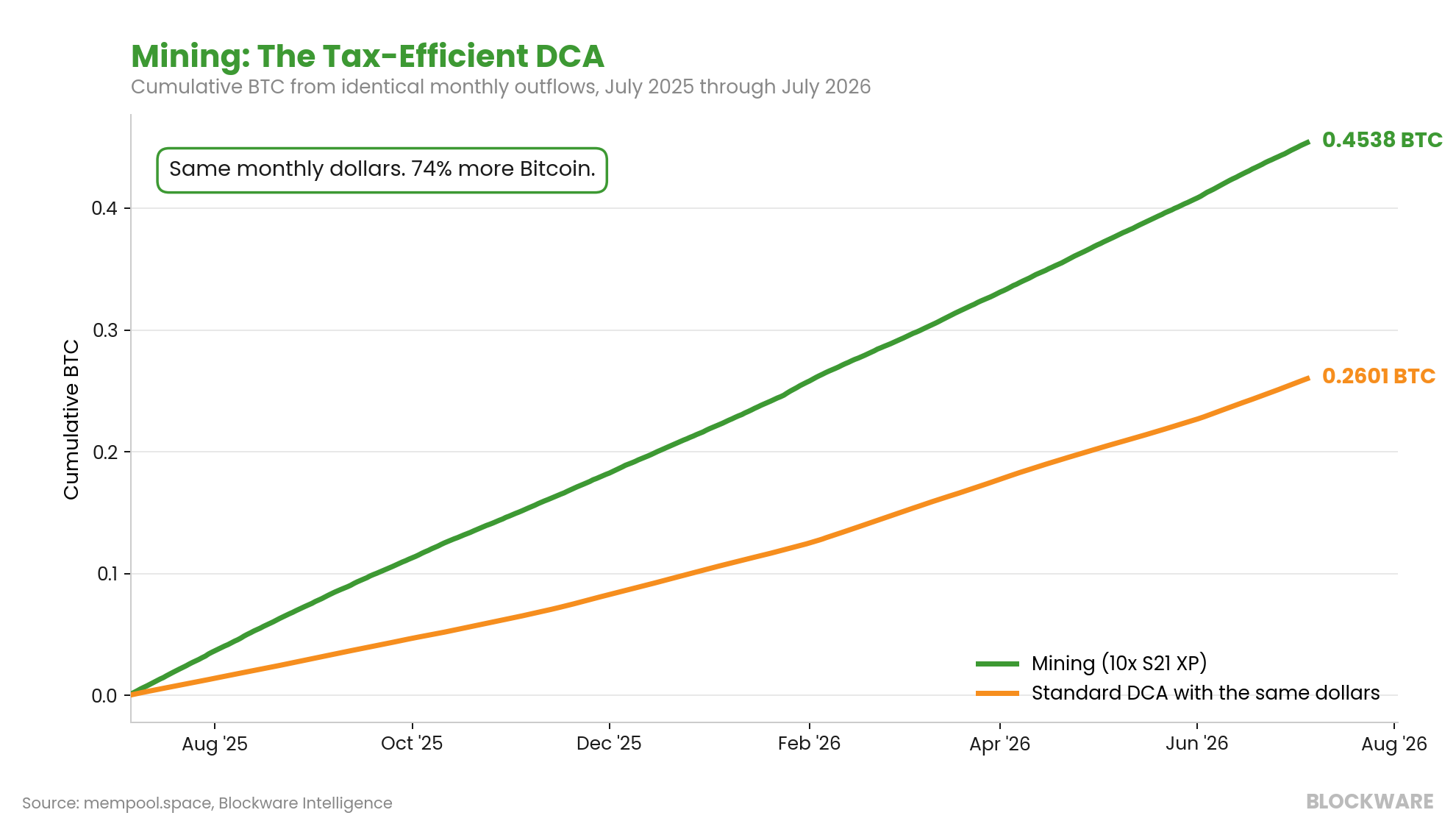
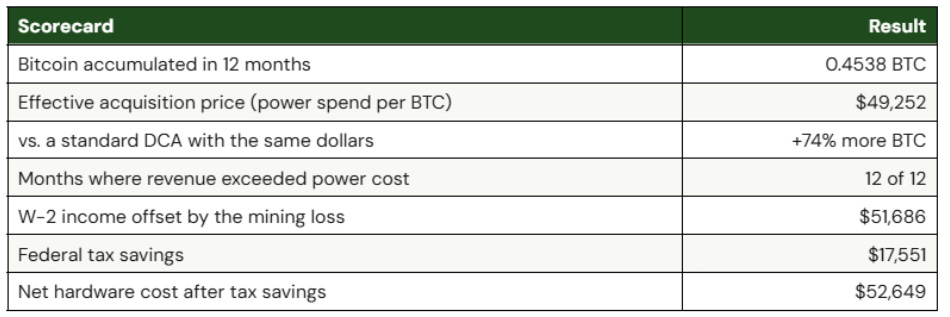
0.4538 BTC accumulated in 12 months
Effective acquisition price: $49,252 per BTC on power spend. Spot averaged $90,227.
74% more Bitcoin than a standard DCA spending the same amount per-month.
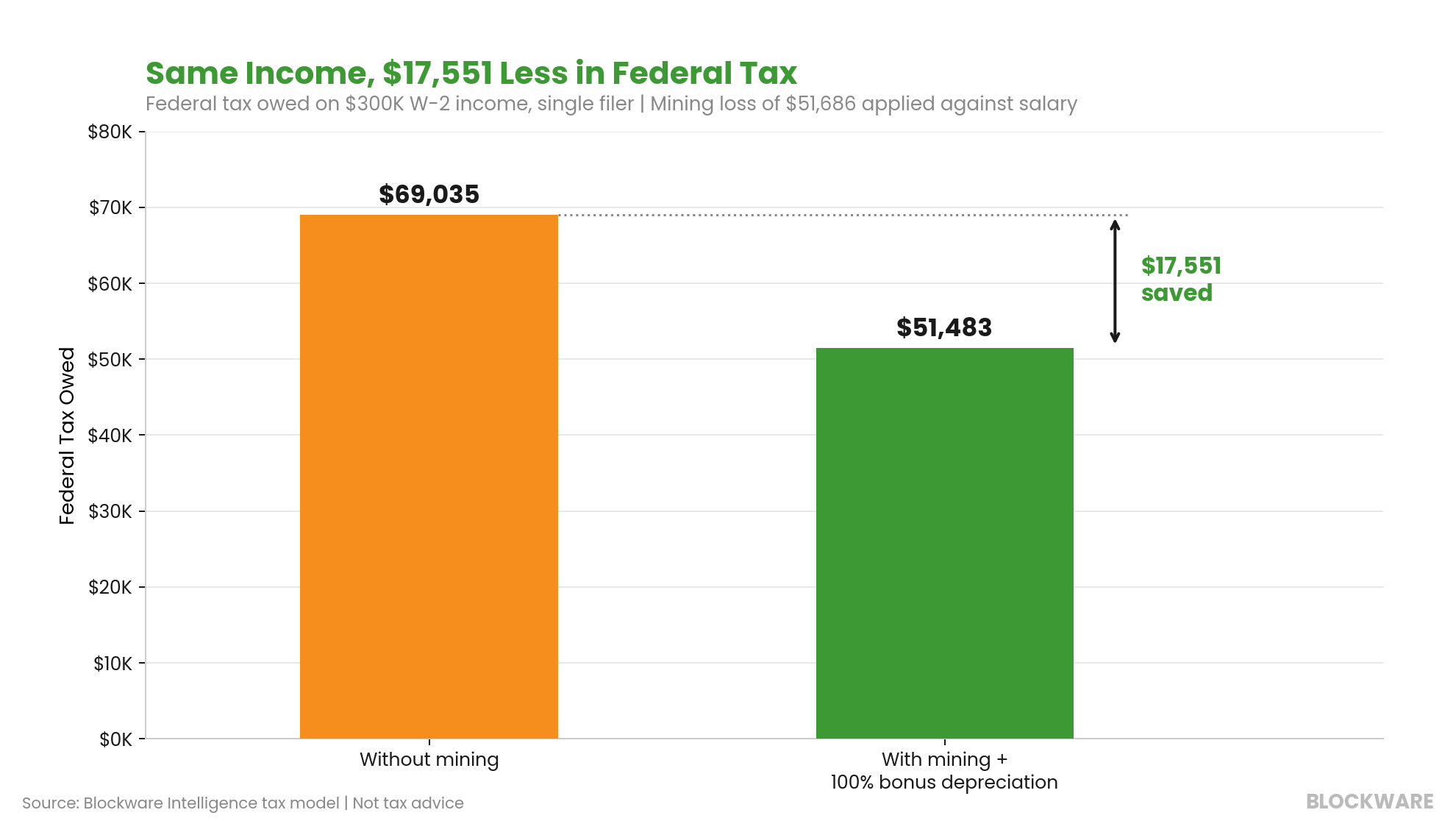
$17,551 in federal tax savings
Machines out-earned their power bill in all 12 months. The position funds itself if the miner ever wants it to.
The Strategy
Bitcoin mining is a dollar cost average program with two upgrades. The client deploys capital monthly, exactly like a DCA. The difference is what the dollars buy. A DCA buys coins at spot. A miner buys power, and the machines convert that power into coins at a steep discount to spot. And unlike exchange purchases, the capital is deductible: 100% bonus depreciation on the hardware under §168(k), electricity expensed as it’s paid.
This is a long-term treasury-building strategy. The price of Bitcoin along the way doesn’t change the plan. It only changes how cheaply the position gets built.
Steady Accumulation
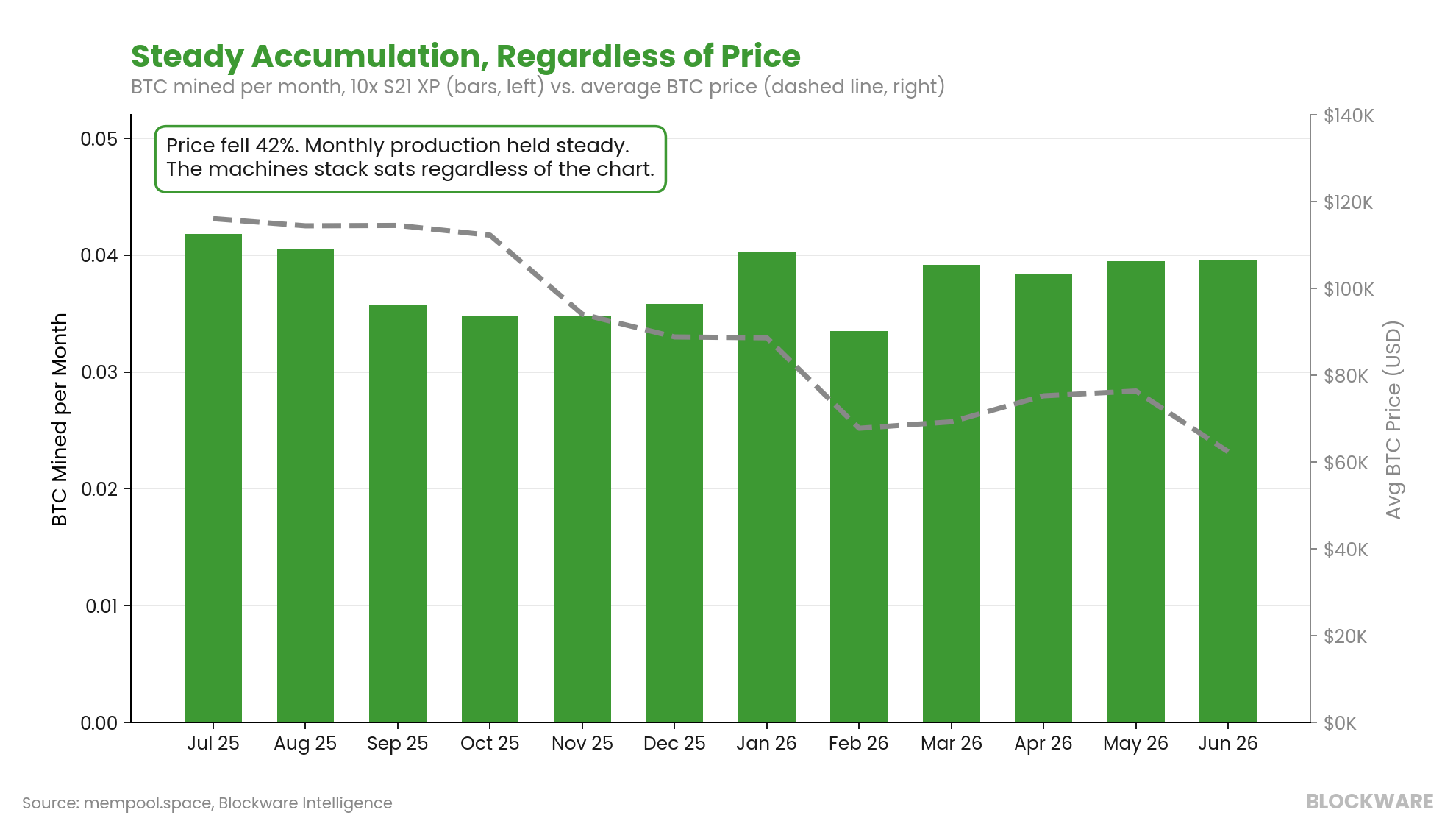
Over the twelve months ending July 5, 2026, the fleet produced 0.4538 BTC. Monthly output stayed in a tight band around 0.037 BTC while price fell 42%, because production depends on hashrate share, not price. Revenue exceeded the power bill in every single month.
The Tax Advantage
Our model client is a single filer in New York earning $300,000 in W-2 income, running the operation as an active trade or business with material participation. Deductions totaled $92,551. That fully sheltered the mining income and left a $51,686 loss that offset salary.
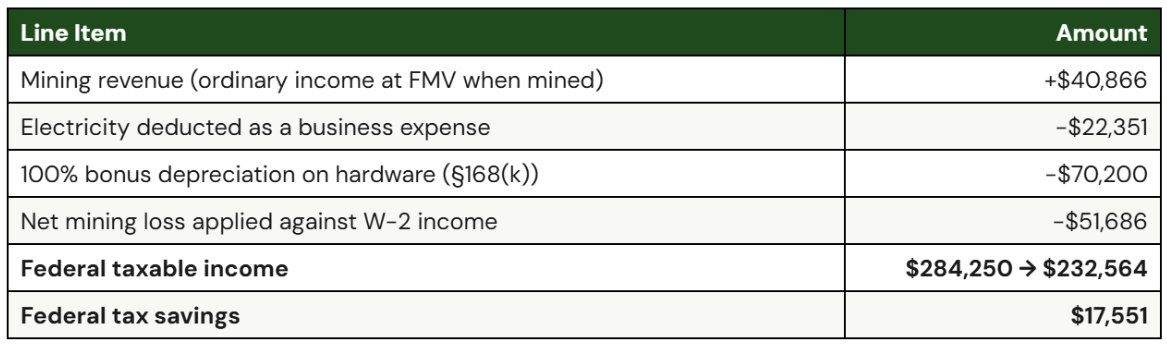
New York decouples from federal bonus depreciation, so the state return depreciates the hardware over five years instead ($14,040 in year one, the rest carrying forward). The headline savings are federal. Mined coins also take a cost basis equal to their value when mined, so most of the eventual upside has a stepped-up starting point.
Same Dollars, More Bitcoin
Take the exact power dollars this client spent, $61.24 per day, and run them through a standard DCA instead. The DCA ends the year with 0.2601 BTC. The machines ended it with 0.4538 BTC. Same outflows, 74% more Bitcoin, plus hardware that’s still producing.
Mining turns a monthly power bill into a growing Bitcoin position and a smaller tax bill. You build a long-term treasury at a discount to spot while the tax code funds part of the entry, in bull markets and bear markets alike. See how the numbers work for your situation at blockwaresolutions.com/info.