



Download your FREE Bitcoin self-custody guide from the Bitcoin Way to learn how to secure your stack properly
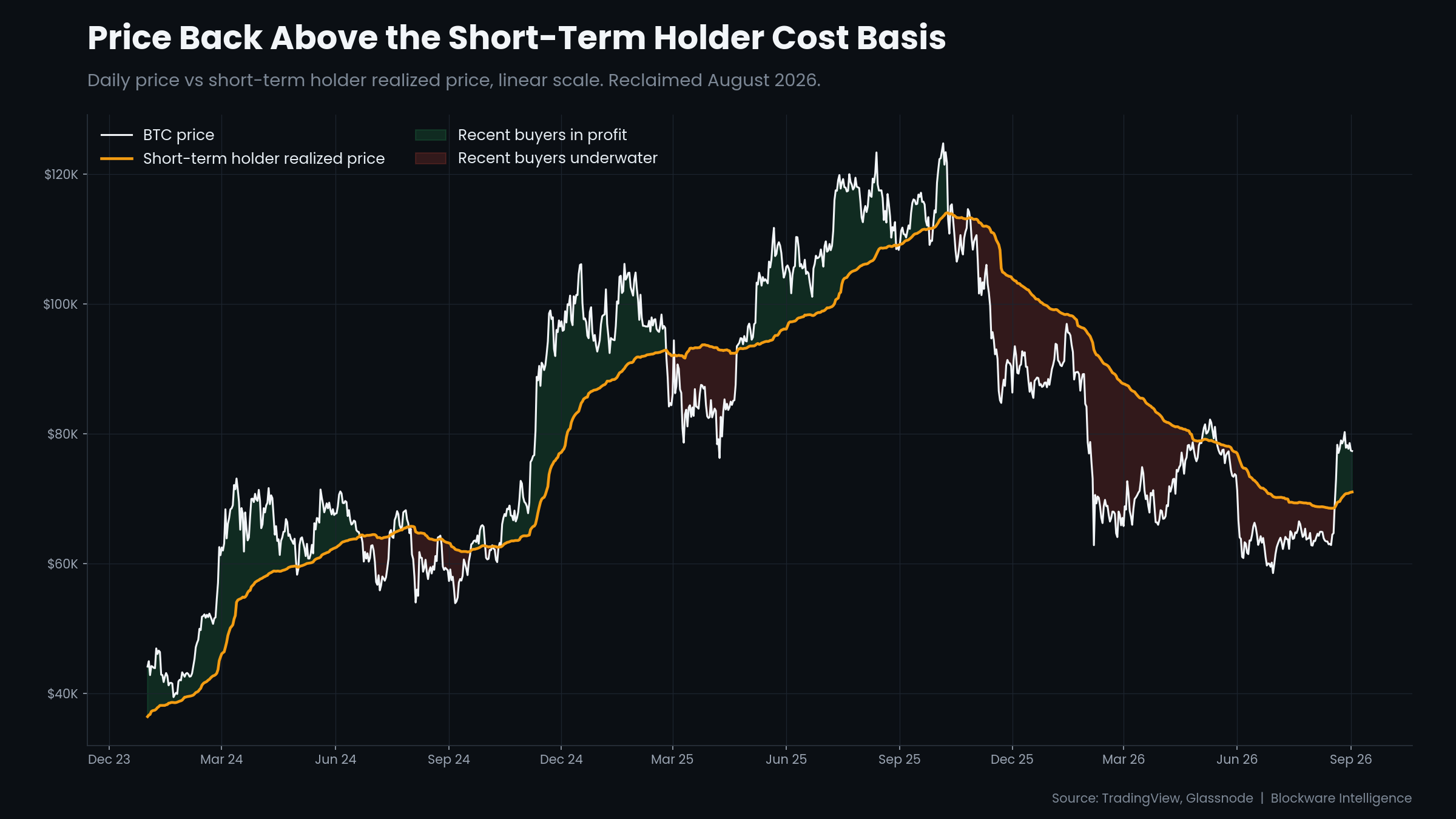
Bitcoin has held it’s recapture of the coveted short-term holder cost basis. A resistance level which, when flipped, has historical signaled the transition from bear market to bull market.
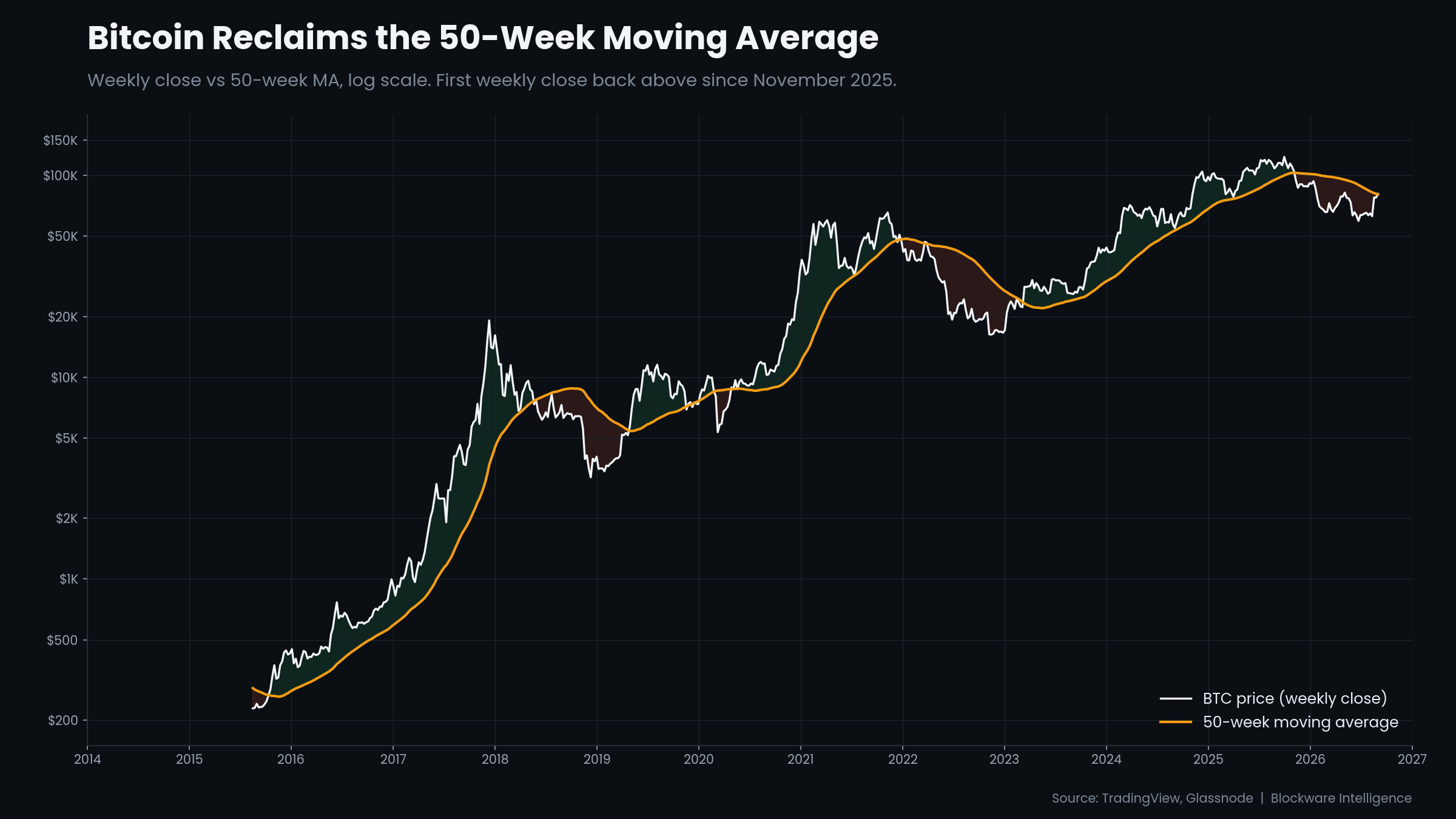
The 50-week moving average is another level that has accurately dictated Bitcoin’s momentum / trend. Re-taking of this level has historical signaled a shift from bear to bull; and this is what is happening right now for Bitcoin.
Regular readers know that “narrative follows price”; not the other way around. Price follows supply & demand; price action dictates narratives and talking points.
One narrative that we expect to resurface over the next few months is the “debasement trade”; a hard money-based investment strategy balancing Bitcoin & precious metals. Ultimately, this is the foundation of our long-term Bitcoin thesis: an asset with a finite supply will go up forever when priced in an asset with an infinite supply. Following the mega-stimulus of 2020/21, we entered a new paradigm where this became abundantly clear.
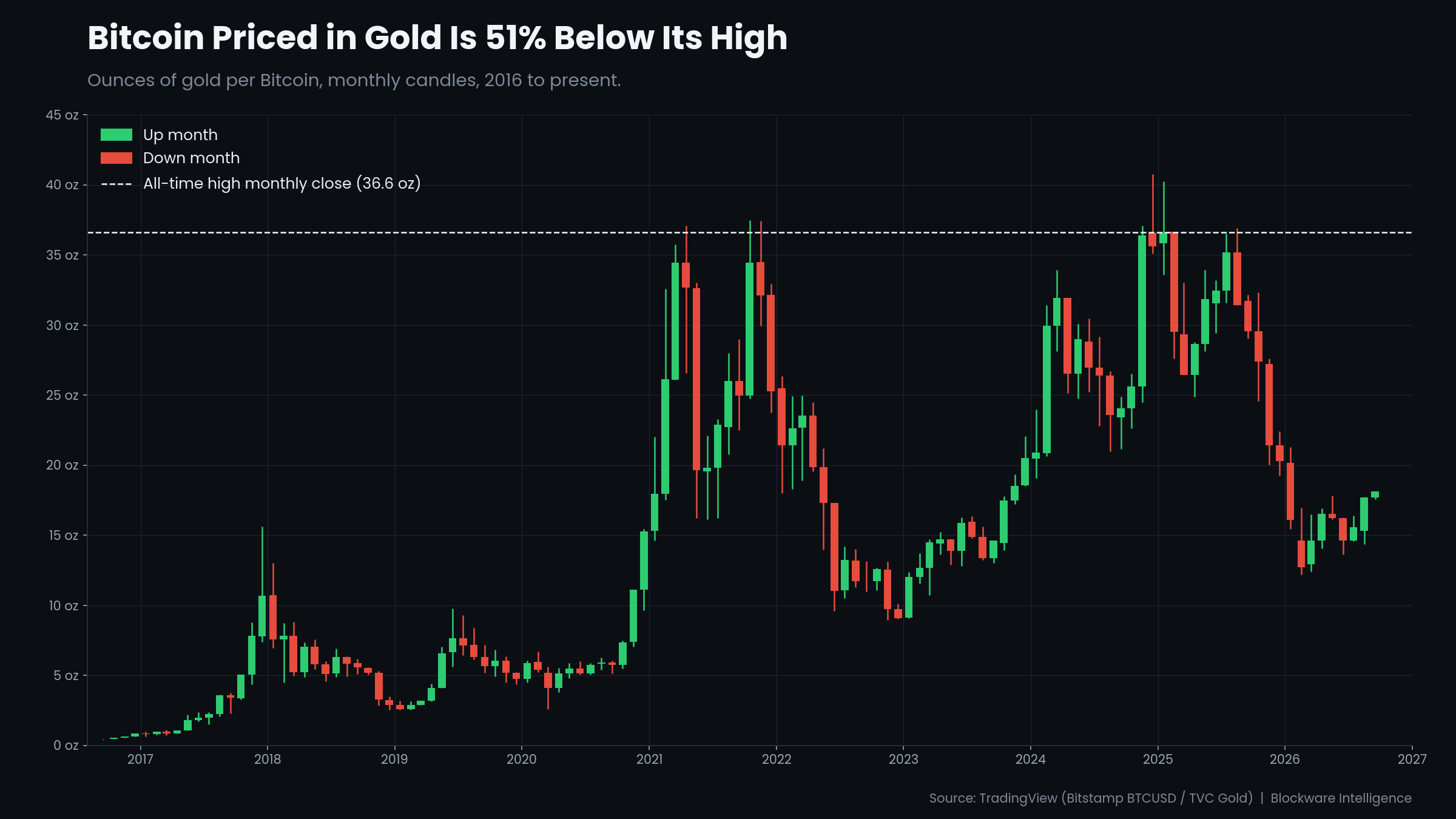
The chart of BTC/Gold since the emergence of this new paradigm is a good reflection of the new reality:
“Risk Off” —> Gold performs well (BTC/Gold declines)
“Risk On” —> BTC performs well (BTC/Gold rises)
As BTC/Gold sits near the bottom of this multi-year channel (with a clear rebound forming), the risk/reward of BTC here is very attractive. BTC is currently trading at ~18 oz of gold. Reaching the all-time high of 40 oz implies a BTC price of ~$183,000/BTC (assuming the price of gold stays at approximately the same level: ~$4,400).
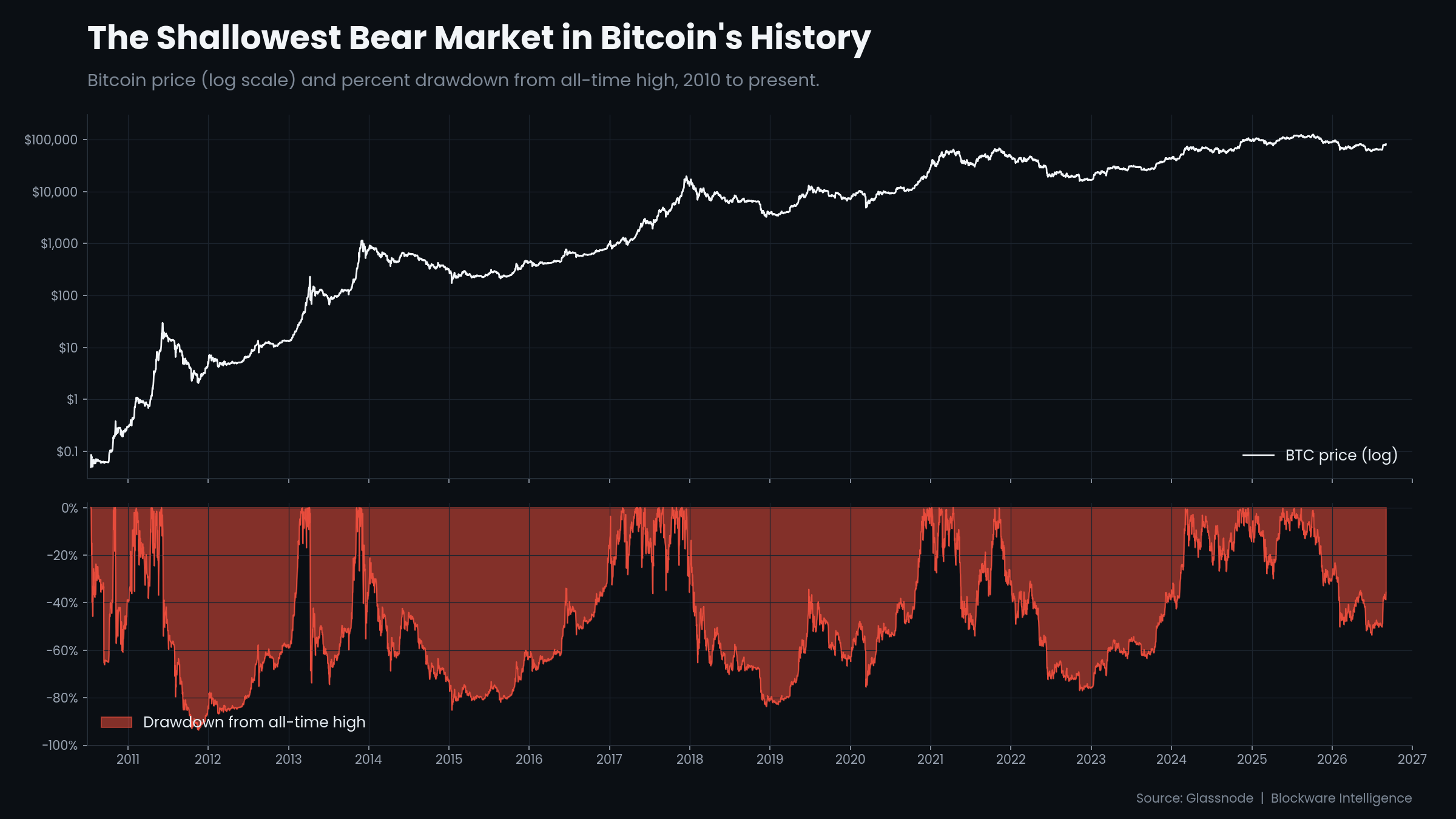
With the bottom forming at a ~50% peak-to-trough drawdown months before the “4-Year Cycle” would predict, Bitcoin has slayed yet another commonly held dogma; just as the 2022 bear market destroyed the pre-conceived notion that “bear market bottoms are above the previous all-time high.”
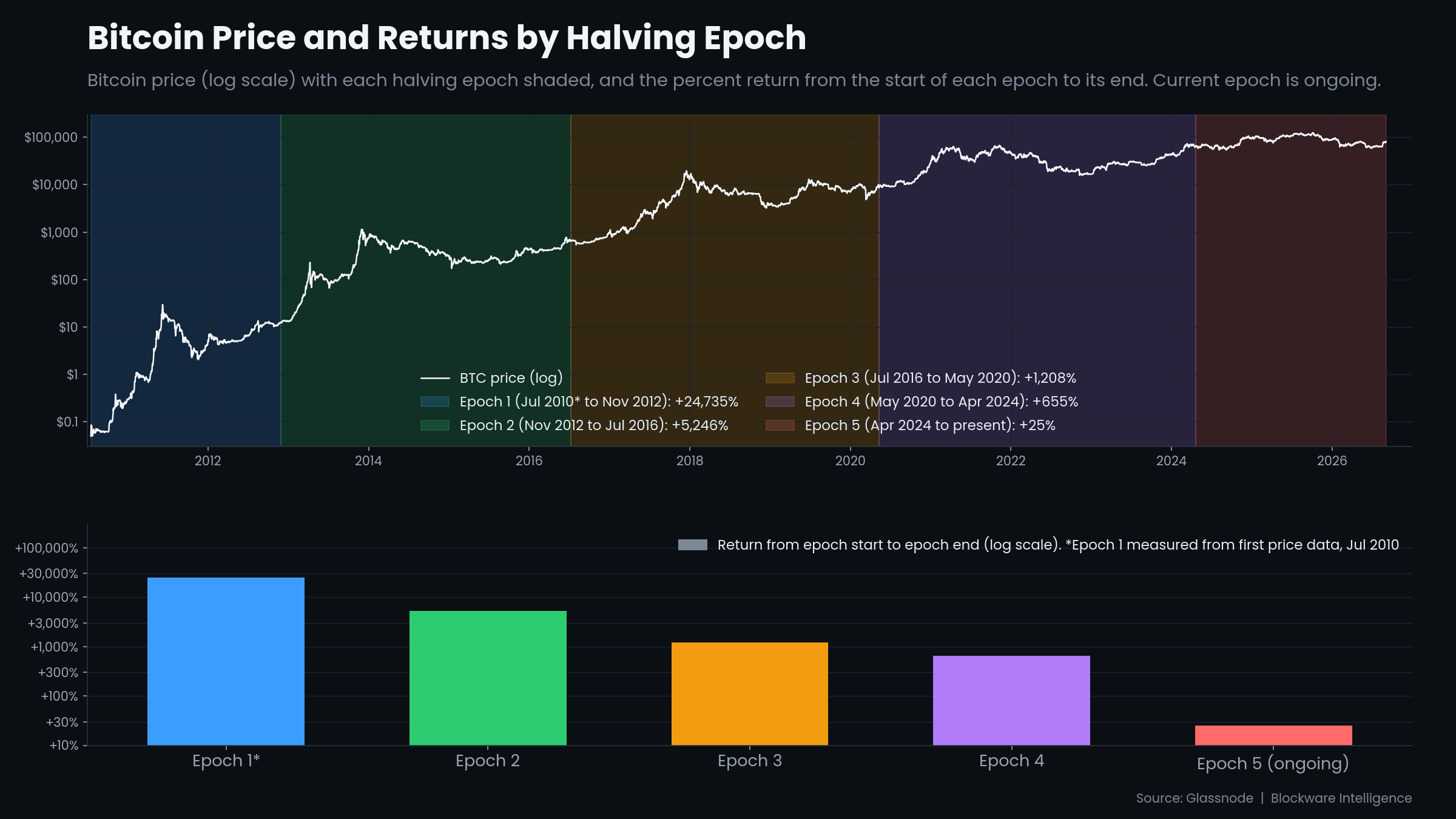
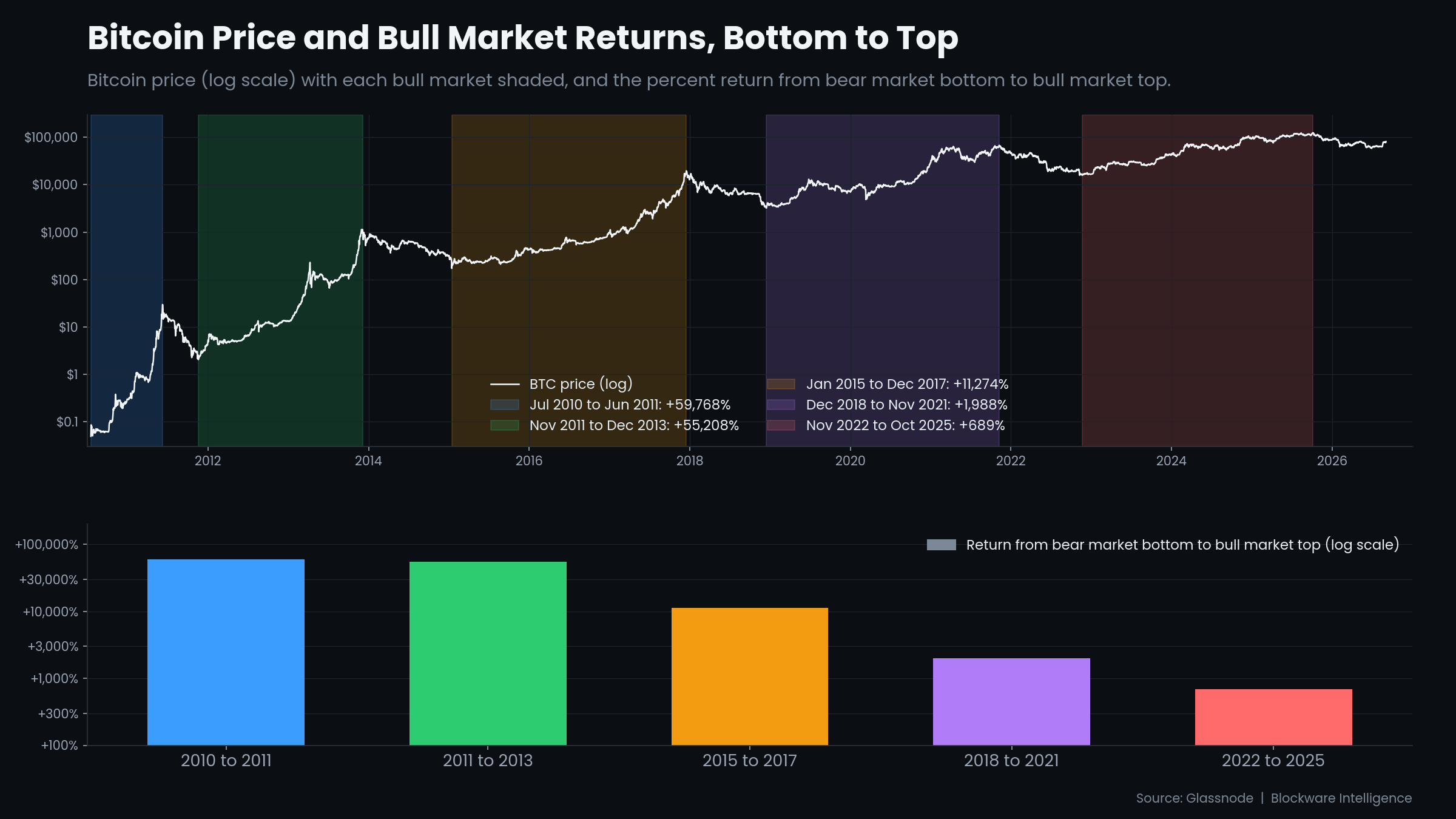
The final dogma remaining in Bitcoin is the notion of “diminishing returns”; each bull market' being smaller than the previous. This is one that makes more logical sense than the others: as an asset grows, exponentially more capital is required to achieve the same % returns. Furthermore, it’s essentially impossible for Bitcoin to repeat the multi thousand % gains from the early years.
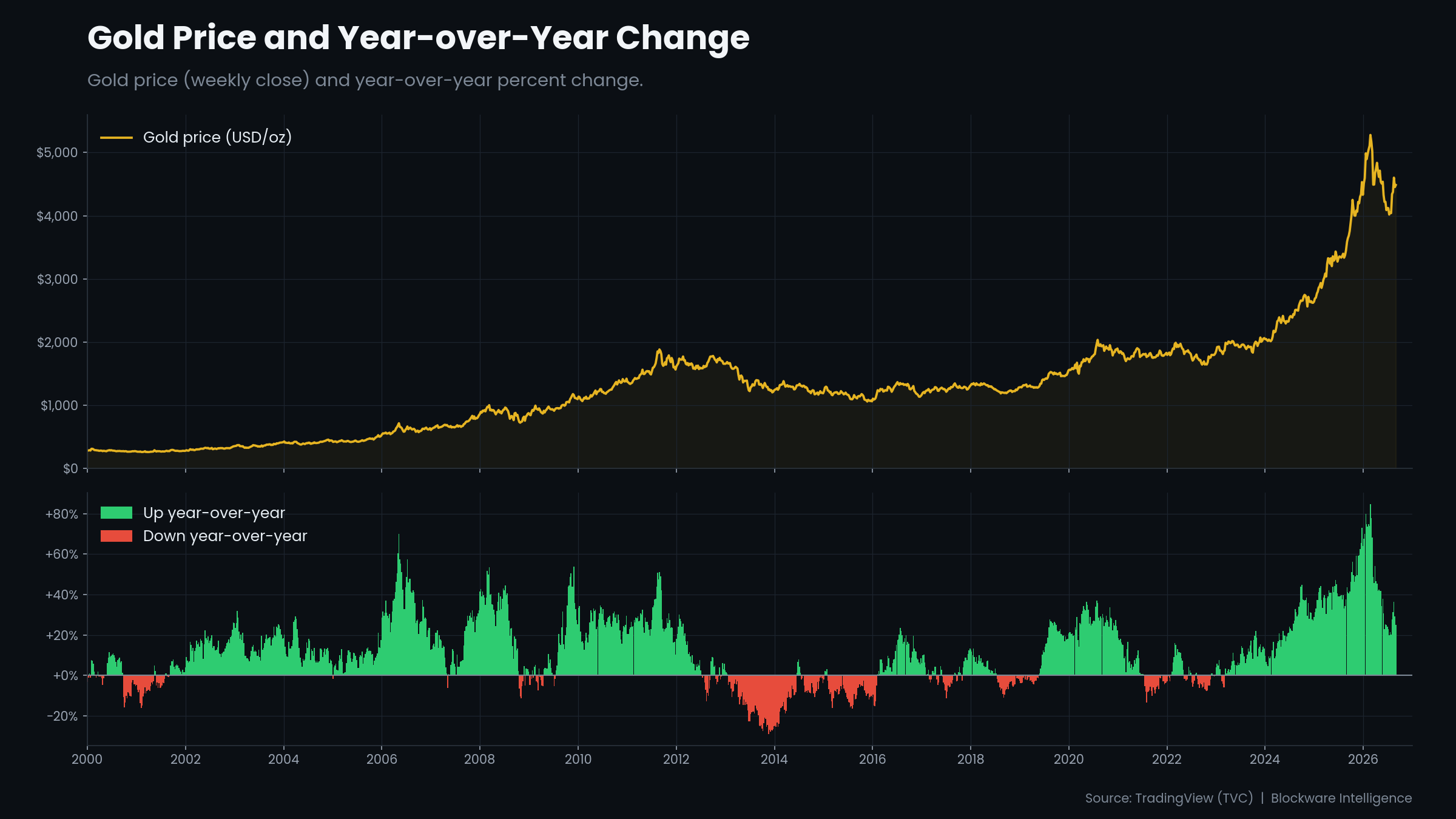
However, it’s not out of the realm of possibility for future Bitcoin bull markets (including the one we are now in) to outperform the 2024 or 2021 bull markets. Looking at the recent performance of gold is a good indicator of what is possible. At it’s peak in Q1 of this year, Gold, with a market cap 10x larger than Bitcoin, was up ~90% on a year-over-year basis; having added ~$17 trillion in market cap over the prior 12 months. And on a trailing 2-year basis, it was up ~168%. If gold is capable of such out-sized returns, then don’t assume Bitcoin can’t do the same or more if the conditions are right.
Albeit, breaking the trend of “diminishing returns” is still unlikely; and it depends on your starting measuring spot: bear market bottoms or the beginning of halving epochs. That being said, Bitcoin started this halving epoch at $63,000, during the prior epoch it posted 655% returns, if does half of that during this epoch that would be a 327% return and the price would reach $269,000 in 2028.
We’re publishing a video later today on the Blockware YouTube channel (at Noon EST) where we break down the potential catalysts for such a rally in more detail. Make sure to subscribe and click the notification bell so you don’t miss it!
Do you want to pay less taxes and stack more Bitcoin?
Mining hardware qualifies for 100% first-year bonus depreciation under Section 168(k), so the purchase is deducted against income in year one while the machines produce Bitcoin every month afterward.
Reach out to sales@blockwaresolutions.com or download our free mining guide at https://blockwaresolutions.com/info/ for more information.

The mining CTA raises a useful distinction: a tax deduction can change first-year cash flow, but it does not make weak mining economics disappear. The operating case still needs power price, delivered hashrate, uptime, cooling, pool fees, and current difficulty modeled separately. That discipline matters at industrial scale and for small home hardware alike.