Buying and holding Bitcoin is a position, not a plan.
The plan of the wealthy is to build a system around Bitcoin and other assets to create liquidity, produce income, and fund their lifestyle without selling what they own.
October 1 at 6pm EST, Blockware’s partner Mark Moss is hosting a free masterclass to explain his wealth building system. Click here to sign up for free.

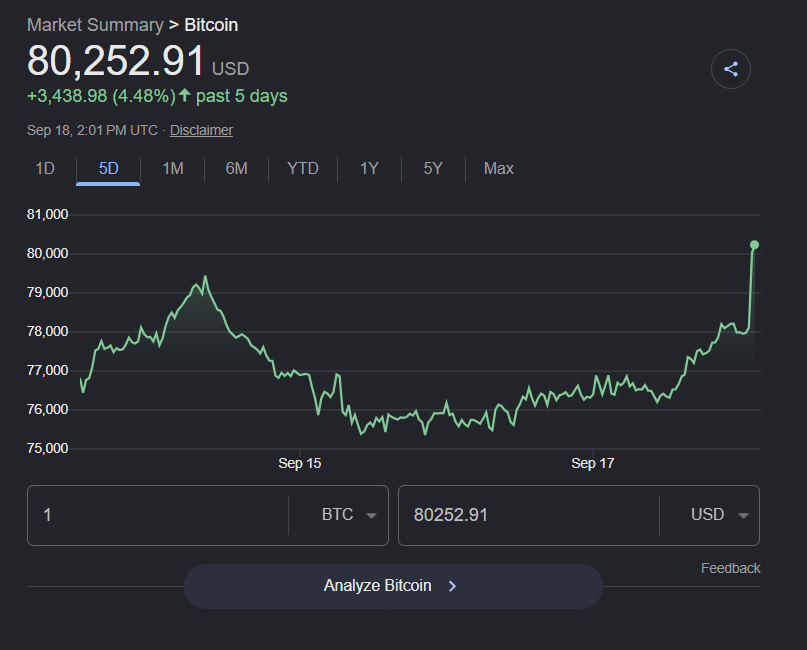
Two pieces of “bad news” hit the market this week but Bitcoin hasn’t budged one bit. In fact, at the time of writing, BTC is up ~5% over the past five days. When objectively bad news isn’t accompanied by negative price action, that’s a strong sign that sellers are exhausted and we are back in a bull market. This is one of the reasons we repeatedly say “narrative follows price”; not the other way around. Failure of the clarity act plus a 25bp rate hike by the Fed are, on the surface, bearish narratives. Yet, marginal changes between supply and demand are the only thing that truly matters for the price of Bitcoin. And right now the supply / demand dynamics are working in favor of the bulls.
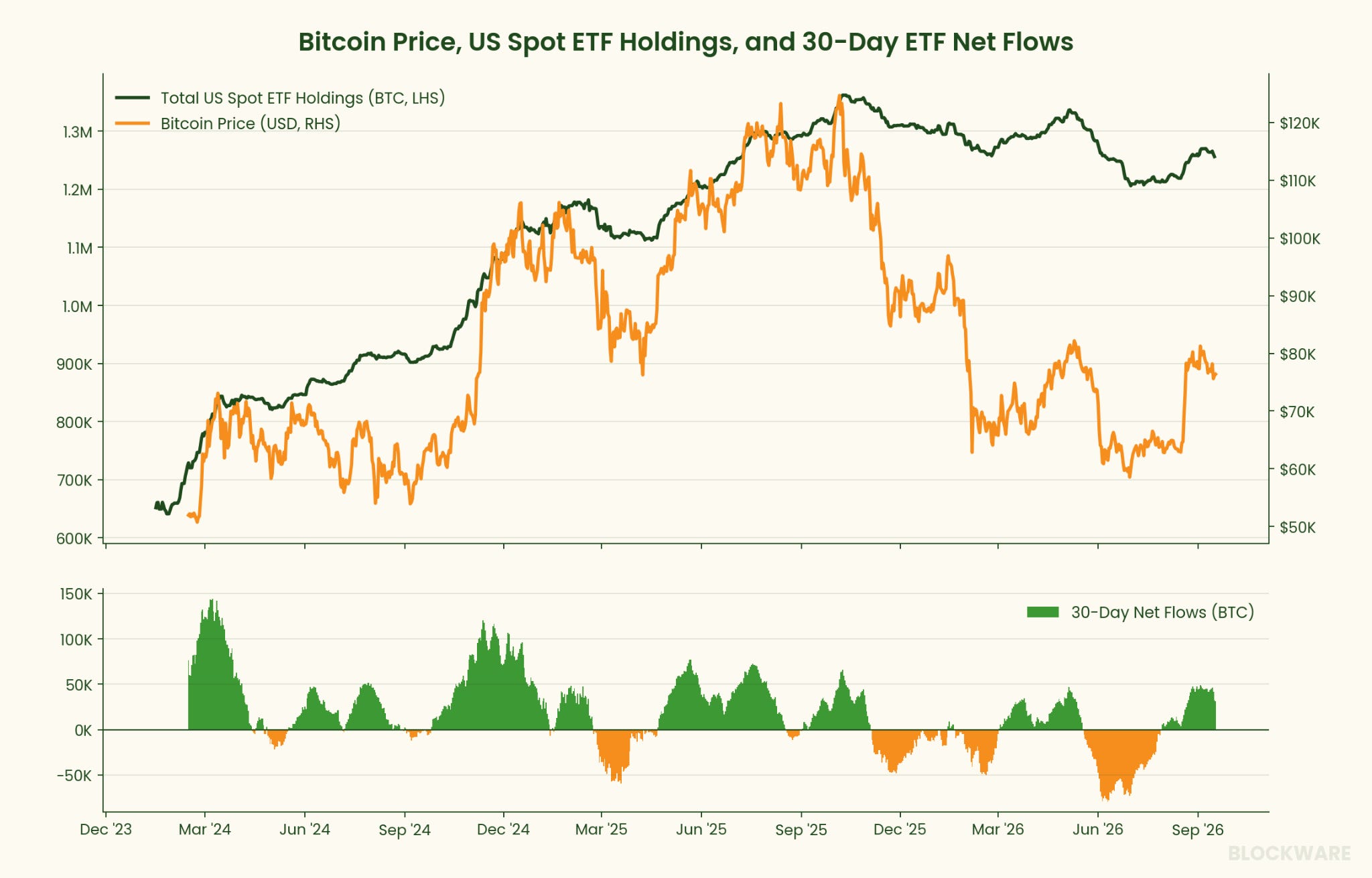
Bitcoin ETF holdings have increased by ~32,000 BTC over the past 30 days; there’s been no distribution / “profit taking” into this higher price range. This marks a sharp reversal from early summer, when the ETFs shed over 70,000 BTC in 30 days as price bottomed. The investors who panic sold the lows are being replaced by buyers stepping in at higher prices, and total ETF holdings now sit above 1.25 million BTC, over 6% of the circulating supply. Institutional demand is back, supply is shrinking, and price is responding exactly how you would expect.
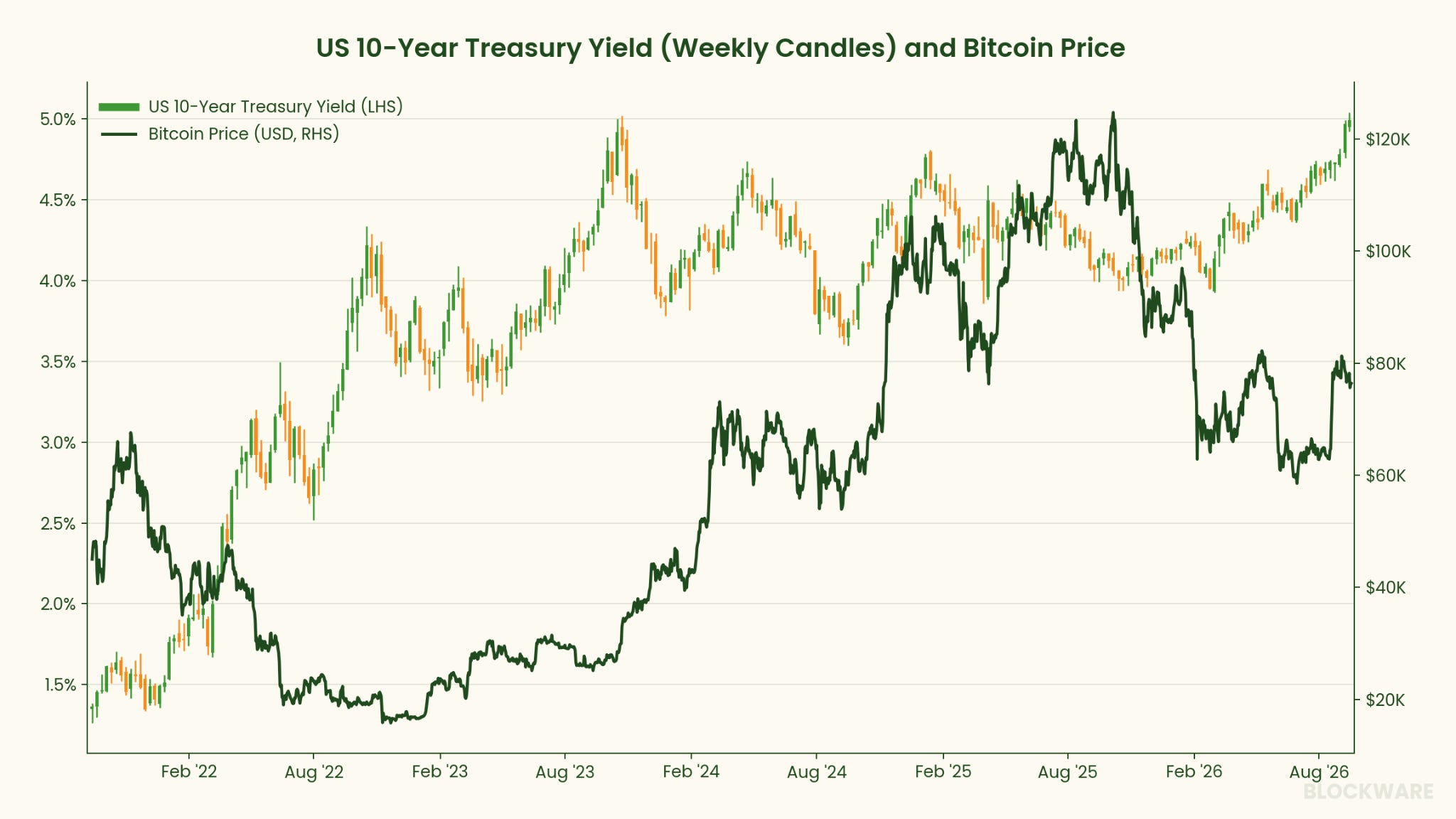
Raising the short-term rate by the Fed unfortunately does nothing to solve the bigger issue: the US 10-Year Treasury is knocking on the door of 5%, its highest level since October 2023. The last time the 10-Year touched 5% was October 2023, and while nothing outright broke, the stress was everywhere: banks were sitting on hundreds of billions in unrealized bond losses, mortgage rates hit 8%, and Treasury auctions started to tail.
That selloff did not resolve on its own. It ended when Secretary Yellen shifted issuance further toward short-term bills, taking supply pressure off the long end. BTC more than doubled over the following six months.
Now, those same short-term bills are rolling over at higher rates today, meaning the situation is worse now than it was 3 years ago. The debt is 20% higher, the interest expense is compounding, and yields are rising in Japan, Germany, and the UK at the same time. The response to bond market stress is always some form of liquidity: adjusting issuance, buybacks, or ultimately the Fed’s balance sheet. Rising long-term yields put a clock on policymakers, and history says that when the clock runs out, they print. Bitcoin will move higher.
After the COLDCARD & Liquid hacks, people are asking non-stop about the future of self-custody. Our friends at The Bitcoin Way are providing answers.
Join them on September 30th for a livestream where they'll explain what you need to know.

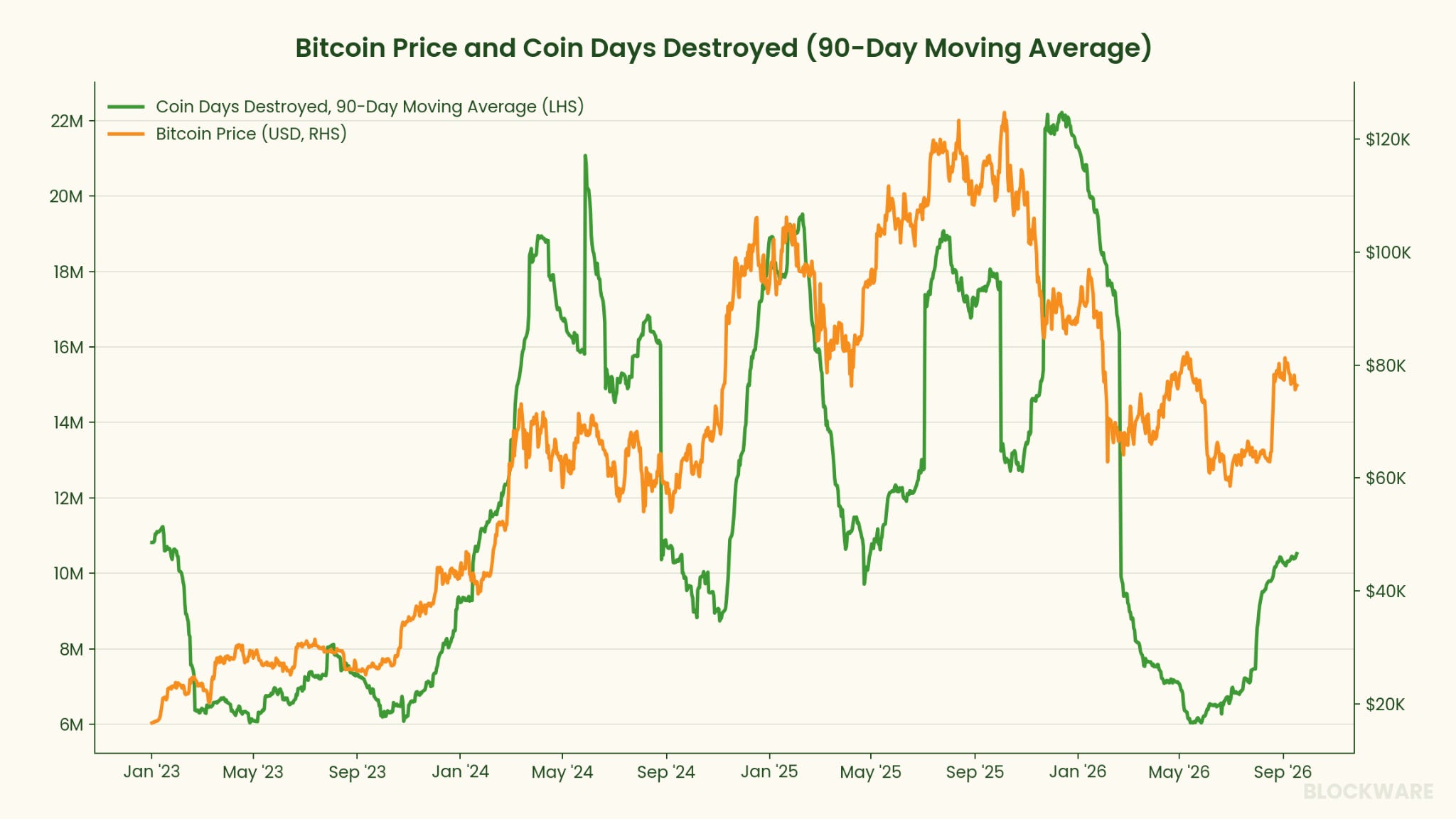
Coin Days Destroyed measures the movement of older coins, and right now it’s telling us long-term holders are sitting on their hands. The 90-day average of CDD sits around 10.5M, well below the 15M+ readings that accompanied every major distribution phase over the past few years: the March 2024 top, the December 2024 push through $100K, and the late 2025 highs. Demand is recovering and not enough old supply is not coming to market to meet it. When rallies occur without long-term holders selling into them, it means the market has to bid for a shrinking pool of available coins. Supply is tight, and tight supply plus returning ETF demand is how legs higher get started.
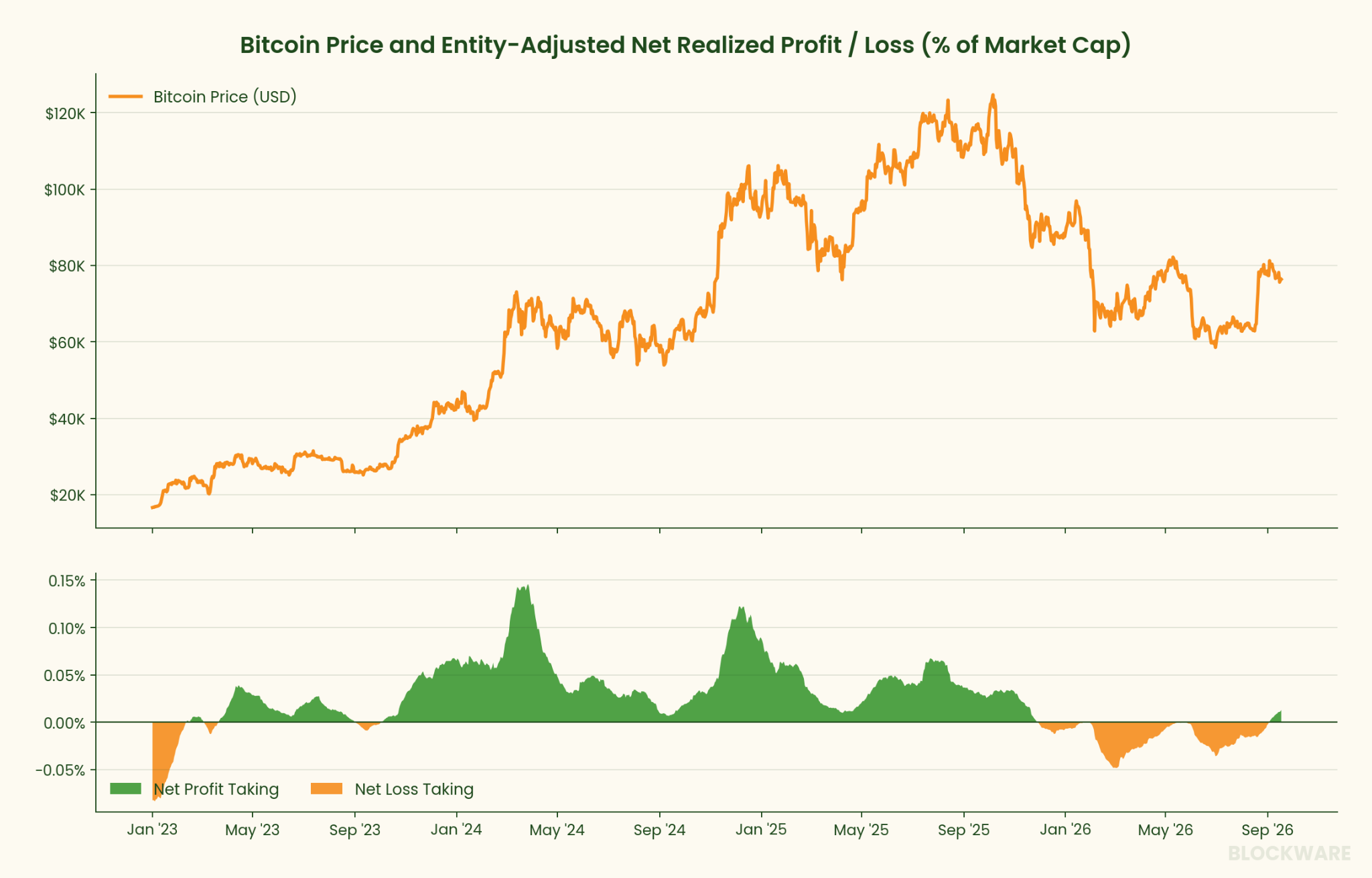
On-chain data confirms the shift in market structure. Entity-adjusted net realized profit / loss measures whether coins moving on the network are being sold at a gain or a loss, and it just flipped positive for the first time since November 2025. That ends a nine month stretch of net loss taking, the kind of regime where forced sellers dominate and every rally gets sold. The flip tells us demand is now strong enough to absorb profit taking and keep bidding, which is a feature of every bull market in Bitcoin’s history.
If this setup has you bullish, Bitcoin mining is the most capital-efficient way to build a position.
Miners are qualifying business equipment under Section 168(k), which means 100% bonus depreciation: deduct the entire cost of your machines in year one.
A client in the 37% bracket purchasing a $300K package can save $100K+ on their tax bill, effectively buying the hardware at a steep discount before it ever hashes a block.
From there, the machines produce Bitcoin every single day at a cost below market price, letting you stack sats at a discount instead of buying spot.
Blockware handles the hosting, power, and maintenance at our facilities across four US states, and you keep the Bitcoin.
Schedule a free consultation at blockwaresolutions.com/info or reach out to sales@blockwaresolutions.com to see what your numbers look like. Not official tax advice, consult your CPA.