Blockware is teaming up with the advisors at Verify Wealth for a free webinar on how to actually own Bitcoin as part of a long-term wealth plan.
Bitcoin Position Sizing: How much Bitcoin actually belongs in your portfolio.
Types of Bitcoin Exposure: Cold Storage Bitcoin, ETFs, Mining, and how they compare.
Bitcoin Tax Strategy: How to keep more of what you stack.
Case Studies: 4 different personas who would benefit the most from Bitcoin mining & bonus depreciation.
Sign up here: https://blockwaresolutions.com/verify

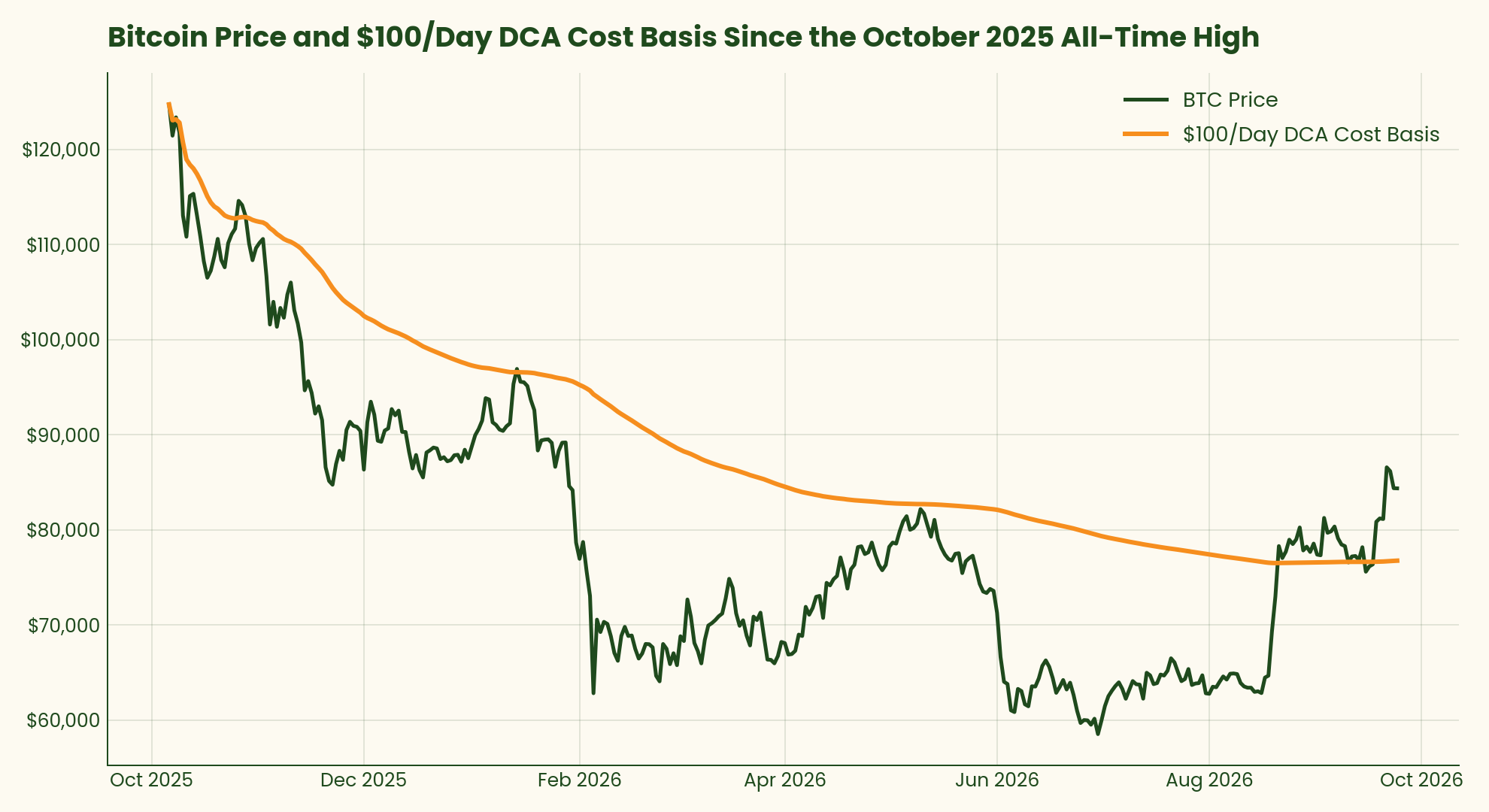
Bitcoin’s rally this week has firmly placed “top buyers” into the green for the first time (if they DCA’d down through the bear market). Bitcoin’s volatility necessitates a dollar cost average strategy; consistent accumulation through peaks and troughs.
If someone started buying BTC daily at the market top, their average cost basis is ~$76,000, which gives them a net return of ~10% at the current price (~$83,000 per BTC). This is despite BTC itself being down ~35% from the peak.
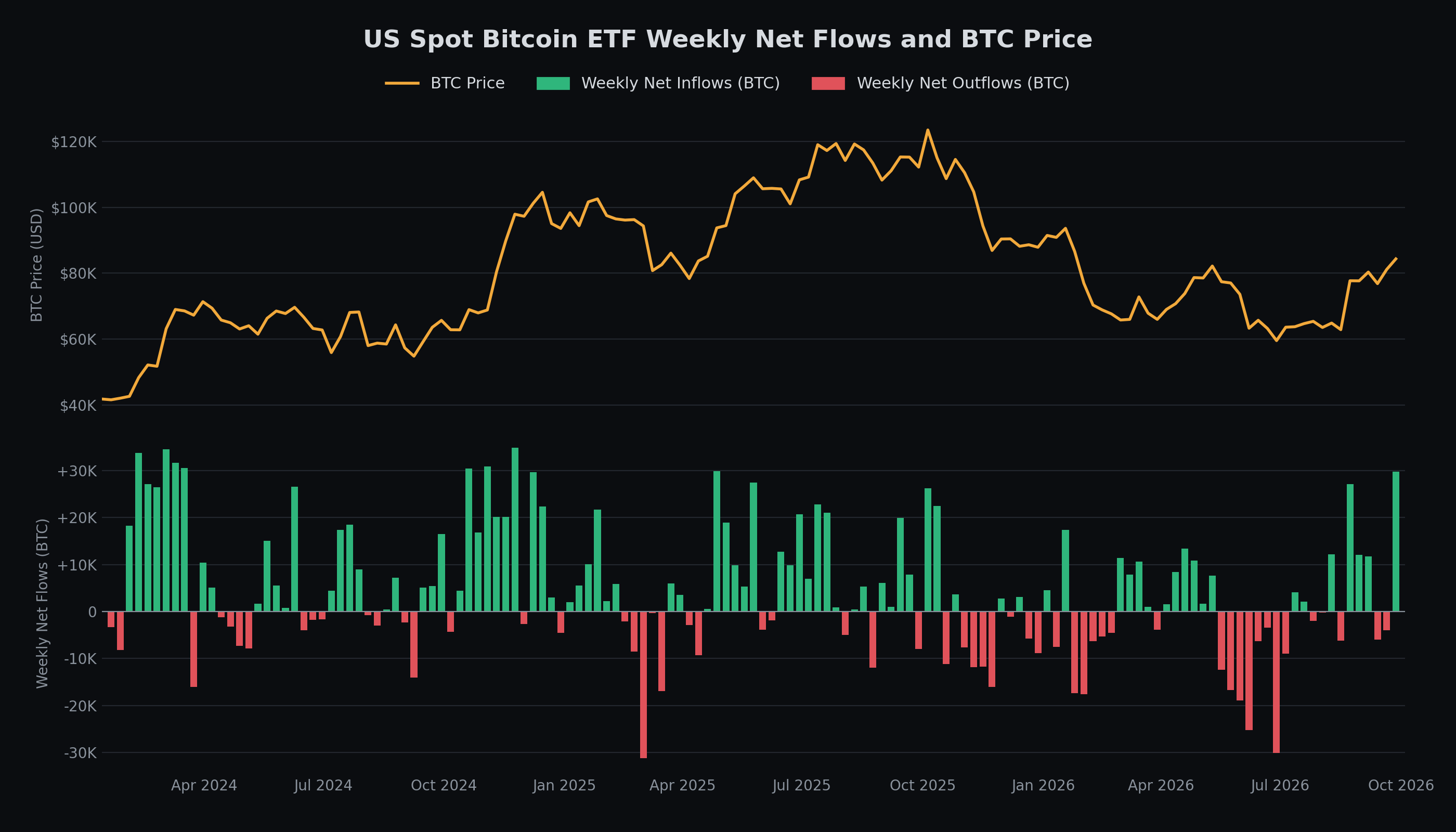
The spot Bitcoin ETFs have added ~29,800 BTC this week through Thursday, the largest weekly inflow of 2026, and that's with Friday's data still to come. Monday alone brought in ~11,700 BTC (roughly $1 billion), the biggest single day of the year. This fully reverses the prior two weeks of outflows, and it's happening at higher prices, which tells us buyers are chasing strength instead of waiting for a dip.
Mitchell Askew, Head of Blockware Intelligence, went live on BMTV this week to discuss seller exhaustion, the end of 75%+ Bitcoin bear markets, and Gen Z Bitcoin adoption. Check out his segment here:

Download your FREE Bitcoin self-custody guide from the Bitcoin Way to learn how to secure your stack properly
US 10-Year Treasury Yield
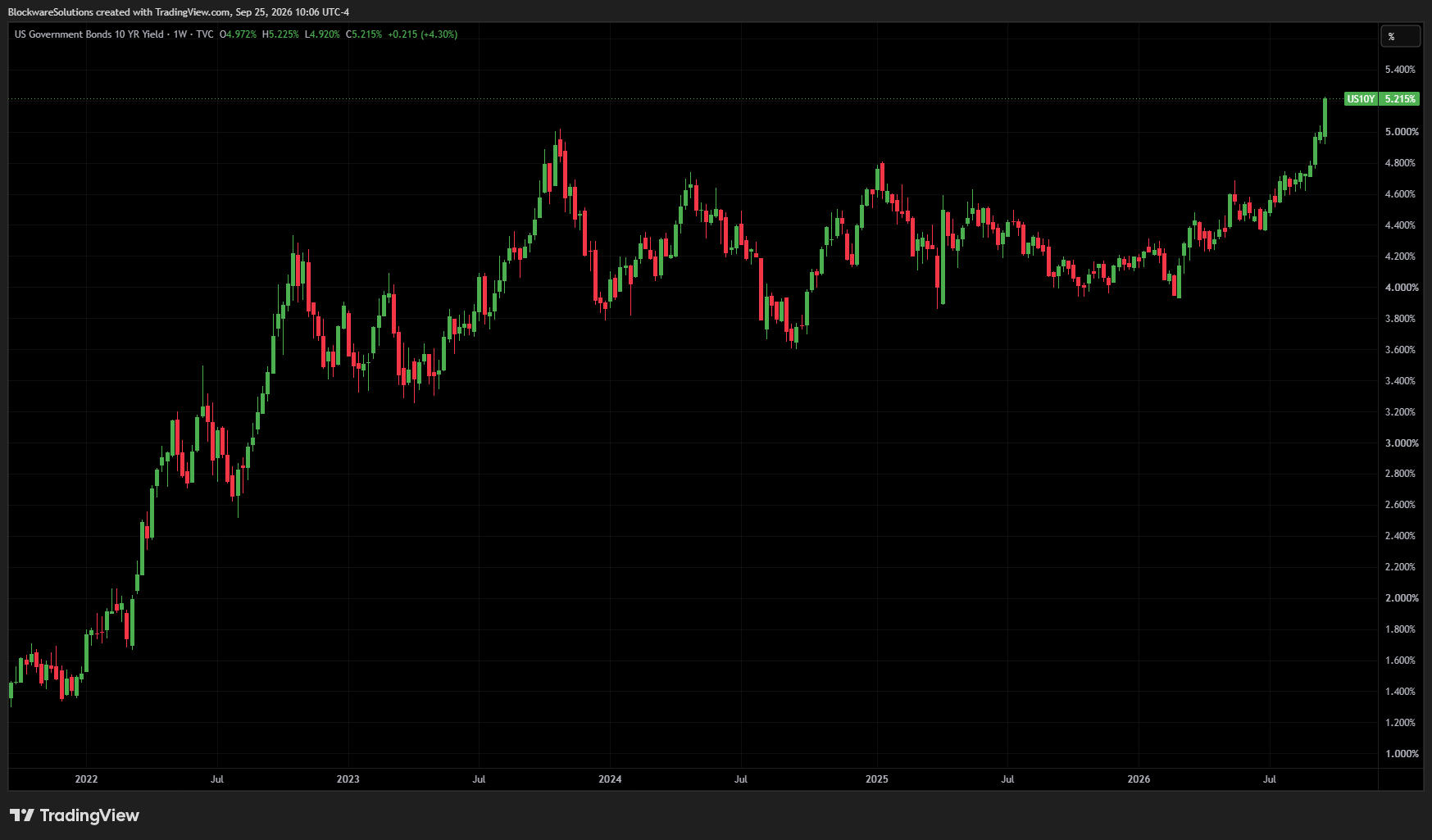
Last week we said the 10-Year was knocking on the door of 5%. This week it went through it. The 10-Year hit ~5.19%, its highest level since July 2007, and it’s now up ~54bp over the past month and more than 100bp over the past year. The 30-Year sits around 5.44% and the 5-Year broke above 5% for the first time since 2007. Rates are rising across the whole curve, which tells us the market is demanding more compensation to hold US debt at every maturity, not just the long end.
US 5-Year Treasury Auction Tails
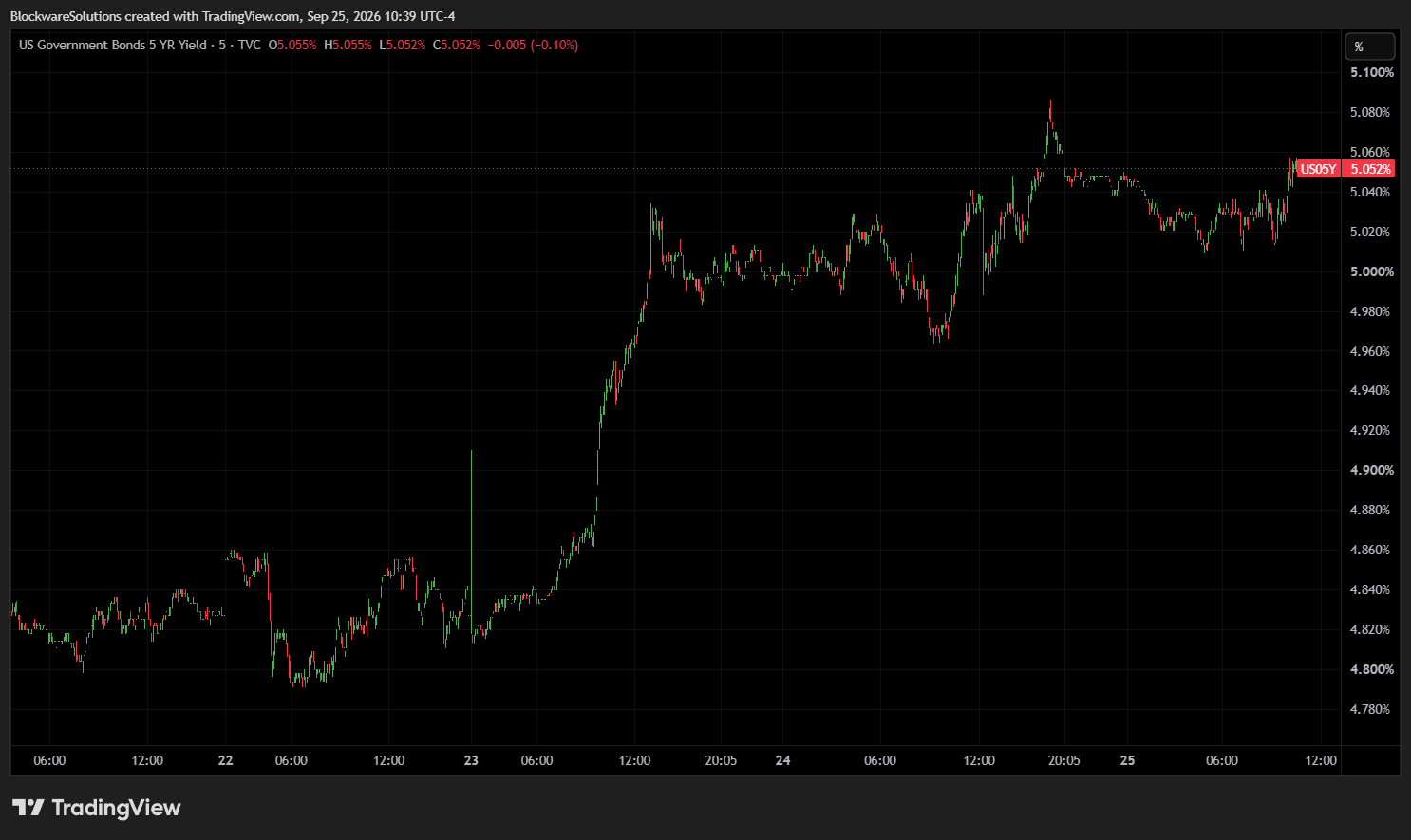
On Wednesday the US Treasury sold $70 billion of 5-Year notes, and buyers didn’t show up the way the market expected. Right before every auction, the market sets an expected yield based on where that note is already trading, which on Wednesday was ~5.00%. The auction cleared at 5.033%, so the Treasury had to pay an extra 3.1bp of interest to find enough buyers for all of the supply. That gap is called the “tail,” and it was the second-largest tail on record for a 5-Year auction. Think of a house that doesn’t sell at its asking price and has to be marked down to attract a buyer; the US government had to discount its own debt just to get it sold. A few basis points sounds small, but on this one auction it adds up to roughly $100 million in extra interest over the life of the notes, and the Treasury runs auctions like this every week. Higher interest costs widen the deficit, a wider deficit means more borrowing, and more borrowing puts even more supply on a market that’s already struggling to absorb it. When buyers won’t step up at current yields, policymakers are left with two options: let rates keep rising until something breaks, or find a buyer of last resort. Historically that buyer has been the Fed.
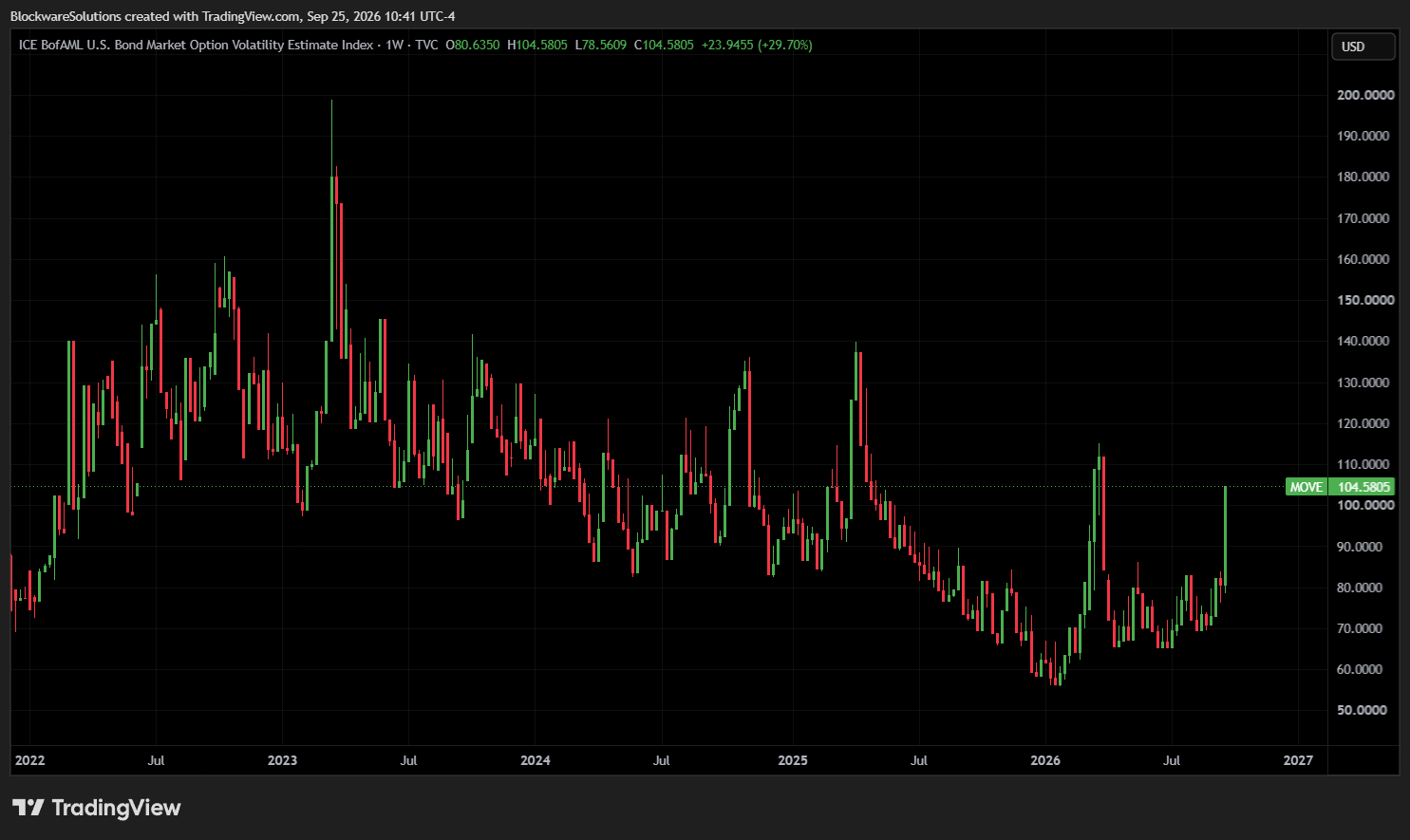
The MOVE Index measures how much traders expect Treasury prices to swing, based on bond options pricing. You can think of it as the VIX for the bond market. This week it jumped ~30%, from ~81 to ~105, its highest level since the spring. Just nine months ago it was sitting near 57, one of its lowest readings in years. The spike matters because Treasuries are the collateral the entire financial system runs on. When bond prices get more volatile, lenders demand bigger cushions on that collateral, leverage gets pulled, and liquidity dries up everywhere at once. That’s the pressure that eventually forces policymakers to act. The last two times the MOVE ran this hot, the response came quickly. In March 2023 it spiked toward 200 during the regional bank crisis and the Fed launched the BTFP bank lending facility within days. In April 2025 it pushed above 140 during the tariff selloff and the administration paused tariffs a week later. Bitcoin rallied hard after both.
Buying and holding Bitcoin is a position, not a plan.
The plan of the wealthy is to build a system around Bitcoin and other assets to create liquidity, produce income, and fund their lifestyle without selling what they own.
October 1 at 6pm EST, Blockware’s partner Mark Moss is hosting a free masterclass to explain his wealth building system. Click here to sign up for free.