
Download your FREE Bitcoin self-custody guide from the Bitcoin Way to learn how to secure your stack properly
Bitcoin Remains Resilient Despite Bad Headlines
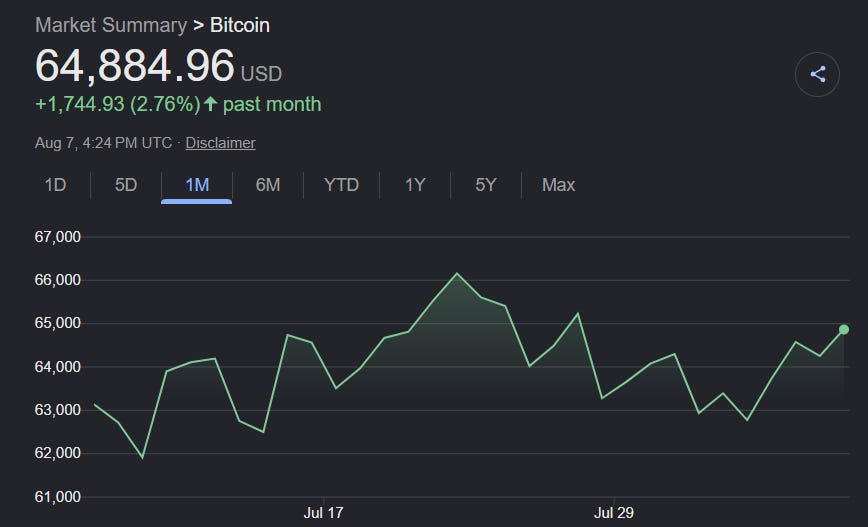
The market no longer reacting negatively to bad news is a strong sign that BTC is forming a bottom. In the past month alone, the following three negative headlines have surfaced:
COLDCARD Hack
Strategy Sells Bitcoin
Clarity Act Falling Through
…but Bitcoin has remained stable regardless.
Headlines like this, while objectively negative, do not in anyway alter the Bitcoin protocol or the fundamental long-term thesis of convicted Bitcoin holders: a non-sovereign, bearer asset with a finite supply in a world of increasing government debt and fiat liquidity.
The only ones still holding Bitcoin 10 months into a bear market and down 50% from the all-time high are those with this thesis; and these headlines aren’t going to entice them to sell.
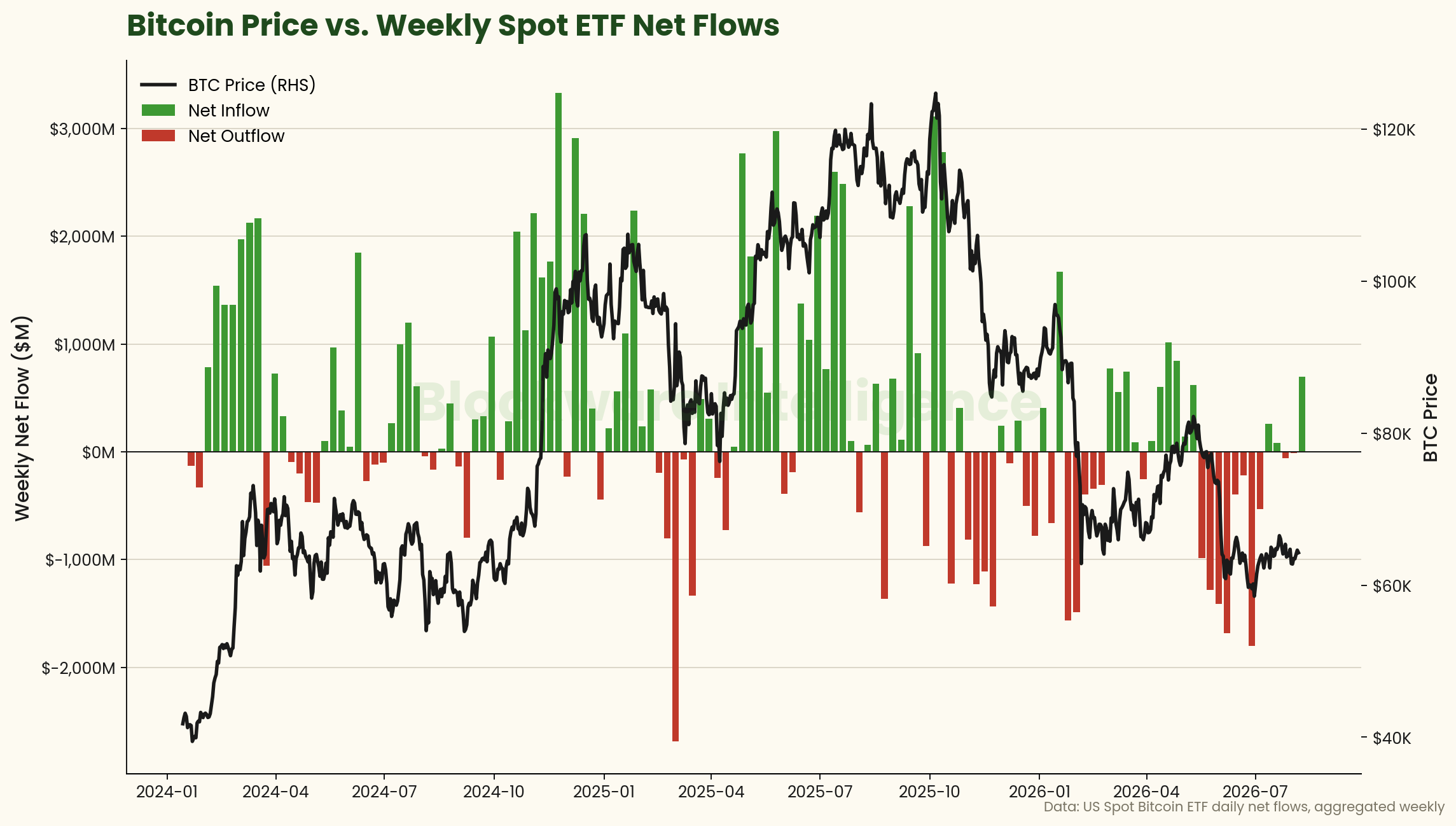
Bitcoin ETF Inflows
After months of net out-flows, the tides have turned for Bitcoin ETF AUM. Bitcoin ETFs saw ~7,895 BTC (~$511m) in net inflows this week. For reference, these inflows are ~2.4x the amount of new Bitcoin that entered circulation via mining during the same timeframe.
The initial reaction is that some of these inflows may be a reaction from cold-storage holders in response to the COLDCARD hack, but that’s likely just a small fraction. Users with BTC in cold storage with COLDCARDs looking for a new custody solution this week more than likely sent to a new self-custody wallet or a Bitcoin exchange; transferring into an ETF involves more extra steps and leaves less flexibility to return back to self-custody. “In kind redemption” (sending in BTC and receiving it as ETF shares in your brokerage account) is not available at smaller sizes; IBIT’s minimum is 40,000 shares (~$1.4 million).
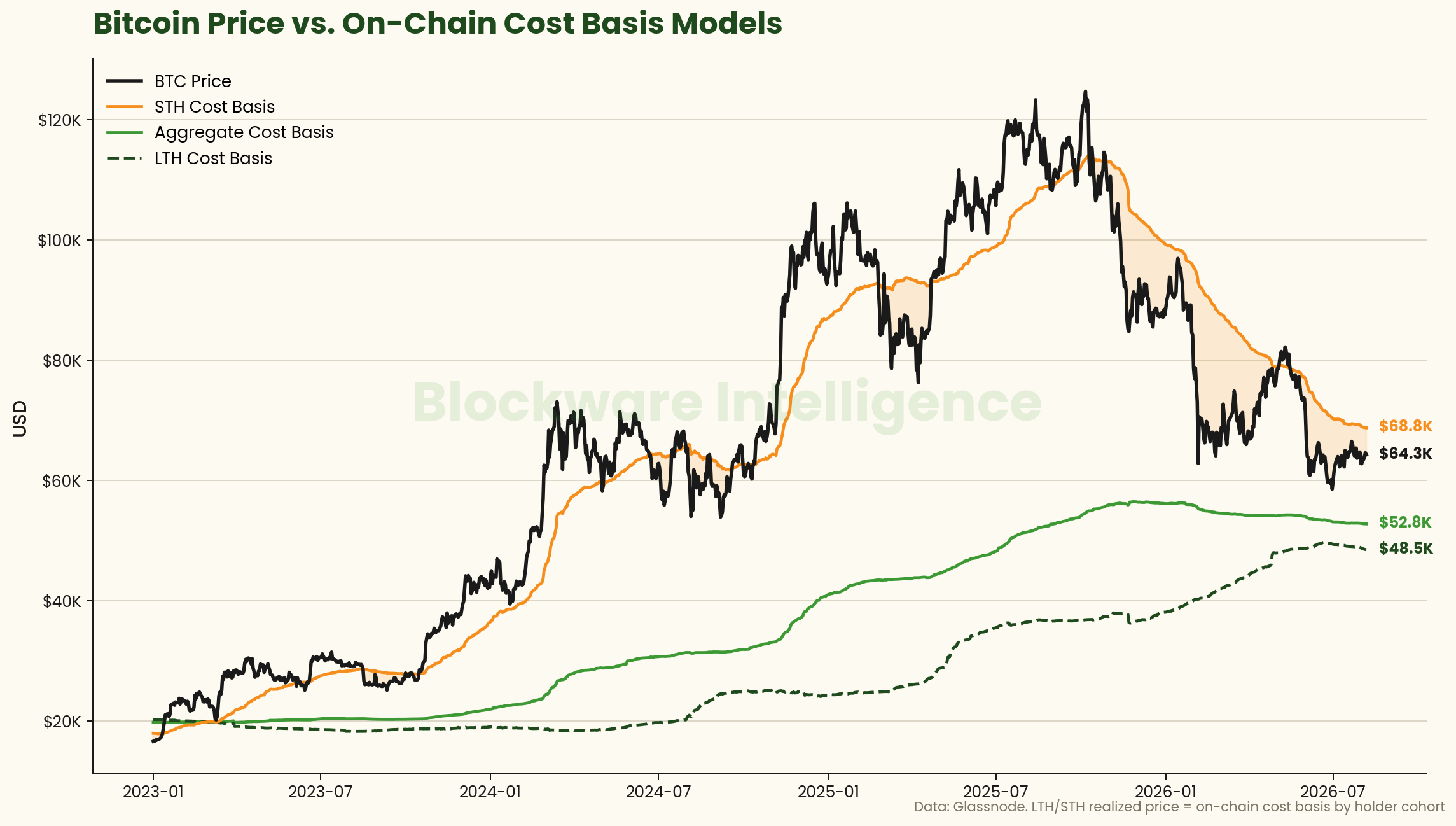
Short Term Holder Realized Price
Short-term holder Realized Price inches lower day by day, now sitting at ~$68,000. We’ve been eye’ing late August as the time when the resistance is tested. The test could happen any day now as BTC is within a day’s worth of volatility of $68k.
If BTC breaks resistance here, there’s strong confirmation that the bottom is in.
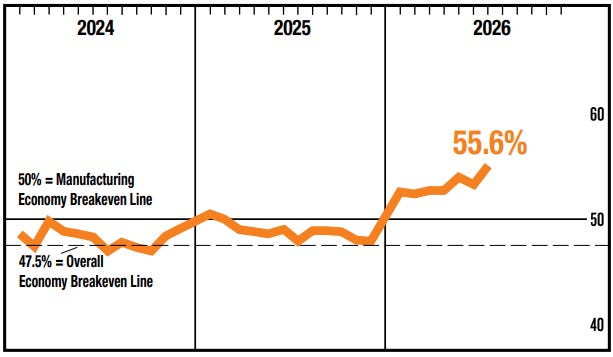
Manufacturing PMI hit 55.6% in July, its highest level since May 2022. This was the seventh consecutive month of expansion, and the internals were strong across the board. New orders came in at 56.7. The employment index moved into expansion for the first time in nearly three years. AI data center capex, reshoring, and defense spending are pulling the industrial economy out of its multi-year slump.
This matters for Bitcoin because Bitcoin is a business cycle asset. PMI is one of the cleanest proxies for the global liquidity and credit cycle, and Bitcoin’s largest rallies have historically clustered in the expansion phase of that cycle, when PMI is rising through 50. Right now there is a glaring divergence. The business cycle is accelerating to a four-year high while Bitcoin trades at $64K, down ~50% from its highs and below the Short-Term Holder cost basis of $68K. One of two things resolves this. Either the ISM rolls over, or Bitcoin catches up to the cycle. Given that prices paid remain elevated at 71.1, the expansion is inflationary. An inflationary expansion is the single best macro regime for scarce, hard assets. Bitcoin is not diverging from the cycle. Bitcoin is lagging it.
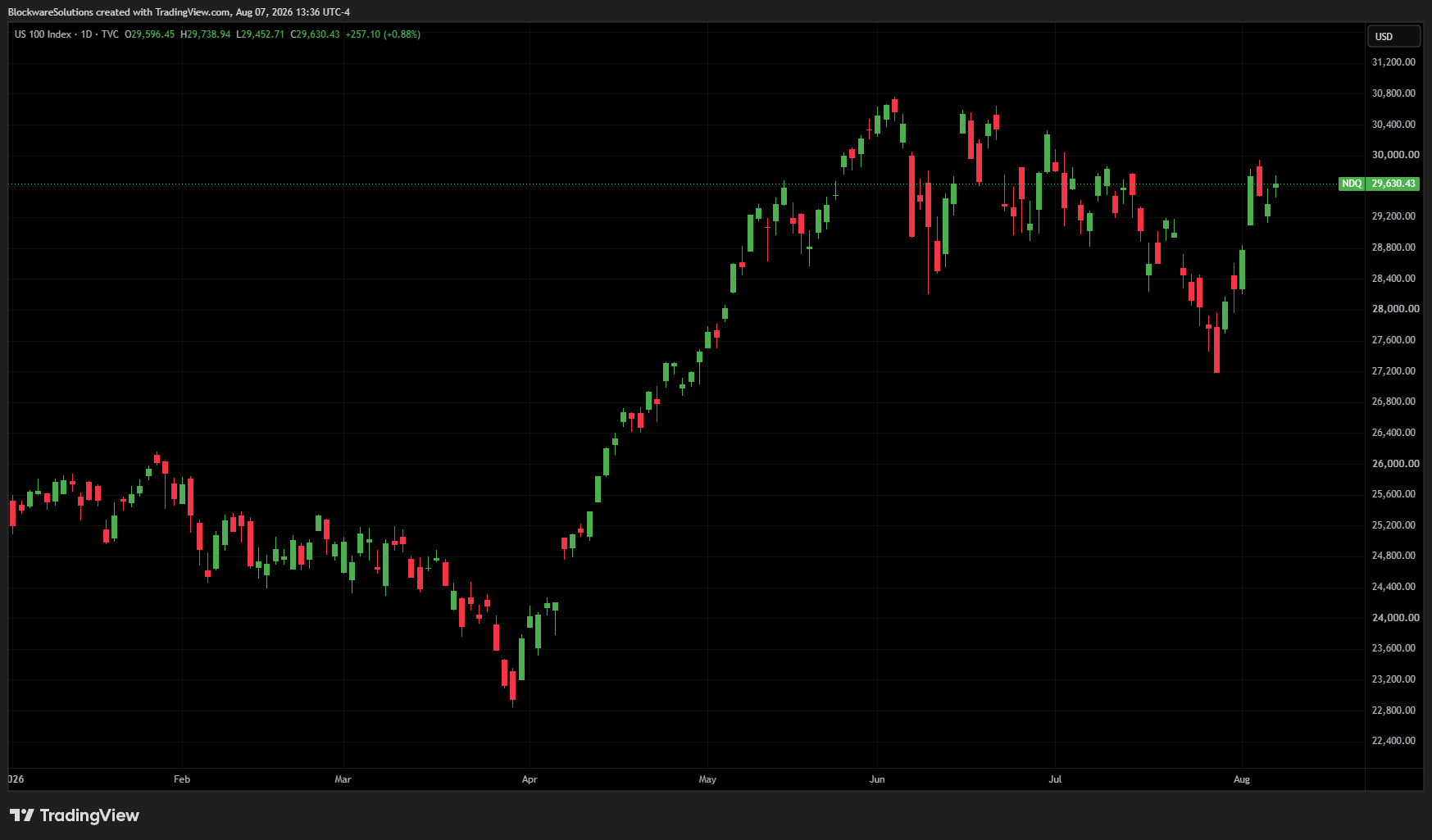
The NASDAQ 100 has retraced much of its July loss, but it appears to be forming (another) lower high. As of Thursday, the index sits at 29,630, roughly 4% below its June peak near 30,800. Each rally since then has stalled at a lower level. Lower highs on declining momentum are the signature of a distribution phase, where large holders sell into strength. Tech equities have led this entire cycle on the back of the AI capex boom, so a topping NASDAQ raises an obvious question: if the AI trade is exhausting, where does that capital rotate next?
Bitcoin is the natural candidate. It is the most liquid hard asset in the world, it trades below its Short-Term Holder cost basis, and it has spent seven months consolidating while the NASDAQ made its highs. Capital rotates from crowded trades to neglected ones. The AI trade is crowded. Bitcoin is neglected.
Selling assets to fund a new investment triggers capital gains taxes and forfeits future compounding. Borrowing against those assets does neither. When the assets you hold appreciate faster than the interest rate on the debt, the spread compounds in your favor. This is the carry trade, and it’s one of the oldest wealth-building mechanisms in finance.
Our new white paper breaks down five ways to do it, with current rates and the honest trade-offs of each:
Home equity (HELOC)
Bitcoin-backed loans, and how to size LTV so a drawdown can’t touch you
Securities-backed lines of credit
SBA 7(a) loans
0% introductory APR credit cards
The final section applies the framework to Bitcoin mining, where 100% bonus depreciation under Section 168(k) means the tax code covers roughly a third of the machine in year one, before it has mined a single satoshi.
https://www.blockwaresolutions.com/leverage