


Download your FREE Bitcoin self-custody guide from the Bitcoin Way to learn how to secure your stack properly
The Hike That Didn’t Come
The Fed held rates at 3.50 to 3.75 percent today. This is the 5th straight meeting with no change to the Federal Funds Rate.
Nine days before the meeting, markets put hike odds near 11 percent. By last Friday they were up to 38 percent. Citadel Securities told clients to expect an increase. UBS said one wouldn’t surprise them.
It didn’t happen.
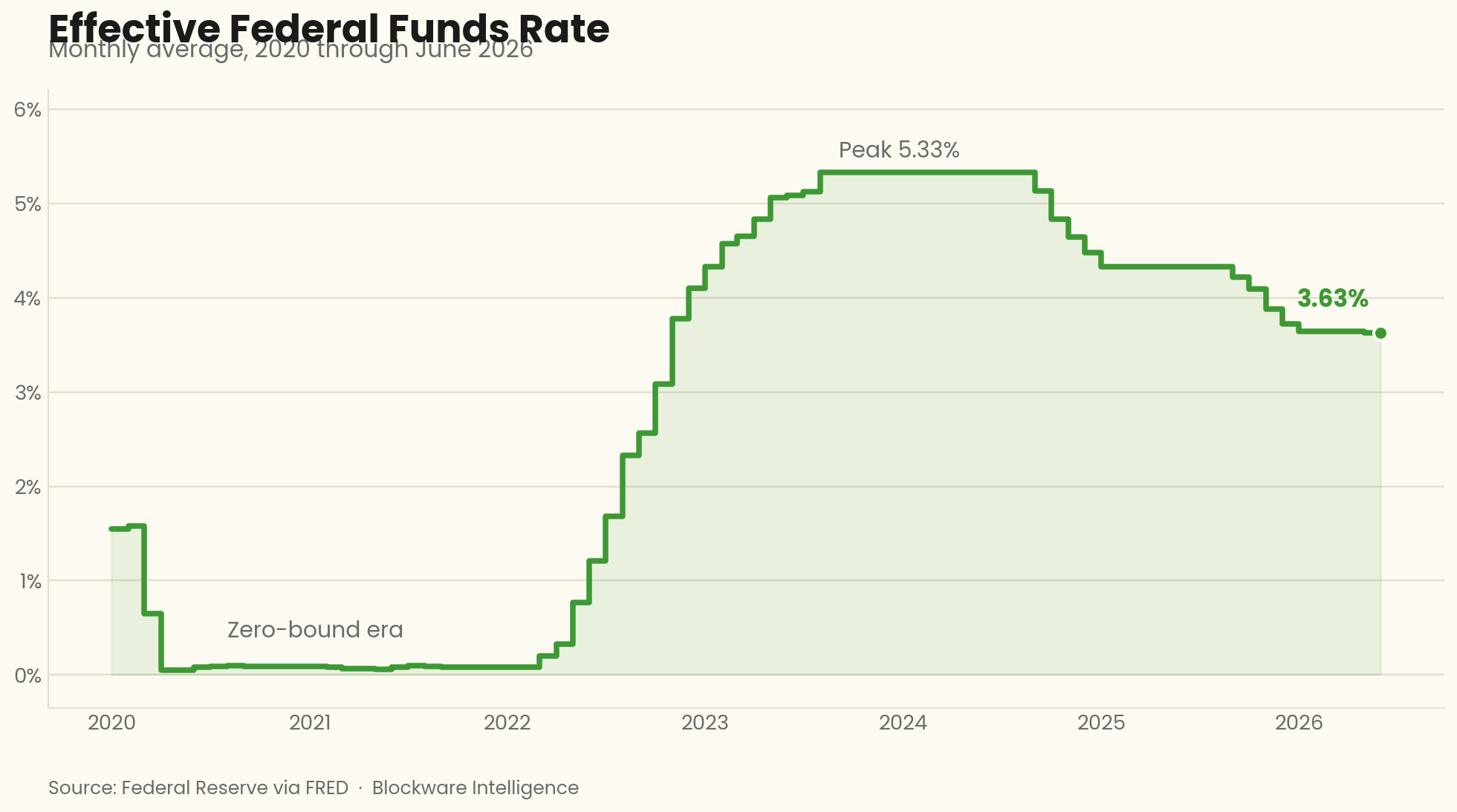
Energy is volatile. Inflation, broadly, is still falling.
WTI sits near $82. It peaked around $94 in mid-July, fell to $78, and has been trading off Iran headlines in both directions since. Trump says talks with Tehran are going well. Oman has floated a mechanism for managing the Strait of Hormuz. This is a market repricing war risk week to week, and it’s well below the April highs above $105.
That’s the input the hawks are worried about. Now look at what the Fed’s own data says underneath it.
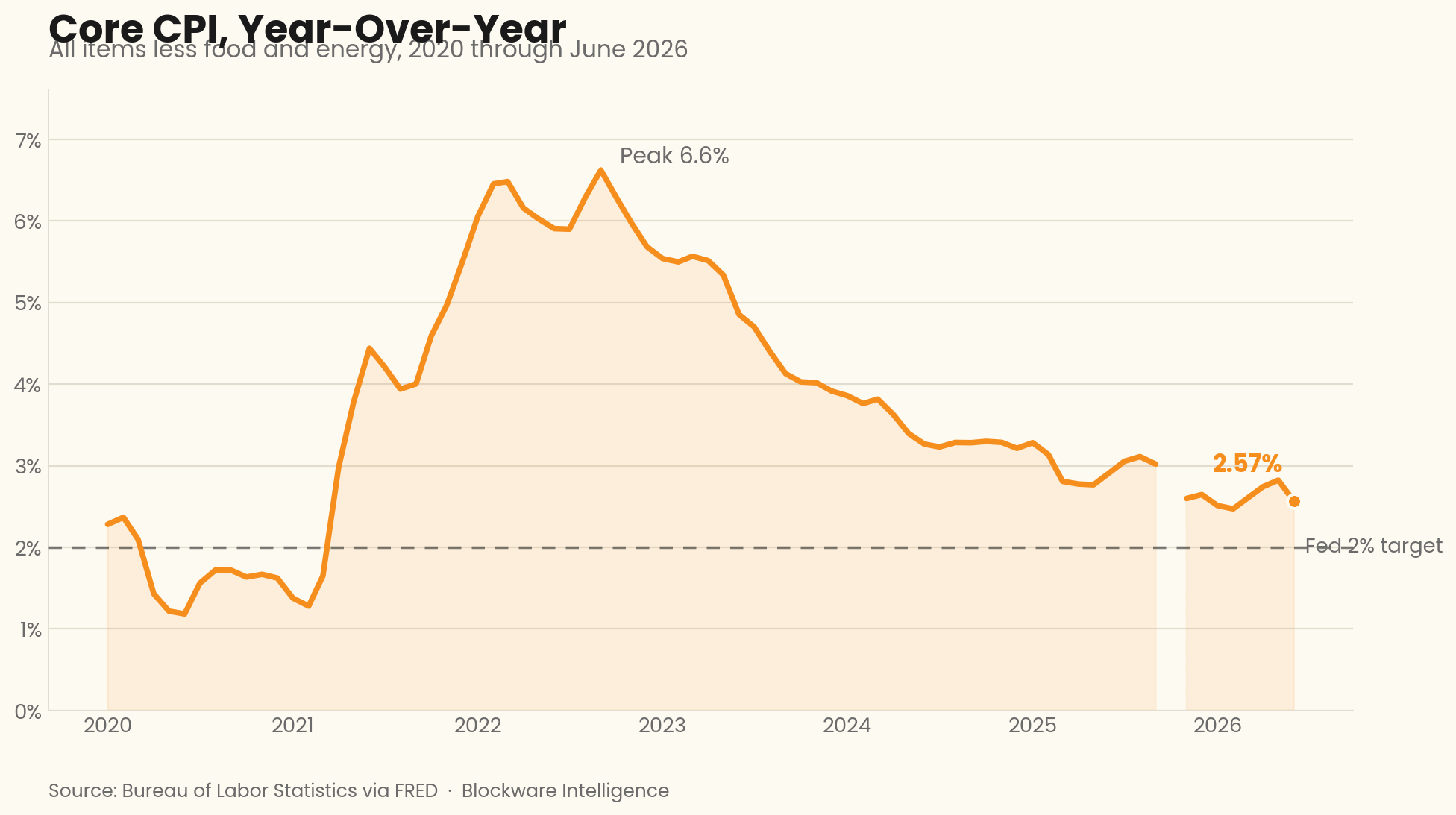
Core CPI came in at ~2.6 percent in June, down from 2.9 percent in May and 6.6 percent at the 2022 peak. The monthly reading was flat at 0.0 percent, the softest print outside a recession since 2017. Core goods, apparel, and transportation services all declined on the month.
Broad cooling, across every category that actually responds to the price of money. Shelter, services, goods. Decelerating all year.
Energy doesn’t work that way. Crude reprices on tankers and geopolitics, and no policy rate on earth produces another barrel. Gasoline fell 9.7 percent in June and pulled headline from 4.2 down to 3.5. The same arithmetic runs in reverse when crude rips, and it tells you nothing about whether money is too loose.
Loose policy shows up as broad price pressure. Broad prices are going the other way.
Which is the whole case for the hold. The Fed is looking at a volatile energy input sitting on top of two years of disinflation. Hiking into a supply shock tightens the economy without adding a single barrel of supply.
Expectations: Still Hawkish
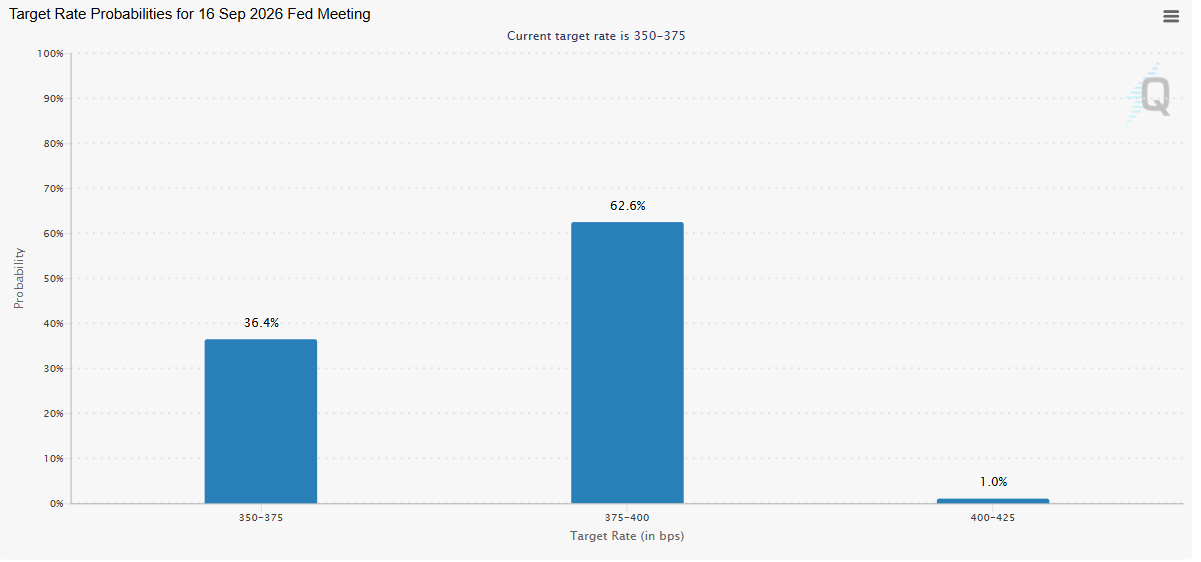
According to the CME Fed Funds futures, the market is still pricing in a ~63% chance of a hike at the next Fed meeting in September.
Why hikes this year stay unlikely
The data. Warsh built five task forces. One on inflation, one on the data used to set policy. That apparatus exists to give the committee cover to look through a supply shock. It’s unlikely they build themselves this “out” and then hike rates because a war (temporary supply shock) increases energy prices when inflation metrics broadly are trending down.
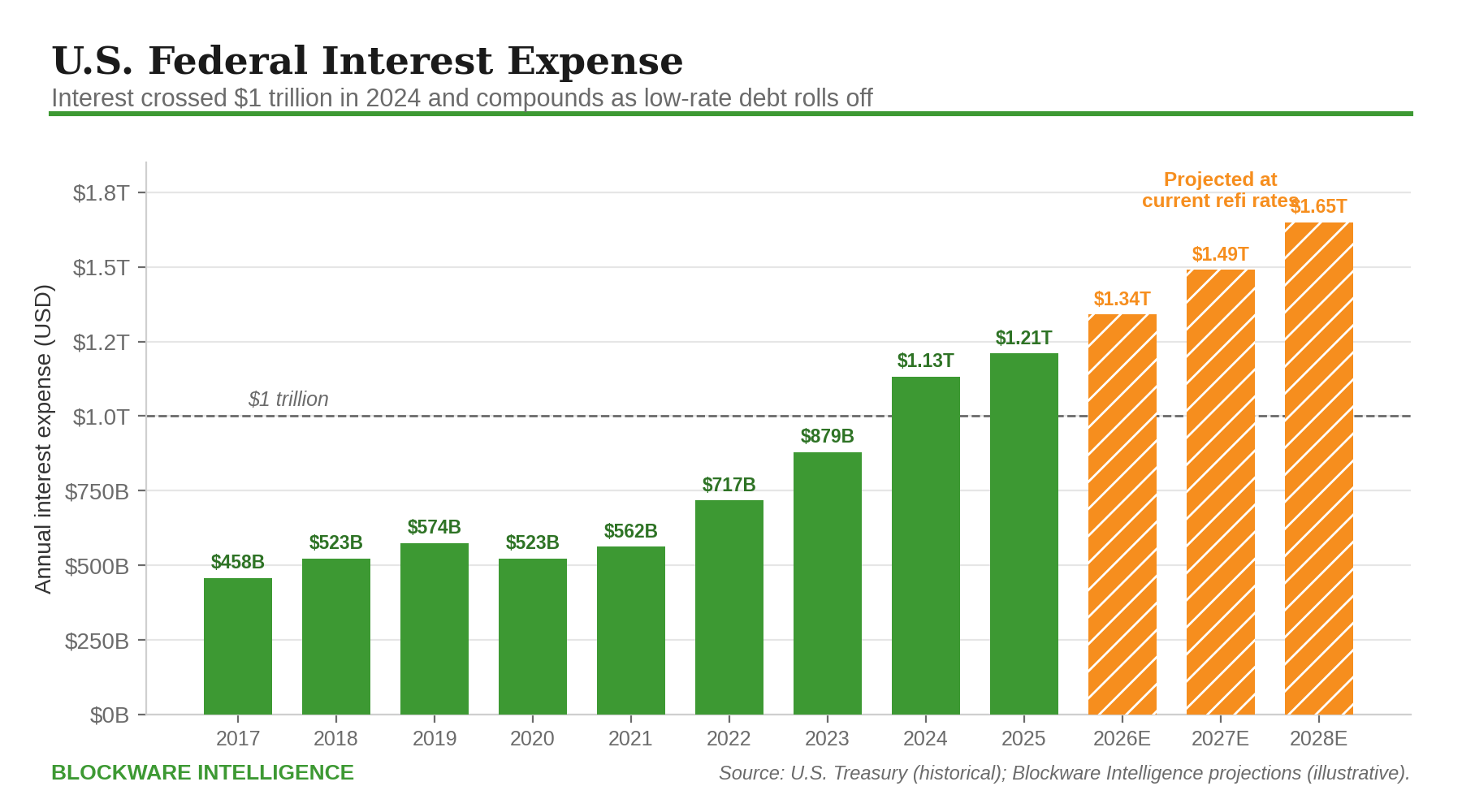
The math. $39 trillion in debt, over $1 trillion a year in interest. A hike raises that bill immediately on every bill and note rolled at the front end (which is where a large %of current financing is coming from). There is no version of this where the Treasury’s largest line item gets more expensive on purpose.
The politics. Trump picked Warsh expecting easier policy. A hike is the most costly career move Warsh can and he’d be doing so less than 6 months into the job.
What it means for Bitcoin
Bitcoin is near $64,000, well off it’s Q2 high of around $80,000.
Bitcoin is priced for a Fed that hikes. The Fed just declined to hike, with its own core data cooling and $39 trillion in debt pulling the other direction.
We’ve watched what happens when that resolves. September 2024: first cut with Bitcoin near $60,000, roughly $108,000 three months later.
As the market begins to price hikes out of the equation, Bitcoin could react violently to the upside.

You can write off 100% of the hardware and electricity costs of a Bitcoin mining operation. $100,000 spent on hardware plus power equals a $100,000 deduction against active income.
Sign up for a free consultation to learn more.