



Download your FREE Bitcoin self-custody guide from the Bitcoin Way to learn how to secure your stack properly
The Fed announces its rate decision Wednesday at 2:00 PM ET. Markets have a 25 basis point hike roughly 92 percent priced in. If it happens, it would be the first rate increase since July 2023. We have seen this setup before, and recently.
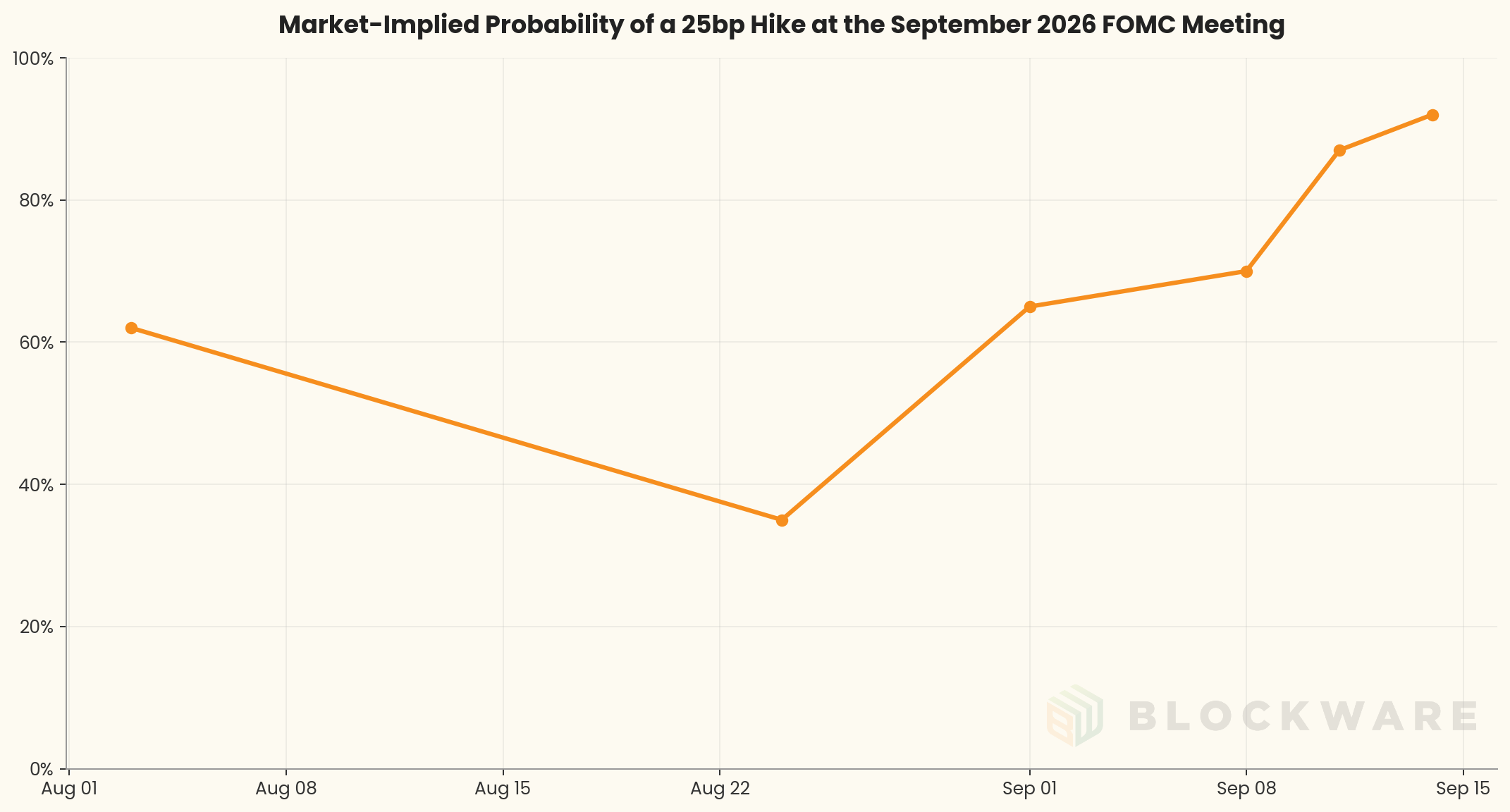
Nine days before the July meeting, markets put hike odds near 11 percent. By the Friday before, they were at 38 percent. The Fed paused. The same ramp just played out again, only steeper. Hike odds sat near 35 percent in late August, then ripped above 90 percent after Warsh’s Jackson Hole speech and a hot August CPI print. The market’s logic is one dimensional: hot inflation data, therefore hike. That is the old Fed’s reaction function, and traders are applying it to a chair who built five task forces specifically to rework how the Fed uses data and thinks about inflation. At Jackson Hole, Warsh described himself as “committed to a discipline, not to a decision.”
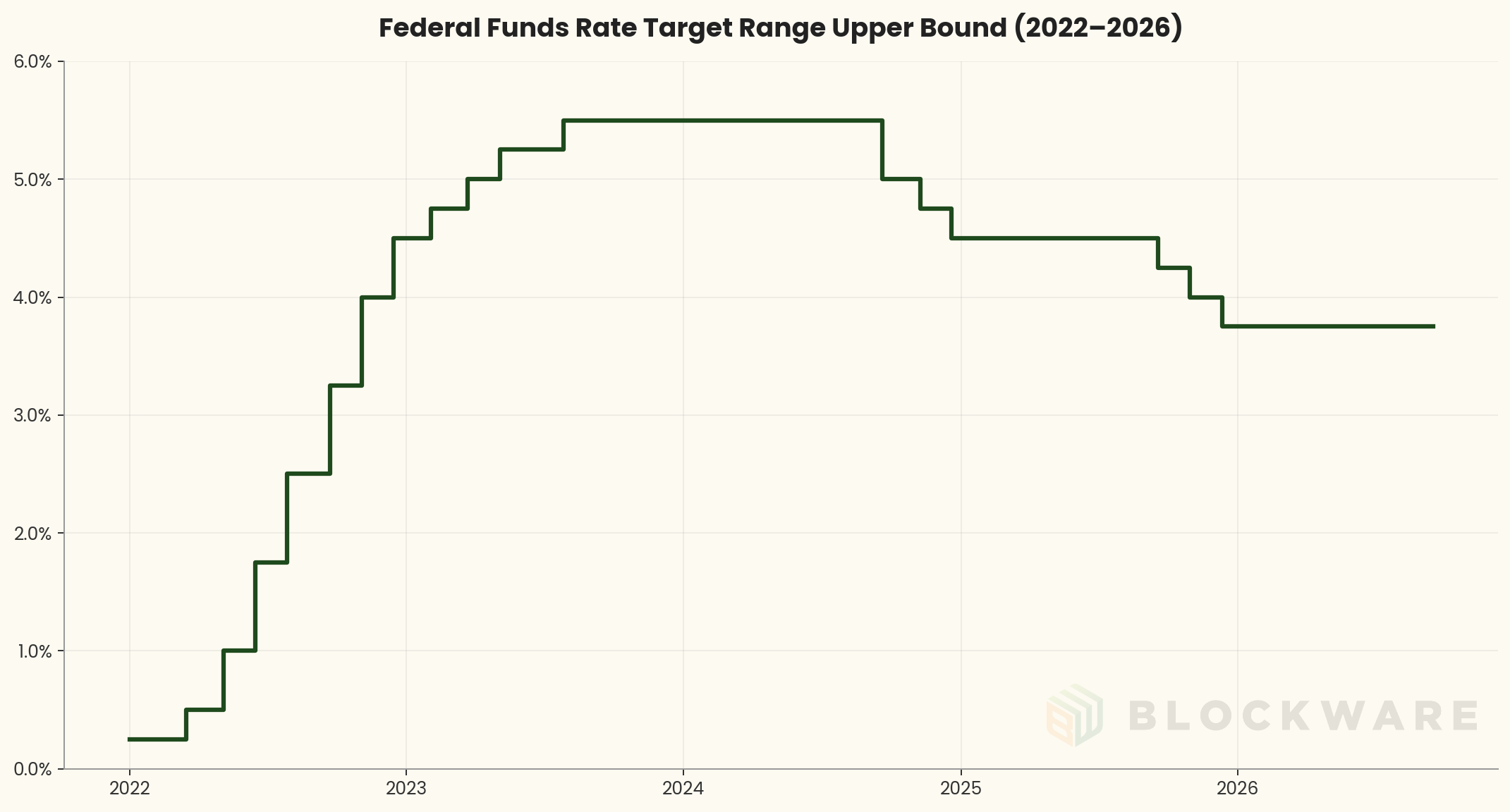
Rates have sat at 3.50 to 3.75 percent since December. Five straight meetings, no change. Warsh took the chair in May and has held twice, including a 9-3 vote in July with three members dissenting in favor of a hike. Wednesday is his first genuinely live decision, and the stakes are different this time. In July, a pause confirmed what the market expected. This week, a pause defies the expectations his own signaling created. Either Warsh delivers the hike, or he shows the market on day one that trading his speeches is a losing strategy, which he already warned against: “We should not indulge a regime in which market participants are looking primarily to the Fed for their next trade.”
Buying and holding Bitcoin is a position, not a plan.
The plan of the wealthy is to build a system around Bitcoin and other assets to create liquidity, produce income, and fund their lifestyle without selling what they own.
Tomorrow at 6pm EST, Blockware’s partner Mark Moss is hosting a free masterclass to explain his wealth building system. Click here to sign up for free.

Why We Still Wouldn’t Rule Out a Pause
The structural case from July has not moved an inch.
The data. The task forces exist to give the committee cover to look through a supply shock. One on inflation, one on the data used to set policy. It would be strange to build that apparatus and then hike because a war-driven energy shock lifted two monthly prints while the two-year disinflation trend remains intact.
The math. $39 trillion in debt, over $1 trillion a year in interest. A hike raises that bill immediately on every bill and note rolled at the front end, which is where a large share of current financing lives. The Treasury’s largest line item does not get more expensive on purpose.
The politics. Trump picked Warsh expecting easier policy. A hike is the most expensive career move available to him, and he would be making it less than six months into the job.
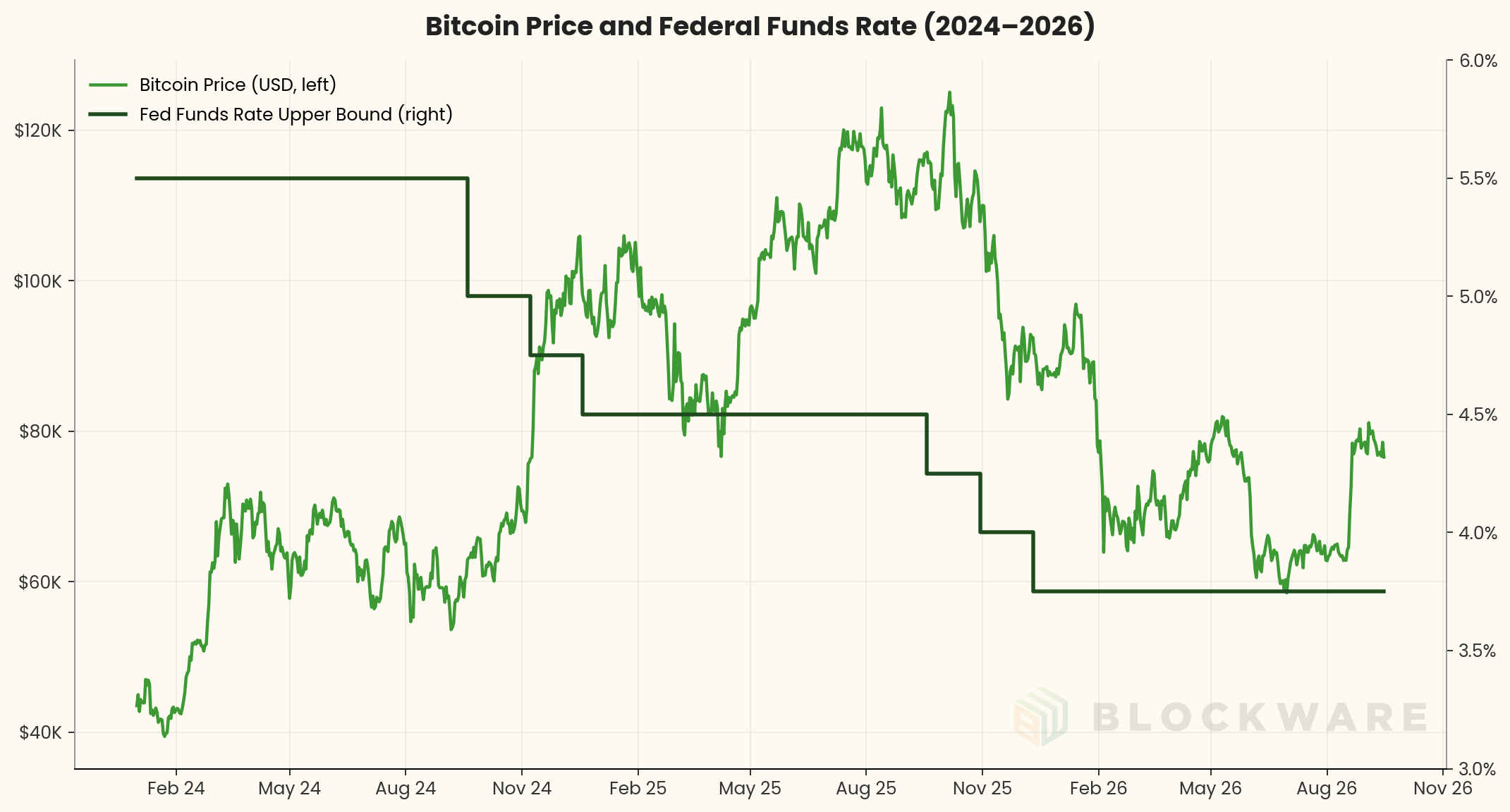
Bitcoin is the most sensitive asset in the world to shifts in rate expectations and liquidity, and it front-runs those shifts rather than waiting for them. With a hike over 90 percent priced in, the hike itself changes very little for BTC on Wednesday. The pause is where the asymmetry lives. A hold would be a dovish surprise against lopsided expectations, and we have watched what happens when hawkish pricing unwinds. September 2024: first cut with Bitcoin near $60,000, roughly $108,000 three months later. Heads, the market gets what it already paid for. Tails, Bitcoin gets a catalyst.
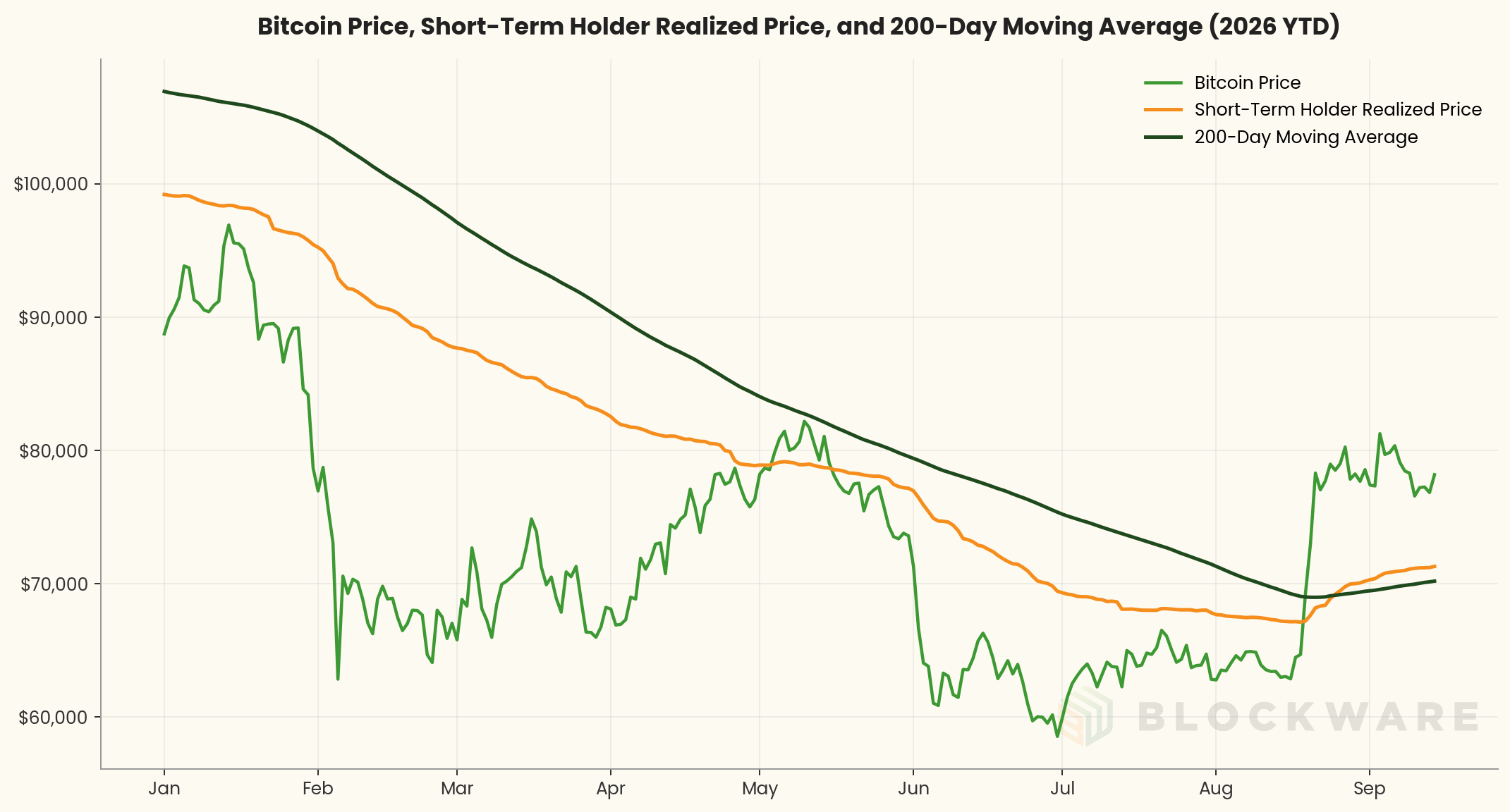
Bitcoin gained roughly 25 percent in August, its strongest monthly performance since November 2024. A pullback or a period of consolidation after a move like that is natural, and we see no indications that BTC is likely to make new lows. BTC’s strongest near-term support levels, the short-term holder cost basis and the 200-day moving average, both sit at roughly $71,000. Price reclaimed both in August and now trades above them. Even in the event of a bearish catalyst Wednesday, it is unlikely BTC falls below that level.
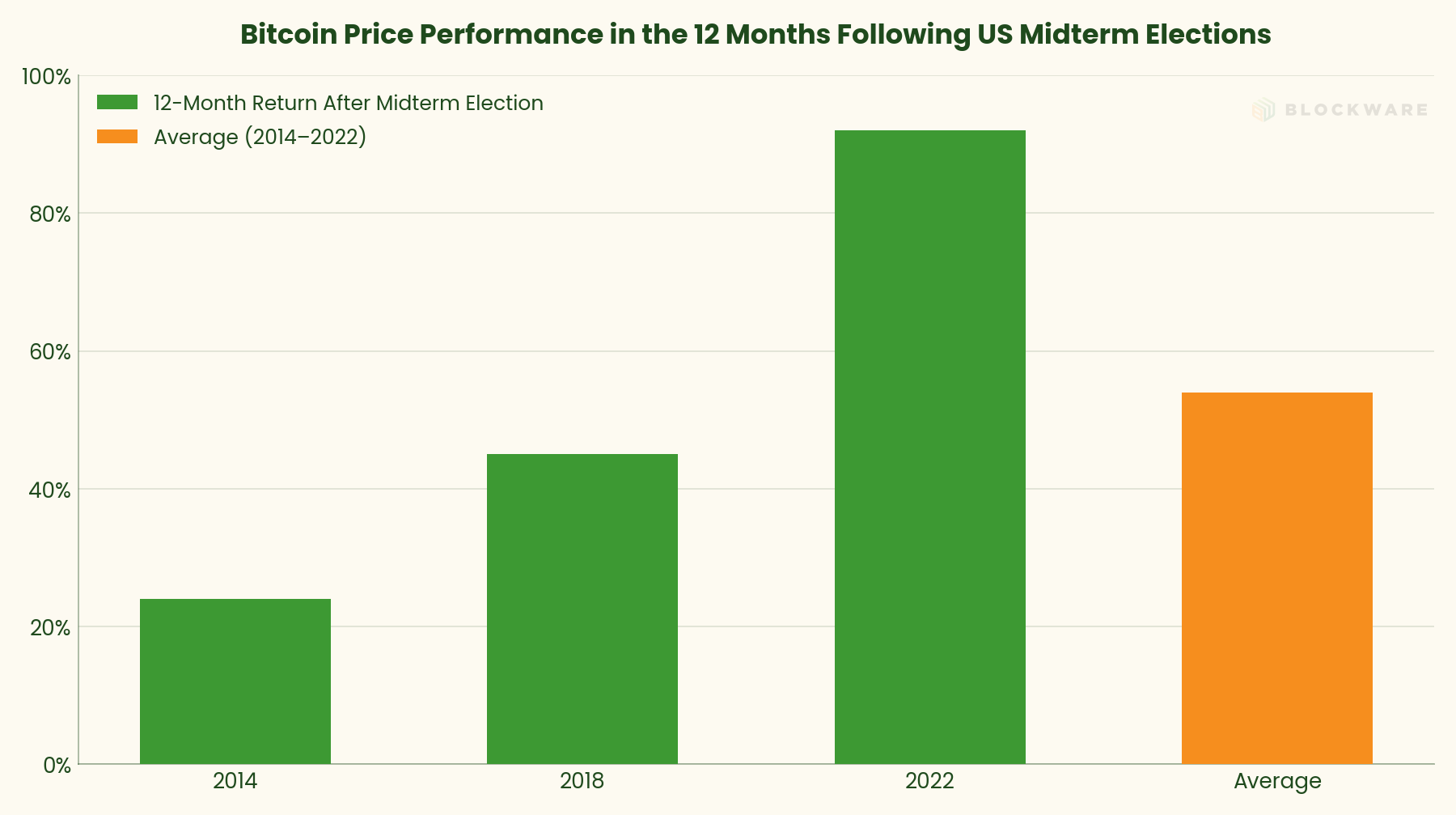
We strongly believe price action is the leading driver of narratives, not the other way around. If anything is keeping BTC in its current range, it is uncertainty surrounding Fed policy, the CLARITY Act, and, most significantly, the US midterms. Uncertainty can be worse than bad news, and those are three looming sources of it. Historically, Bitcoin has gained an average of 54 percent in the 12 months following US midterm elections. Our base case is consolidation between $70,000 and $80,000 into early November, followed by a strong finish to the year.
We are not predicting Wednesday’s outcome. We are pointing out that the risk is one sided. A hike is already in the price. A pause is not. Miners hosted with Blockware stack BTC through every FOMC meeting, hike or pause, and you can write off 100 percent of the hardware and electricity costs of a Bitcoin mining operation. $100,000 spent on hardware plus power equals a $100,000 deduction against active income.
Sign up for a free consultation to learn more.

Past performance is no guarantee, but the midterm election cycle has been a reliable Bitcoin cheat code.