


What Bitcoin’s Bottom Formation Means for Miners
The following dynamics are working in tandem make this one of the best times in recent history to start mining Bitcoin:
Bitcoin Bottom Formation
Declining Network Difficulty due to Ai Pivot
Limited Time Discounted Hardware Prices
BONUS: Tax Savings via 100% Bonus Depreciation
We’ve covered Bitcoin’s bottom formation extensively in recent newsletters, so today’s edition will focus more on the other dynamics; specifically, the largest miners in the industry pivoting to Ai and the resulting impact on mining difficulty, miner economics, and machine prices.
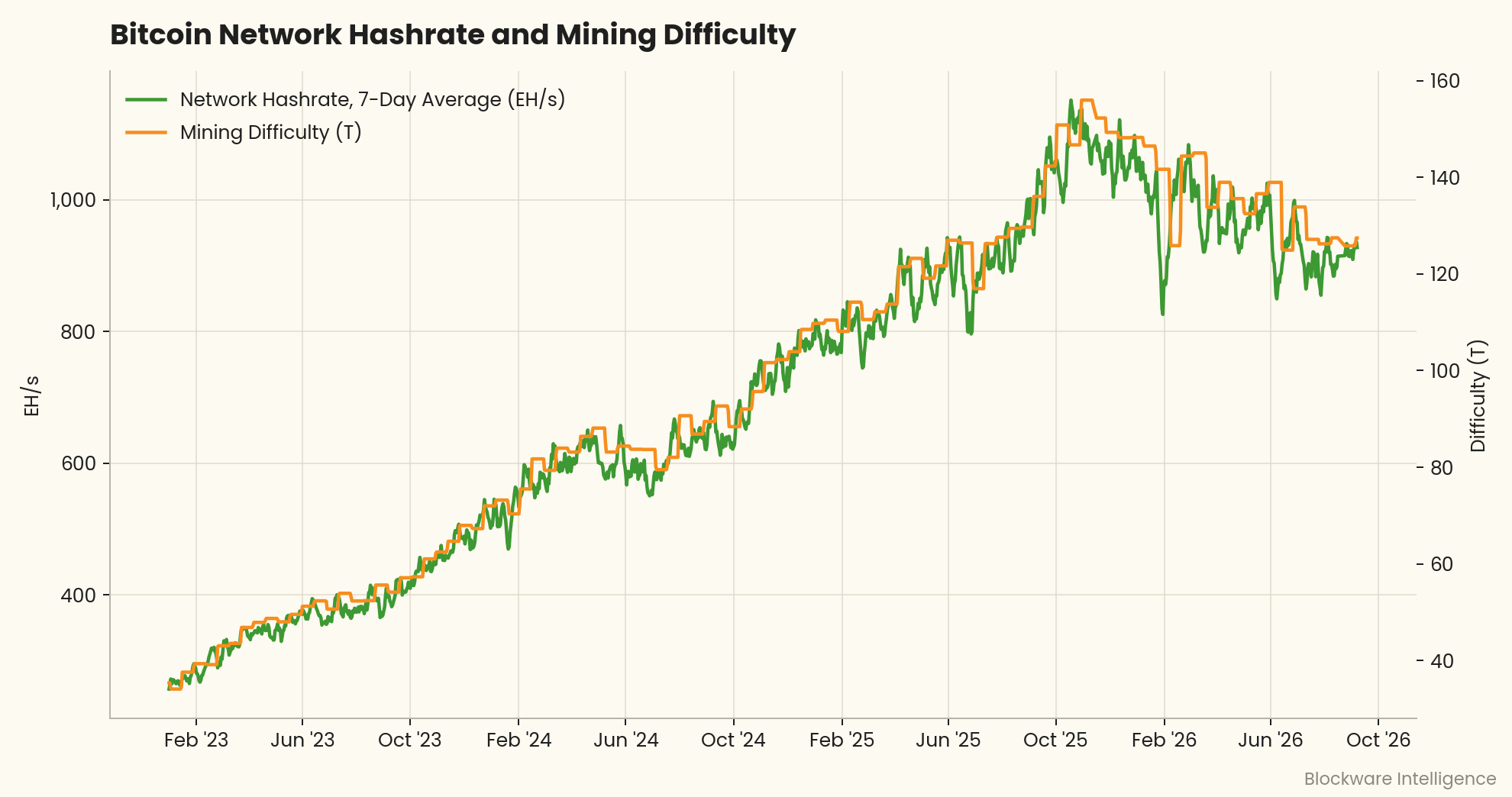
An AI data center landlord earns roughly $0.18 per kWh in rent versus the $0.12 per kWh an S21 XP earns mining Bitcoin today, about 1.5x the revenue per unit of power. This opportunity cost for data center operators has led to the first ever mass exodus away from Bitcoin Mining; with the network hashrate down ~18% from the peak and 14% year-to-date.
Declining hashrate means “fewer hands in the cookie jar”; less miners competing for the finite amount of BTC that is mined daily (~450 BTC).
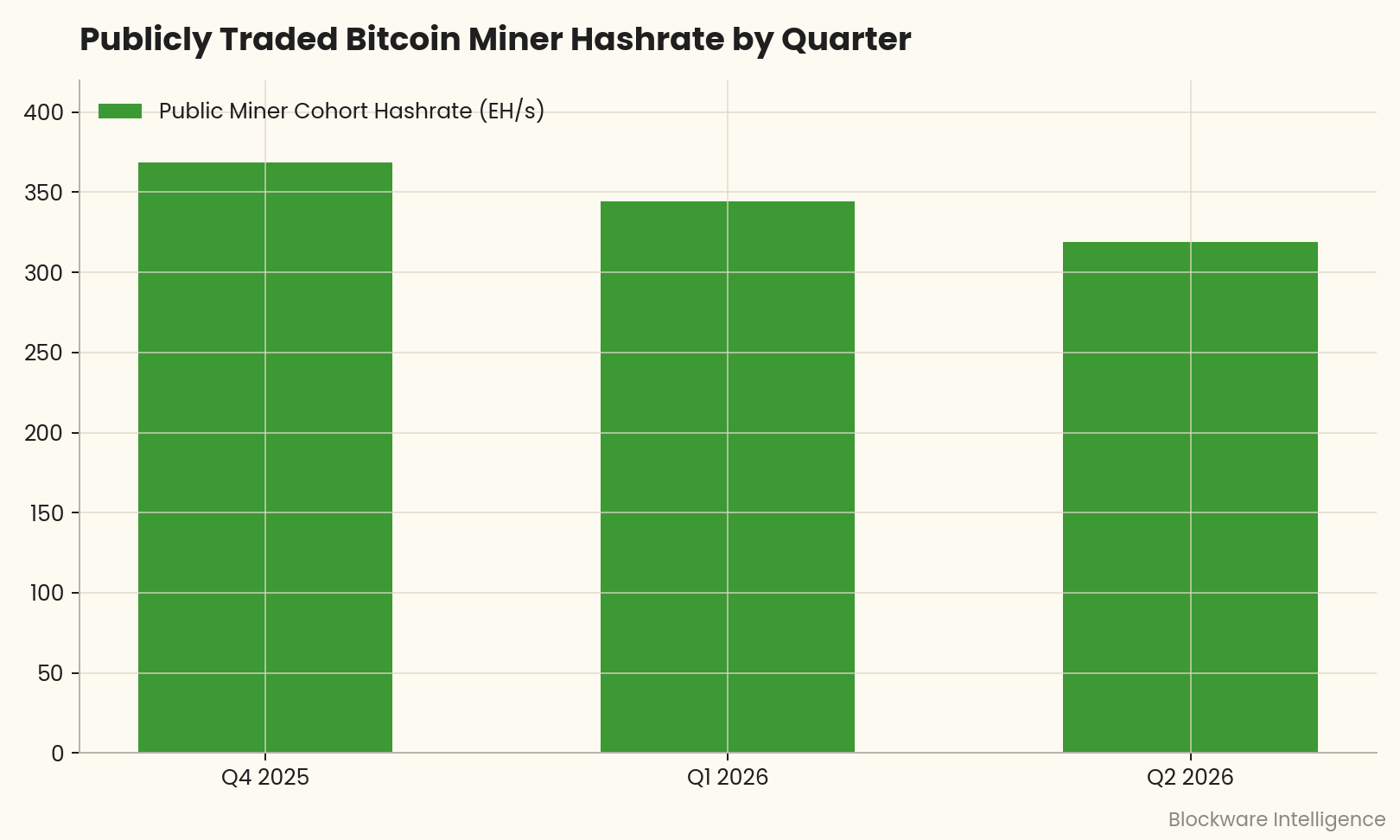
Looking exclusively at publicly traded Bitcoin miners (whose hashrate is quantified in public filings), they have turned off ~49 EH/s over the past two quarters.

Download your FREE Bitcoin self-custody guide from the Bitcoin Way to learn how to secure your stack properly
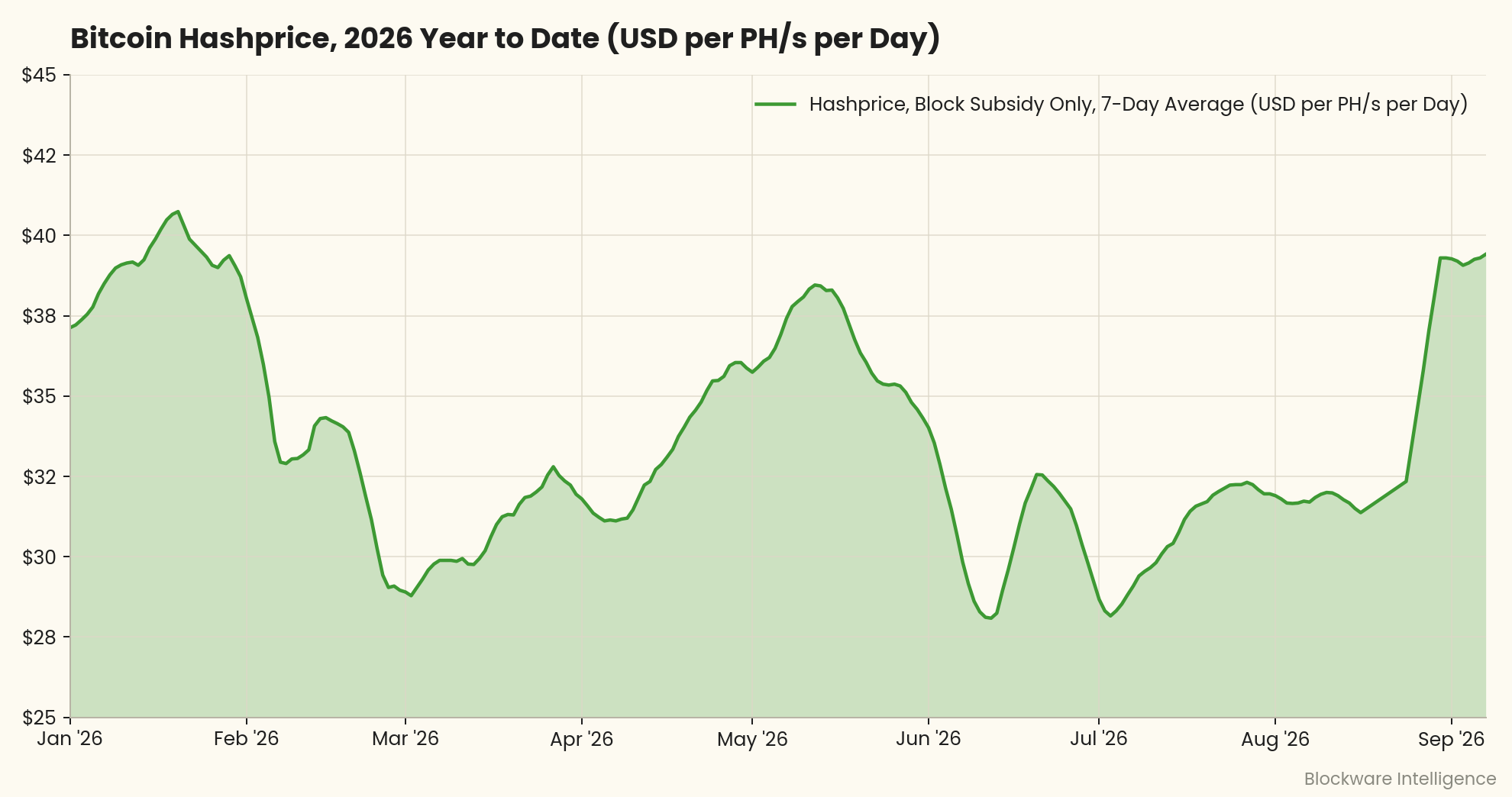
Hashprice is a blended cocktail of every market-related factor that impacts Bitcoin Miner revenue: BTC Price, Mining Difficulty, Halvings, and On-Chain Transaction Fees.
The measurable benefit of declining difficulty is evident here: Hashprice is up ~6% year-to-date despite Bitcoin itself being down ~10%.
Limited Time Offer: Bitcoin Miners Priced for $65,000 per BTC
On a short-term basis, there’s a lagging correlation between Bitcoin & the price of Bitcoin Mining servers (ASICs). Unlike BTC which trades 24/7/365 with billions of dollars of daily trading volume, ASICs, as physical, non-fungible, Bitcoin producing assets, have a far more fragmented market. However, because they are effectively “dividend producing assets”, with the dividend being BTC, the value of the dividend going up (ie BTC price going up) has a positive impact on miner demand can move the price of machines higher, all-else being equal.
One of the factors that can remove the “all-else being equal” is large supply of ASICs hitting the market from one of the large miners pivoting to Ai. This is the opportunity at present. Blockware has access to a limited-supply of extremely low-priced, refurbished Bitcoin miners (Antminer S21 XP 270T). Blockware purchased these machines before Bitcoin’s recent price pump. While supplies last, these are priced for sub $65k BTC. As this supply dwindles, it’s likely that machine prices will move higher. If this opportunity is of interest to you, email sales@blockwaresolutions.com to secure your share of the batch. Minimum deal size is $30,000.
The chart below shows the amount of months it will take to re-coup the cost of $100,000 worth of machines based on different BTC CAGRs (with tax savings included, assuming BTC is sold to pay monthly power costs). If you expect Bitcoin to break $110,000 over the next 12 months (~40% CAGR), the cost of the miners could be fully recouped in the first year.
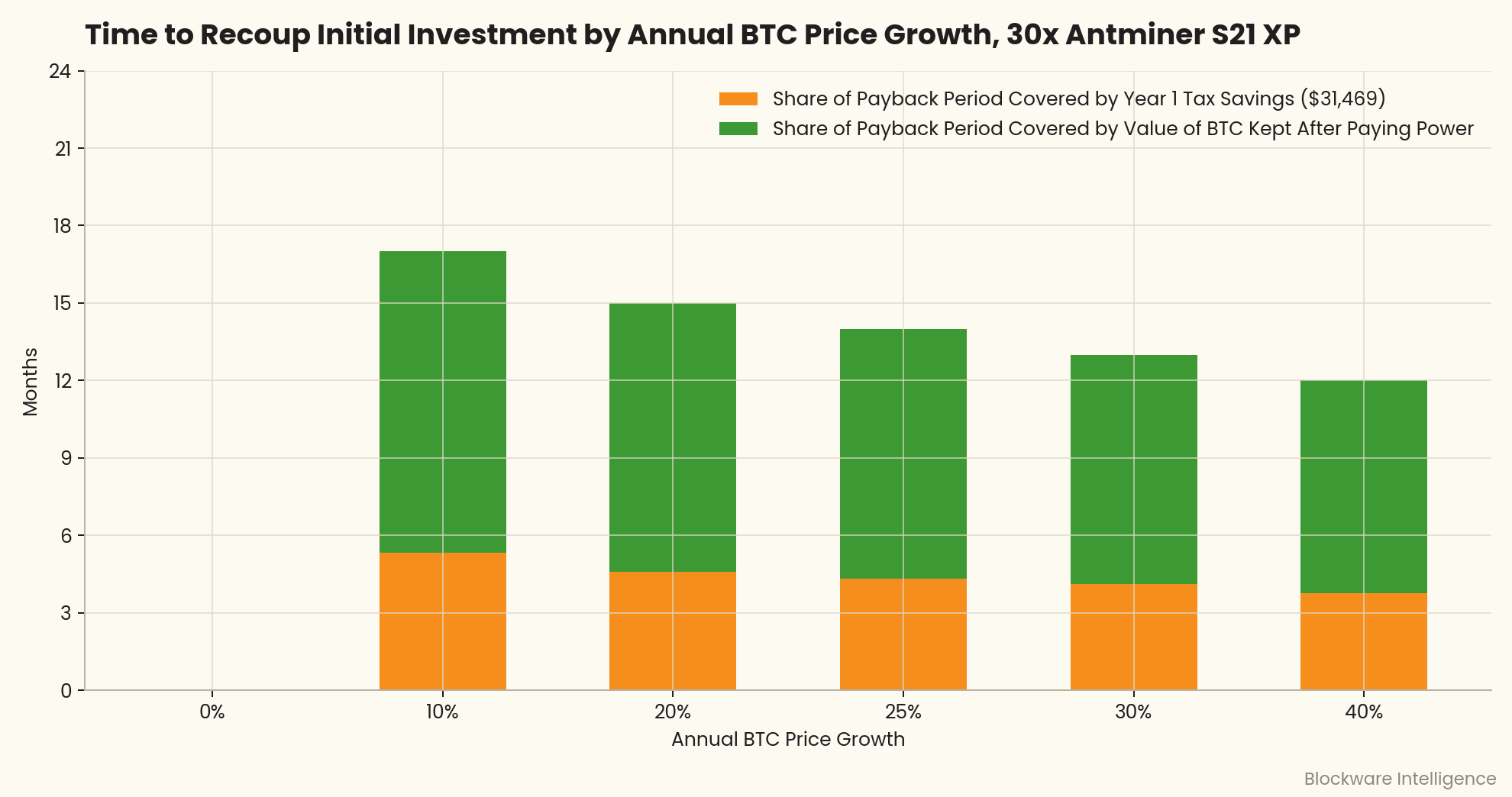
Right now, these units produce Bitcoin at an effective price of ~$48,000 per Bitcoin. Conservatively assuming the trend of miner pivoting to Ai reverses, and difficulty begins rising, the breakeven price will jump to ~$105,000 by the time of the 2028 halving (~April 2028). At a modest 25% Bitcoin CAGR, these machines will continue operating profitably beyond the next halving.
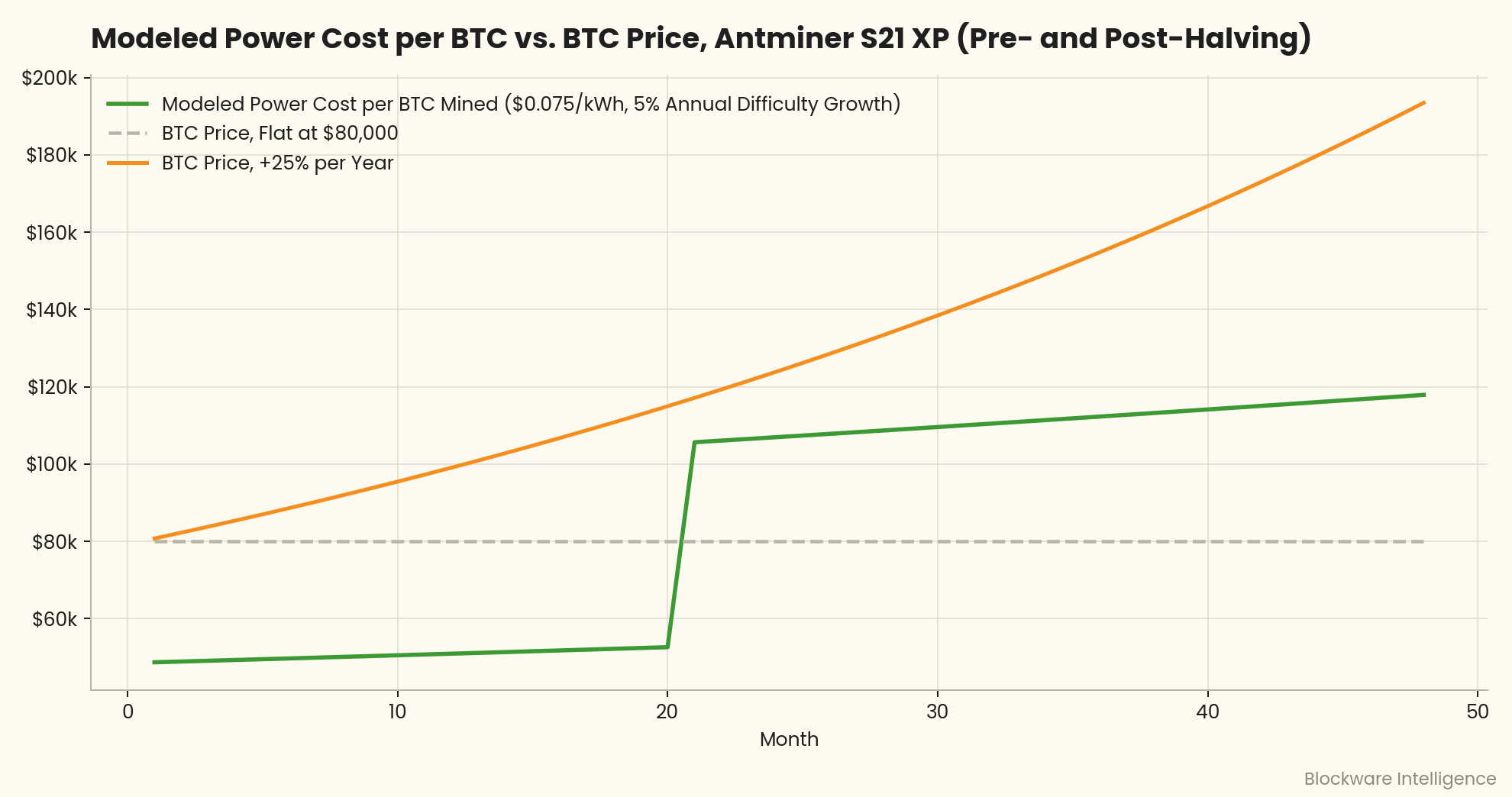
But what happens if Bitcoin’s CAGR is just 10%? What if it’s 50%? We built a model to help you forecast this.
This model let’s you adjust multiple inputs: BTC Price CAGR, Difficulty Growth Rate, Uptime, etc. to forecast the economics of a Bitcoin mining operation and your potential tax savings.
Fill out the form here to access the model for free.
The 18% hashrate pullback is the key variable here, but I’d still model the AI pivot as a temporary difficulty regime rather than a permanent gift. Home and small miners should stress-test a snapback in difficulty, delivered wall watts, actual uptime, and resale value—not just the current hashprice—before treating discounted hardware as discounted risk.